Bank of England raises rates to 4% amid Middle East war fears
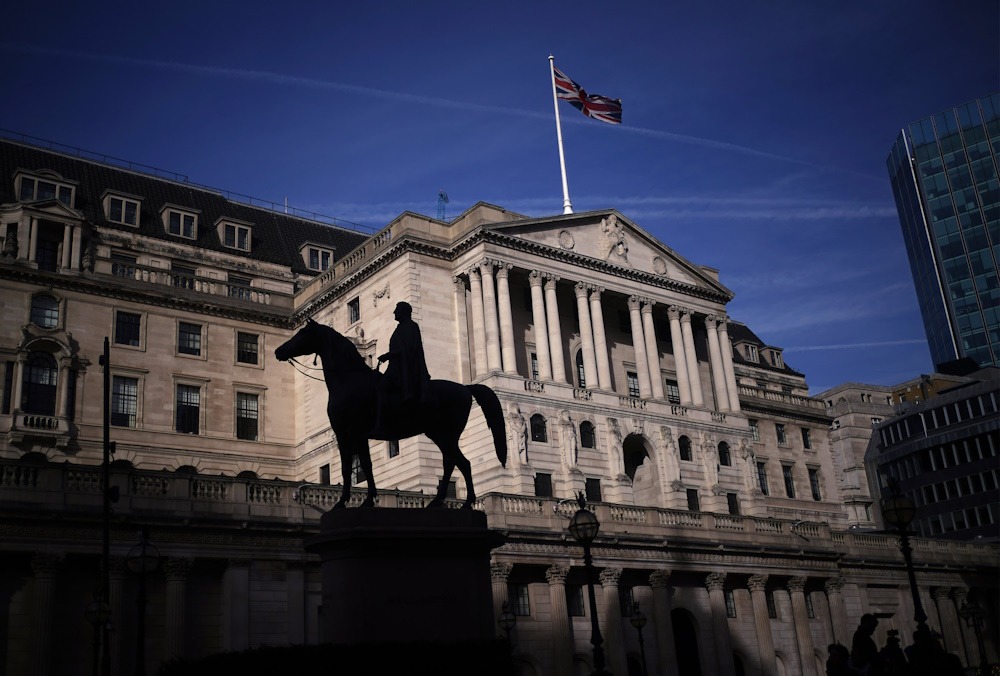
The Bank of England raised interest rates for the first time in over three years on Thursday and cautioned that at least one more increase was likely if the US-Iran conflict persists, as it initiated a trajectory that its primary counterparts have already undertaken. British inflation is projected to approach approximately 5% by the middle of next year, according to the Bank of England, significantly exceeding the central bank’s target. This development poses a challenge for new Prime Minister Andy Burnham, who has aimed to alleviate cost-of-living pressures. While there was scant evidence thus far of accelerated inflation beyond sectors directly influenced by elevated energy costs, the Bank of England indicated that the inflationary pressures stemming from months of high energy prices necessitated a rate increase at this juncture. “Today’s increase shouldn’t be seen as the first in an inevitable long sequence of hikes. But unless the conflict in the Middle East is resolved, neither does it seem likely to be the last increase,” Governor Andrew Bailey said.
The central bank’s Monetary Policy Committee voted 8-1 to raise rates to 4% from 3.75%. Contrary to expectations reflected in a Reuters poll, the dissent did not originate from a policymaker advocating for a pause in rate increases, but rather from one who favoured a more substantial hike. Catherine Mann, who remarked last month that the BoE had been sluggish in reassuring markets of its control over inflation, cast her vote for a half-point interest rate increase to 4.25%. In the minutes of November’s decision, Mann expressed her concerns regarding “non-linear inflation risks,” noting that consumer price inflation had increased to 3.5% in September. She perceived this as a possible catalyst for a decline in confidence in the central bank. In prior months, Bailey contended that the Bank of England could afford to be patient regarding a decision to increase interest rates, given that it commenced the conflict with elevated rates compared to other central banks, and investors had earlier anticipated a rate cut this year.
As Thursday’s decision approached, both investors and financial markets were nearly unanimous in their expectation of a rate increase this month. However, financial markets have also factored in three quarter-point rate increases for 2027, a scenario that exceeds the expectations of most economists. Bailey indicated that these discrepancies illustrated how financial markets were accounting for the potential tail risks associated with a significant increase in energy prices, whereas economists’ forecasts were grounded in the most probable scenario of a more modest degree of additional tightening. “Without news which softens the risks to inflationary pressures, I can see the argument for a further increase in rates,” he said in the policy minutes. Deputy Governor Clare Lombardelli indicated that an additional rate hike is probable in the near term. External MPC member Megan Greene and Chief Economist Huw Pill – who, like Mann, had voted for a rate hike in September – talked of a need for “further tightening” and “additional hikes”, respectively.
MPC members Swati Dhingra and Alan Taylor, who had previously expressed hesitance regarding rate increases, indicated that they would require more compelling evidence of second-round effects before supporting further tightening. In its central forecast for growth and inflation, the BoE has adjusted its expectations for growth this year and next to 1.6% and 1.3%, respectively, which is significantly more robust than the projections made by the government’s Office for Budget Responsibility just last week. The upgrade is a result of robust official data observed this year, with the Bank of England attributing part of this strength to expenditures on artificial intelligence, alongside a minor, temporary uplift stemming from Finance Minister John Healey’s annual budget presented last week. However, the Bank of England now anticipates that inflation will reach an average peak of 4.8% in the second quarter of the upcoming year.
In a more adverse scenario where oil prices peak at approximately $130 a barrel, compared to the current level of around $100, inflation is projected to reach 6.2% in the third quarter of 2027. Under the central scenario, inflation is projected to remain above the 2% target until the third quarter of 2028, which is six months later than the Bank of England’s earlier predictions made in July. These forecasts were developed during a period of reduced tensions in the US-Iran conflict, which had contributed to lower energy costs. According to the Bank of England, British households’ income from work, after accounting for inflation and taxes, is projected to decline in both the current year and the following year. Healey’s annual budget is projected to reduce inflation by 0.25 percentage points at its peak; however, the Bank of England noted that it would subsequently lead to an increase in inflation once the temporary cost-of-living assistance comes to an end.