Wall Street recovers as chip stocks recover from AI selloff

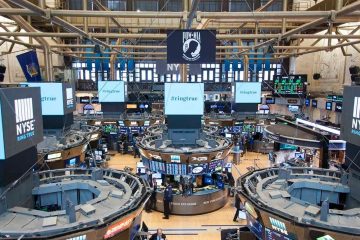
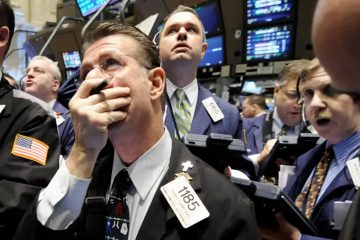
Wall Street equities experienced a notable rally on Friday, reversing their previous trajectory after a significant loss of trillions of dollars in global stock market value. This decline was primarily driven by concerns that recent Democratic election victories could lead to stricter regulations for the AI industry in the United States. The benchmark S&P 500 and the Nasdaq concluded the trading session on an upward trajectory, propelled by advancements in technology, communication services, and industrials sectors. The Dow concluded the trading session with a decline. All three indexes recorded weekly losses after a significant selloff in the previous session. The Dow Jones Industrial Average experienced a decline of 0.46 percent, while the S&P 500 saw an increase of 0.31 percent, and the Nasdaq Composite recorded a gain of 1.1 percent.
The Philadelphia Semiconductor Index experienced an increase of 4.2 percent following a significant decline, marking its largest one-day drop since April 2025. Nvidia rose nearly 3 percent following its most significant decline since January 2025, a period marked by the market’s reaction to the introduction of the low-cost Chinese AI model DeepSeek. Other major chip manufacturers, such as AMD, Intel, and Micron Technology, experienced gains ranging from 5 percent to 11 percent. Meanwhile, Tesla and SpaceX, led by Elon Musk, saw increases of 4 percent and nearly 9 percent, respectively, following earlier losses this week. “Most of the disruption of the AI buildout will not probably occur but it’s just the uncertainty of the change in government from Republican-led to Democratic-led, not only at the federal level but the state, local levels,” said Gerry Sparrow. “That’s causing some disruption in the expectations of investors … The volatility around elections or any political event, whether it be war or terrorist attack, is always going to disrupt the market.”
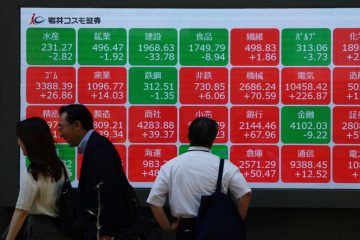
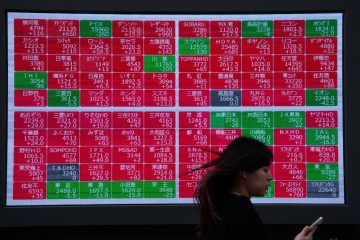
Texas’ Democratic Governor-elect Gina Hinojosa stated on Thursday that the state, which already hosts a significant number of US data centers, will implement new legislation aimed at safeguarding local communities from the further proliferation of these facilities. The jitters are affecting an AI trade that is already facing pressure due to concerns that the substantial expenses associated with data centers and other infrastructure will constrain future returns. This situation is prompting margin calls and unsettling both retail investors and hedge funds. The bounces were in stark contrast with global market action. Europe’s STOXX 600 experienced a decline of 1 percent. In Asia, Japan’s Nikkei and South Korea’s KOSPI experienced declines of approximately 6 percent. For the Nikkei, mirroring Wall Street’s performance the previous day, it experienced the largest single-day decline since the trade tariff panic of “Liberation Day” in April 2025, during the presidency of Donald Trump. The MSCI All-World index experienced a decline of 0.68 percent, whereas MSCI’s comprehensive index of Asia-Pacific shares, excluding Japan, saw a decrease of nearly 3 percent.
Payrolls exceeded expectations. US nonfarm payrolls, typically a focal point of economic analysis, demonstrated a robust increase of 165,000 jobs, surpassing expectations, yet this data was largely eclipsed by the ongoing developments in the technology sector. An anticipated slowdown in annual wage growth to below 3 percent for the first time in nearly 5-1/2 years did not materialise, as it registered at 3.1 percent. The yield on the benchmark US 10-year Treasury note increased to 4.86 percent, following a decline to its lowest level since September 9 overnight. In the realm of currencies, the dollar appreciated against key counterparts such as the euro, yen, and Swiss franc. It increased by 0.52 percent relative to the yen and appreciated by 0.47 percent against the Swiss franc. The euro experienced a decline of 0.68 percent relative to the dollar, trading at $1.1142. Brent crude prices settled at $98.32, reflecting a modest increase of 0.03 percent, driven by expectations that the outcomes of the midterm elections could lead Trump to consider de-escalation in the Iran conflict. Spot gold remained unchanged at $4,066.28 per ounce.