The Fed and ECB Minutes Show Inflation Concerns as Rate Hike Hopes Dim
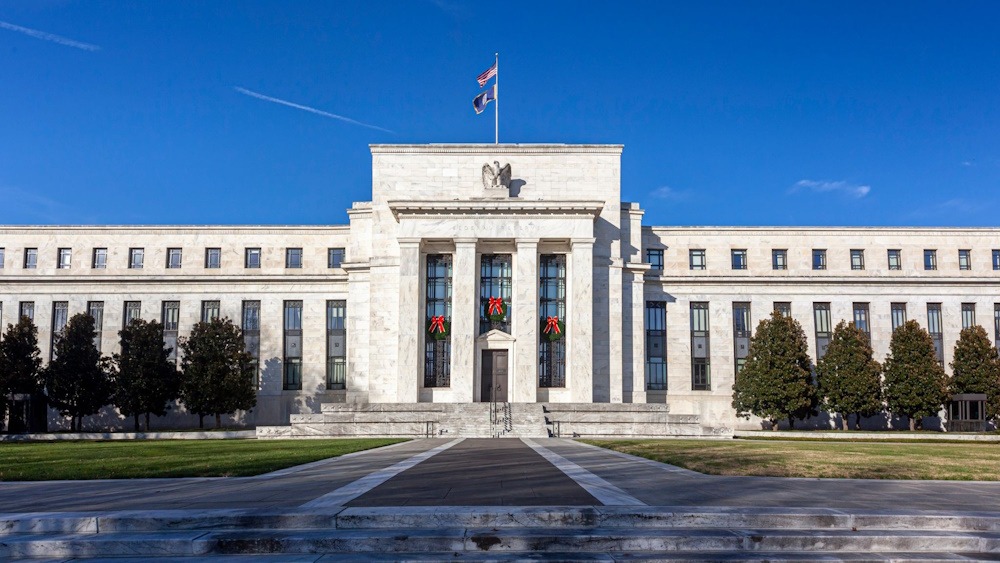
Any urgency among Federal Reserve and European Central Bank policymakers to follow up on September interest-rate hikes at this month’s meetings has been tempered in light of soft US jobs data and significant stress in French financial markets. In the forthcoming days, both central banks are set to publish the minutes from last month’s meetings, during which they elevated benchmark rates in response to escalating inflationary pressures. In the United States, robust economic growth has been strengthening the labour market, enabling the Federal Reserve to focus intently on inflation. Minutes from the Federal Reserve’s September meeting, set to be released on Wednesday, may indicate that a significant number of policymakers expressed considerable concern regarding fundamental price trends and anticipated at least one additional rate increase before the year concludes. However, recent employment data released on Friday indicated a lower-than-anticipated rate of job creation and subdued wage growth – reinforcing the notion that the labour market is not exacerbating the current inflationary pressures. Earlier in the week, government revisions to the Fed’s preferred price gauge indicated that inflation has exhibited a somewhat softer trajectory this year. Moreover, two senior rate-setters – Fed Vise Chair Philip Jefferson and New York Fed President John Williams – conveyed clear signals just two days apart indicating that they perceived little urgency for the Fed to take further action. Investors appropriately adjusted their expectations for a rate increase.
US central bankers are scheduled to convene on October 27-28, just days before the highly contentious midterm election, which may inject a significant dose of partisan politics into the electoral outcome. On Thursday, the ECB is set to publish the account of its meeting held on 9-10 September, and investors will be attentive to any indications regarding the timing of the forthcoming ECB rate hike. In the euro area, the most recent data indicated that inflation surged in September, exceeding expectations, primarily as a result of energy costs driven by conflict. Despite the persistently high price pressures, investors perceive minimal likelihood of an interest-rate hike in October. Bond-market stress has proliferated on a global scale, with France experiencing significant impact due to its fragmented parliament, which exacerbates worries regarding the budget and deficit. In other developments, Canadian unemployment and trade statistics will reveal the repercussions of the ongoing tariff conflict with the United States. Central banks from approximately a dozen nations are scheduled to determine interest rates, with anticipated increases in India, Kenya, and Peru.
Asia
A significant emphasis will be placed on the Indian central bank’s decision regarding borrowing costs on Wednesday. Economists anticipate that the Reserve Bank will raise its repurchase rate to 5.5%, aligning with similar actions taken by counterparts in Japan, Australia, and the US in their tightening measures. On Monday, Australia’s Westpac Bank is set to publish consumer confidence data, which is expected to indicate a continued downturn following last week’s interest rate increase. Japan will release its wages data for August on Tuesday, with particular attention on whether the increase in real wages has persisted for an eighth consecutive month. Taiwan, Thailand, and the Philippines are set to publish consumer price indices this week, with projections indicating a rise in inflation rates for September. Throughout the week, several countries will disclose their foreign reserves data, with particular attention on South Korea, Taiwan, and China. Observers will be keen to determine whether any of the funds from their increasing trade surpluses are reflected in these figures. India and Thailand will also proceed in this manner. Toward the end of the week, or possibly early next week, China’s central bank is expected to release September lending data, which will be scrutinised for indications of a potential recovery from the decline in lending observed in August.
Europe, West Asia, Africa
France’s fiscal troubles are likely to remain a focal point, directing attention toward the ECB as a possible responder to the crisis. Scheduled appearances by rate-setters include ECB chief economist Philip Lane, Austria’s Martin Kocher, and Belgium’s Pierre Wunsch. An account of the central bank’s September meeting, scheduled for release on Thursday, will also attract attention. Manoeuvring for the selection of new ECB officials is intensifying. Both Pablo Hernandez de Cos, chief of the Bank for International Settlements, and Klaas Knot, former Governor of the Dutch central bank – both prominent candidates to succeed President Christine Lagarde – are scheduled to appear at the same event on Monday. German Chancellor Friedrich Merz is scheduled to engage with both candidates, including Knot, in the upcoming days, as per sources acquainted with the situation. Euro-zone finance ministers may initiate talks regarding a successor to Executive Board member Isabel Schnabel during their meeting in Luxembourg on Thursday. That gathering will also be closely monitored due to the turmoil surrounding France’s bonds.
Data from the euro region features a number of releases pertaining to the manufacturing sector. Beginning Tuesday, Germany will release data on factory orders, industrial production, and exports on consecutive days. Production figures from France, Spain, and Italy will be released over the course of the week. The region’s industrial challenges will capture attention when European Union Trade Commissioner Maros Sefcovic visits Beijing later in the week. The remarks from the Bank of England could emerge as a significant focal point in the UK, which is currently grappling with its own bond-market challenges. Five officials are slated to appear, with Governor Andrew Bailey scheduled for Thursday. Swedish inflation data is set to be released on Thursday, coinciding with the Riksbank’s recent pivot toward a probable increase in interest rates. In Norway, where the central bank implemented a rate hike last month, the price index is set to be released on Friday. In South Africa, Reserve Bank Governor Lesetja Kganyago is set to address the release of the Monetary Policy Review on Tuesday.
Latin America
Colombia’s central bank on Monday released a record detailing its unexpected decision on September 30 to increase the key interest rate by a quarter point, bringing it to 12.25%. The board’s split decision reflects tight monetary conditions beginning to bend but not yet reverse 2026’s jump in consumer prices. Vindication for BanRep’s decision may hinge on the inflation data released in September. The early consensus indicates that the headline print is expected to rise once more from 6.24%, exceeding the central bank’s target by more than double. Mexico additionally provides the minutes from its central bank’s September meeting along with new consumer price data. Banxico, maintaining its stance at 6.5% for a third consecutive meeting, has transitioned to a data-dependent approach in its guidance. Similar to Colombia, the data for September is expected to indicate a further acceleration in inflation. In the realm of monetary policy, the central banks of Peru and Uruguay are confronted with challenging decisions at their upcoming meetings. In Peru, inflation in September exceeded the target, potentially leading Governor Julio Velarde and his colleagues to lose patience after maintaining the rate at 4.25% for a year.
Uruguay’s central bank has maintained its key rate at 5.75% following a 75 basis-point reduction in March. The institution may find itself constrained by the economy’s contraction in the second quarter on one hand, and on the other, five months of data indicating an acceleration in consumer-price growth. Inflation data will conclude the week, with Chile and Brazil anticipated to report elevated figures for September – increasing from 4.1% in the former and 4.22% in the latter, in both instances exceeding target levels. Brazil’s election on Sunday features 80-year-old President Luiz Inácio Lula da Silva facing off against right-wing challenger Flávio Bolsonaro in a contest that remains too close to call, potentially shaking up the dynamics for Latin America’s largest economy. Venezuela’s central bank will release monthly and annual inflation figures, having resumed the publication of these statistics earlier in 2026. In August, monthly increases decelerated to below 10%, a significant decline from the 32.6% observed in January, resulting in a cooling of the annual rate to 534.2%.