Asia’s AI Stocks Face Uncertainty Ahead of US Midterm Elections
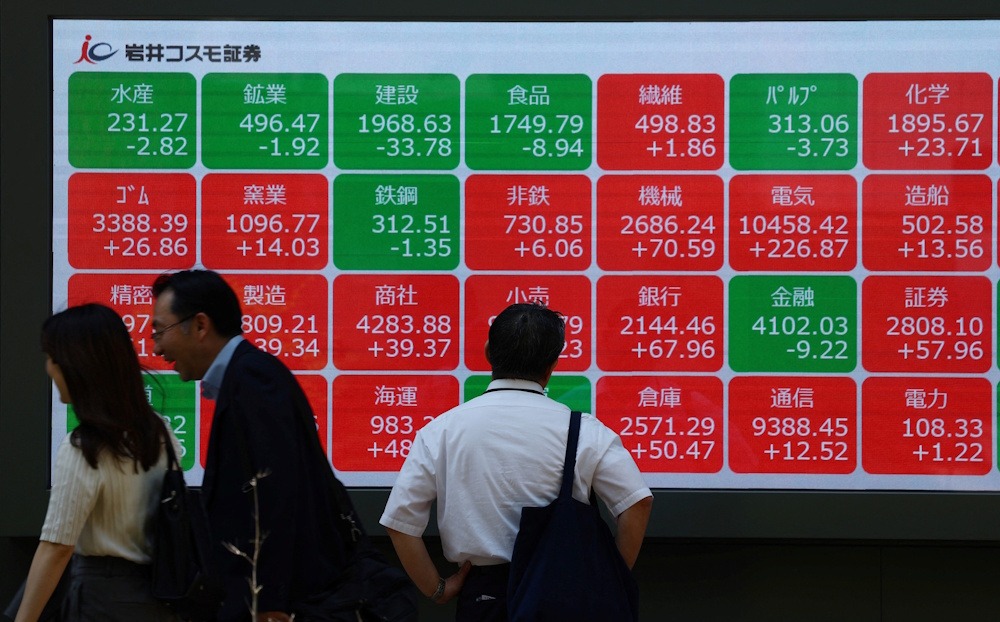
Asia’s AI-heavy stock markets are confronted with a new variable stemming from US policy in the midterm elections, with the results likely to redefine the technology trade and influence sectors ranging from clean energy to defence. A Democratic sweep of both chambers of Congress would likely result in increased scrutiny of the AI industry and the expansion of data centers. An unexpected Republican hold would provide greater policy continuity, which could advantage Korean and Taiwanese chipmakers, along with other suppliers to the US technology boom, as per strategists. At present, polling data and prediction markets suggest a significant probability that Republicans will relinquish their control of the House of Representatives, whereas the Senate’s outcome remains more ambiguous. Beyond technology, Chinese clean-energy companies could see advantages from a more robust performance by the Democratic Party, whereas Japanese defence firms might experience improved prospects if the Republican Party maintains its dominance in Congress. A divided government could offer an indirect boost for equities by limiting fiscal expansion and exerting downward pressure on US bond yields, Lombard Odier observed.
The vote occurs at a critical juncture for Asia’s AI trade. Investors are currently contending with high borrowing costs, uncertainties regarding the sustainability of the memory-chip boom, and the potential returns on debt-driven investments in AI infrastructure. The midterms introduce an additional layer of uncertainty, as topics such as AI safety, data-center development, and power costs gain heightened political significance in Washington. “If Dems sweep next week, those issues could become more pressing and those fears could spur another pullback in AI stocks,” said Phillip Wool. “Anything that’s a threat to AI is going to weigh heavily on sentiment toward stocks in Korea, Taiwan, Japan, and maybe to a lesser extent, China.” President Donald Trump continues to hold veto power and significant authority over tariffs, immigration, and foreign policy, which constrains the Democrats’ capacity to alter his agenda. Asia has significant interests in the AI investment surge compared to other regions, as South Korea and Taiwan provide a substantial portion of the advanced semiconductors and essential hardware that support the expansion of data centers in the United States.
Such exposure may render the region susceptible should a Democratic Congress amplify its examination of the industry. Potential areas of focus include mandating that AI developers assume a larger share of the expenses associated with operating data centers, as well as enhancing congressional oversight of trade and technology policy. Measures that increase infrastructure and power costs or complicate data-center development may exacerbate investor apprehensions regarding the substantial investments being allocated to AI and the escalating debt incurred to support that growth. “Potential changes to the US AI infrastructure build-out, data-center development or technology restrictions could ultimately reverberate through Asian supply chains” at a time when some money has rotated from AI stocks toward areas such as financials, healthcare and utilities, said Afdhal Rahman. Investors generally anticipate that the global demand for AI computing power and infrastructure will continue to be robust, irrespective of the political dynamics in Congress.
Korean and Taiwanese chipmakers continue to play a crucial role in that structural investment, positioning them favourably to navigate various election outcomes, Pruksa Iamthongthong, head of APAC equities at Aberdeen Investments, stated. Stocks to monitor include Taiwan Semiconductor Manufacturing Co., Samsung Electronics Co., SK Hynix Inc., Hon Hai Precision Industry Co., Quanta Computer Inc., Advantest Corp., and Delta Electronics Inc. The election may also have implications for Chinese stocks; however, investors perceive fewer definitive outcomes. A Democratic sweep and the party’s increased backing for clean energy may enhance sentiment toward Chinese solar, battery, and electric-vehicle companies, as noted by Rayliant’s Wool. If Democrats take control of Congress, constraints on his domestic agenda could compel the administration to increasingly depend on executive powers, with trade remaining one domain where the White House maintains significant latitude to operate. “Tariffs and trade represent the highest-beta channel,” said Wei Li. There is a prevailing expectation that the midterms will exert only a modest influence on Chinese equities, as the overarching trajectory of US policy toward Beijing benefits from bipartisan consensus.
China’s increasingly diversified export markets and enhancing technological capabilities offer a degree of protection against fluctuations in Washington, according to June Chua, head of Asia equities at Manulife Investment Management. Stocks to monitor include Contemporary Amperex Technology Co. Ltd., BYD Co., Sungrow Power Supply Co., LONGi Green Energy Technology Co., and Jinko Solar Co. For Japanese investors, the election is being assessed with a focus on geopolitical dynamics and oil markets. Some, including Kazuyuki Muramatsu, head of investment management at Nagomi Capital, are preparing for a departure from the historical trend of stock rallies following US midterm elections. Trump has suggested that US forces might recommence strikes on Iran following the vote, thereby increasing the likelihood of another spike in energy prices. A potential climb in oil toward $120 a barrel “would overshadow expectations that positive developments could follow the midterms,” Muramatsu stated. A Republican hold, meanwhile, could favour Japanese defence companies and US-aligned industrial manufacturers by preserving current spending priorities, according to Li.
The election possesses the capacity to create waves across Asian markets, extending its influence beyond just equities. The dollar’s recent rally may reverse in the event of a Democratic sweep, increasing signs of a US-Iran compromise and greater scrutiny of AI and data-center spending, according to Richard Franulovich. He stated that closely contested races leading to recounts or legal challenges could potentially erode confidence in US institutions. Democratic control of Congress is expected to limit the potential for additional fiscal expansion and alleviate upward pressure on US interest rates, which may have a marginal impact on the dollar, as noted by Commonwealth Bank of Australia strategist Carol Kong. A larger-than-expected Republican defeat could lead to a more pronounced selloff of the dollar and introduce greater unpredictability into Trump’s policymaking, which may enhance the appeal of the yen as a safe haven alternative. Lower US yields and a more constrained fiscal outlook under divided government may benefit Asian exporters and local-currency bonds, according to BNP Paribas’ Li.