How a hedge fund’s Nvidia warning mattered six months later

Nvidia was experiencing a notable peak in the stock market when the New York-based short-selling firm Culper Research expressed apprehensions regarding the chipmaker’s operations in China and its chief executive, Jensen Huang. In a report published on May 13, the investment research firm warned that the world’s most valuable company had a “significant China problem,” according to the source. The 40-page report scrutinised Nvidia’s association with Megaspeed, a significant purchaser of its artificial intelligence chips, and highlighted apprehensions regarding its connections to China. It also highlighted what Culper characterised as an exceptionally close relationship between Huang and Alice Huang, a Chinese national and senior executive at Megaspeed. Six months later, the allegations have resurfaced, drawing renewed scrutiny in light of reports concerning Huang’s personal relationship with the executive. Huang has expressed remorse to his wife, stating he was “deeply sorry,” according to the source. The developments have prompted enquiries into corporate governance, potential espionage risks, and Nvidia’s vulnerability to China, creating waves throughout the global technology sector and among investors.
In its May report, Culper Research asserted that Huang had sustained an unusually close relationship with Megaspeed and its executive Alice Huang, also referred to as Huang Le. “Huang has not only vouched for Megaspeed, but seems to have quite literally walked alongside Megaspeed at every step, while maintaining a close relationship with Megaspeed’s Alice Huang, a Chinese national,” the research firm wrote. Culper also questioned Nvidia’s exposure to Chinese customers despite the restrictions imposed by the Trump administration on the sale of advanced technology to China. Megaspeed was established in 2023 following the separation of the overseas operations of the Chinese gaming and cloud computing company 7Road, which subsequently rebranded the business. Based in Singapore, it emerged as one of Nvidia’s most significant clients in Asia, with expenditures totalling $4.8 billion over a two-year period, as indicated by the report. Culper alleged that Megaspeed was being financed by Chinese e-commerce giant Alibaba via a series of shell companies. It raised enquiries regarding Nvidia’s true reliance on Chinese clientele, suggesting it may exceed the levels the company has disclosed publicly.
The short seller cautioned that Chinese competitors were closing the gap with Nvidia, prompting concerns regarding the company’s long-term market standing. The controversy has intensified following reports that US intelligence agencies concluded that Alice Huang was passing information to Beijing. Nvidia has reportedly initiated an internal investigation concerning her association with Jensen Huang. Alice Huang previously held the position of television reporter in China before assuming an executive role at Megaspeed. The allegations have drawn fresh scrutiny to the risks confronting Nvidia, especially given the significance of its technology to the US government. Preventing China from accessing Nvidia’s most advanced chips has been a priority for the administration of President Donald Trump. Washington perceives limitations on these products as a mechanism to curtail China’s capacity to advance AI systems for both civilian and military purposes, according to the report. Nvidia has, however, been permitted to sell certain less advanced H200 chips to Chinese customers following an agreement to allocate a portion of the sales revenue to the US government.
Despite the controversy, Trump has defended Huang, describing him as a “fine person” who had “done an amazing job for our country”. Billionaire investor Bill Ackman, founder of Pershing Square Capital Management, has also expressed support for the Nvidia chief, saying that “even incredible humans make mistakes”. The developments have also highlighted the risks linked to Nvidia’s reliance on its chief executive. The company plays a pivotal role in the global AI boom, providing the chips that drive advanced computing systems. It has also emerged as a significant financial ally for firms constructing data centers, offering capital, guarantees, and various forms of support to select customers, as reported. Chief executives and investors have frequently turned to Huang to advocate for the prospects of AI. His appearances at events across the globe, where he has drawn significant crowds, have become integral to what is commonly referred to as ‘Jensanity’. However, the latest controversy has prompted a reevaluation of the risks inherent in having a significant portion of the company’s public image and leadership tied to a single individual.
Australian investment firm Loftus Peak, which first invested in Nvidia in 2016, maintains its position in the chipmaker as one of the largest holdings in its $1.6 billion Global Disruption Fund. Its Chief Investment Officer, Alex Pollack, remarked that the revelations underscored the necessity of evaluating key-person risks, especially in the absence of a definitive succession plan. “I’m really disappointed, Nvidia is one of our largest positions and there’s a whiff of espionage around this situation. If you’re Jensen Huang and you’re that important, it could be hard not to believe in your own hype sometimes and think you can do anything,” Pollack told. He stated that he anticipated a considerable decline in Nvidia’s share price but was improbable to divest the company’s entire stake. Veteran investor John Hempton of Bronte Capital articulated a defence of the role that short sellers play in illuminating potential issues. His fund does not hold Nvidia shares but maintains a positive perspective on Culper Research and its contributions.
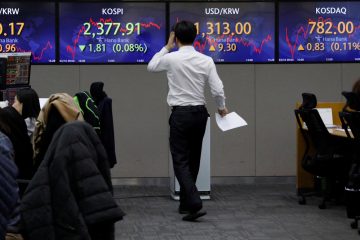
Hempton noted that investors frequently disregard short sellers due to their financial motivations, while failing to recognise that long-term investors may also possess biases. He remarked that he had initially deemed Culper’s allegations implausible when they surfaced in May. The controversy arises during a period when investors are increasingly scrutinising the elevated valuations of technology firms and the expenditures associated with AI infrastructure. Concerns regarding increased oversight of data center construction and AI development in the aftermath of the US midterm elections have contributed to heightened uncertainty within the technology sector. The resulting sell-off erased trillions of dollars in market value, as the Nasdaq faced pressure due to concerns over elevated valuations, increasing debt levels, and the potential for investments in AI to yield adequate returns, according to the source. Nvidia investors have been contending with a significant downturn in the company’s shares, which have decreased by approximately 20 percent over the past month.