The US asked Venezuela and Iraq to leave OPEC amid oil output boost
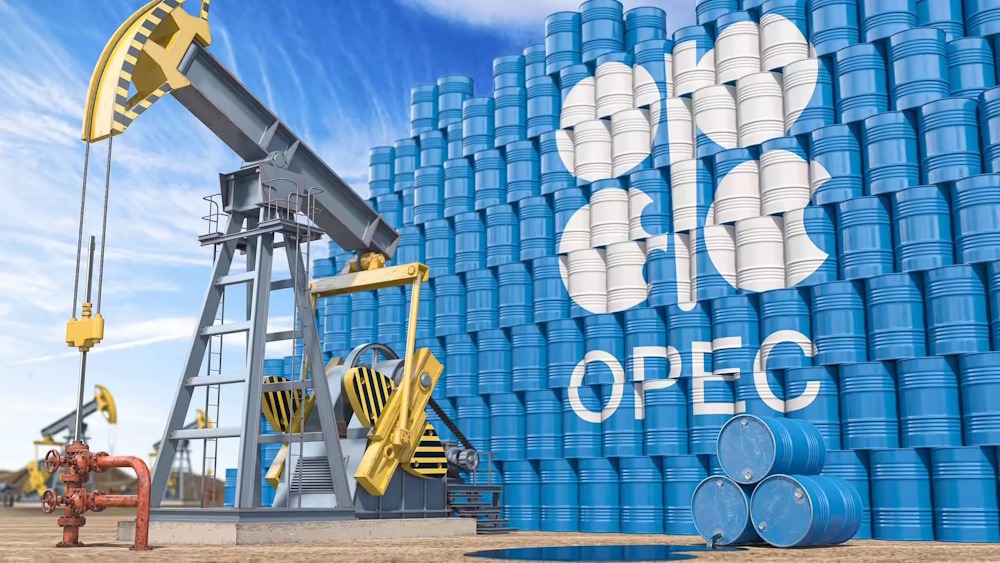
The Trump administration urged Venezuela and Iraq to contemplate exiting OPEC earlier this year and obstructed Venezuela from fulfilling its annual membership dues to the organization, as reported by 10 individuals with knowledge of the situation. The previously unreported moves targeted two of OPEC’s five founding members, marking an unusually direct challenge to an organization that President Donald Trump has long accused of keeping oil prices artificially high. US officials were advocating for increased oil production and investment in both countries during that period, with concerns raised by some that OPEC production limits might ultimately hinder those aspirations, as per sources familiar with the discussions. The US exerted significant pressure on Venezuela, prompting Saudi Crown Prince Mohammed bin Salman to intervene this summer. He reportedly convinced the Trump administration to refrain from escalating the issue further, according to two individuals with knowledge of the situation.
In Iraq, Prime Minister Ali Faleh al-Zaidi broached the subject of potentially exiting OPEC during a government meeting this summer, following conversations with US officials who advocated for the notion, according to two individuals acquainted with the situation. Iraq’s oil ministry intervened, convincing al-Zaidi to maintain Iraq’s membership in the group and to contemplate pursuing a higher production quota instead, according to sources. The United States possesses significant leverage over both nations. The US exerts control over Venezuela’s access to state funds in the aftermath of the January ousting of Nicolas Maduro, whereas Iraq’s oil revenues persist in flowing through an account at the Federal Reserve Bank of New York, a remnant of the 2003 Iraq War. The US State Department refrained from addressing enquiries regarding its potential role in obstructing Venezuela’s payment of its OPEC membership fee. However, it affirmed that Washington possesses the authority to determine the allocation of Venezuela’s state funds, which are currently maintained in a US-controlled account established following Maduro’s ousting.
“The Department receives disbursement requests from the interim Venezuelan government and reviews the requests, including against a list of approved and prohibited uses of the foreign Government Deposit Funds,” a State Department official told. The official said that it was possible that lower-level US officials had raised the question of leaving OPEC with Venezuela’s government earlier this year, but that “it has not been among the issues raised by high-level officials”. The State Department’s conversations with Iraq, meanwhile, “have focused on improving energy infrastructure to increase production and transportation of energy, not OPEC,” the official said. The US manoeuvres exacerbate the pressures on an organization that has already seen a decline in membership, losing four members since 2019. Additionally, its share of the global oil market has recently reached a low, influenced by disruptions stemming from the US and Israeli conflict with Iran, another founding member of OPEC. “The risk of OPEC fracture is rising,” said Dan Alamariu. The United Arab Emirates announced its exit from OPEC earlier this year, citing frustration with the group’s production caps. Angola, Ecuador, and Qatar also departed from the organization in 2024, 2020, and 2019, respectively. There are no indications that the United States was involved in those decisions.
OPEC was established in Baghdad in September 1960 by oil-producing nations aiming to gain greater influence over a global market increasingly controlled by a limited number of Western oil firms. Established by Iraq, Iran, Saudi Arabia, Kuwait, and Venezuela, OPEC currently comprises 11 member countries. It has also formed a coalition with various other producing nations, including Russia, known as OPEC+, which convenes regularly to determine synchronised production levels. Trump has consistently criticised OPEC over the course of his extensive business and political career, labelling it a cartel and a monopoly that benefits at the expense of the global community. Over the past decade, the US has emerged as the world’s largest oil producer, transforming its role from an OPEC customer to a principal competitor for oil market share. Following the US’s seizure of Maduro in January, the US State Department initiated talks with Venezuelan officials in Washington regarding the potential exit of the country from OPEC, according to five individuals familiar with the situation.
Trump sought to encourage US oil majors to restore Venezuela’s oil production, asserting that this would enhance energy security in the Western Hemisphere. He expressed concerns that OPEC’s policy decisions could obstruct this initiative, according to sources. Saudi Arabia’s Crown Prince Mohammed bin Salman intervened, persuading the Trump administration not to push further, according to two sources. Saudi Arabia stands as OPEC’s leading producer and serves as its de facto leader. In August, Trump stated that the decision for Venezuela to exit OPEC rested with Venezuela itself. US officials this summer engaged in discussions with Iraqi Prime Minister Ali Faleh al-Zaidi, advocating for Iraq’s exit from OPEC as US oil giants Exxon Mobil and Chevron prepared for significant new investments in the region, according to two individuals with knowledge of the situation. Al-Zaidi subsequently brought the matter to the attention of a government meeting. His oil ministry convinced him to remain and instead potentially pursue a higher OPEC quota, they indicated.
The issue may resurface as certain factions within Iraq’s ruling coalition express a preference for exiting OPEC and OPEC+, perceiving these organisations as heavily influenced by Saudi Arabia and Russia, according to sources. There is no evidence to suggest that Washington has attempted to obstruct Baghdad’s OPEC payments. Following the United States’ invasion of Iraq in 2003, the country initiated the process of channelling Iraq’s oil revenues through an account at the Federal Reserve Bank of New York. That structure persists more than two decades later. This year, the US issued a warning to Iraq regarding its oil revenue, suggesting that failure to diminish Iran’s influence within its government could result in financial repercussions. Payments for OPEC membership fees are generally required in the first quarter of each year, funding staff salaries, research, and travel at the OPEC Secretariat located in Vienna. In contrast to the United Nations, which adjusts dues according to the economic size of its member states, OPEC distributes fees uniformly among its members, amounting to approximately €2.8 million each. The price tag is modest relative to OPEC oil revenues; however, fulfilling this obligation holds significant symbolic value as an indicator of ongoing membership in an organization that Caracas played a pivotal role in establishing.
Washington contended that funds from Venezuela could be allocated to more pressing issues, according to an individual knowledgeable about the nation’s ties with OPEC. According to two sources within OPEC, the organization possesses the authority to overlook unpaid membership fees and has no intention of expelling Venezuela on this basis. Washington’s oversight of Venezuela’s oil revenues and financial systems has prompted some within the South American nation to characterise it as a US protectorate rather than a sovereign entity. The US Government Accountability Office initiated a formal investigation in July regarding the administration’s management and disbursement of Venezuelan oil revenues, in response to congressional requests for increased transparency. The Trump administration has asserted that Venezuela’s oil revenues are being utilised to address the needs of the Venezuelan populace, encompassing the payment of government salaries and the financing of essential services.
Venezuela is presently excluded from OPEC+ oil output quotas, as its production has significantly declined from historical peaks due to prolonged sanctions and mismanagement. The country produced approximately 1.2 million barrels per day in September, as indicated by OPEC figures. PDVSA, the state oil company, has announced its intention to achieve a production level of 1.5 million barrels per day by the conclusion of the next year. OPEC last imposed quotas on Caracas’ output during the 2017-18 period, with the country’s target set at approximately 2 million barrels per day. The country’s return to the quota system is improbable until it reaches that level once more, according to a source familiar with Venezuela’s OPEC stance.