China AI Stocks Lose $1.7 Trillion Amid US Curbs
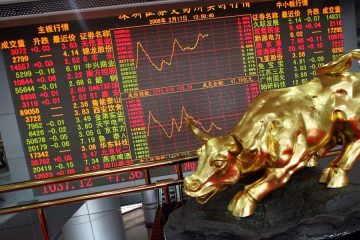
China’s AI stock trade, previously viewed as a promising investment as the country’s technology giants sought to compete with the US, has now transformed into an unprofitable approach. Stocks listed on three tech-focused indexes have experienced a decline of $1.7 trillion in market value since the end of June, as per data. Multifold gains in the first half of the year that propelled upstart model developer Z.AI Co. and optical module maker Zhongji Innolight Co. to record highs have swiftly diminished. The unravelling of the global AI boom has significantly impacted China, as inflated valuations and dependence on policy support rendered stocks susceptible once vulnerabilities became apparent. The attractiveness of Chinese AI as a cost-effective substitute for more expensive US models, along with the country’s ambition for a self-reliant chip supply chain, is currently under scrutiny as the US intensifies its limitations on technology exports.
The market is poised for another turbulent session on Monday, following a shift in sentiment regarding the viability of the AI trade, which has escalated into a significant rout in the US. A KraneShares exchange-traded fund tracking China’s Star 50 gauge experienced a decline of over 4% in US trading. “As a China fund manager, experiencing this year’s wild swings and second-half selloff has honestly left us pretty speechless,” said Bush Chu. “Investors are worried both about an AI capex slowdown and whether US-China supply chain business is sustainable.” It is a difficult realisation for investors who pursued China’s AI surge, as the “DeepSeek moment” has taken the world by surprise. The three primary Chinese tech indexes are currently exhibiting year-to-date losses, in contrast to their significant counterparts in the US, Taiwan, and South Korea, which continue to maintain positive performance. Hong Kong’s Hang Seng Tech Index, which includes significant internet entities such as Alibaba Group Holding Ltd. and Tencent Holdings Ltd., has declined to a two-year low.
The onshore ChiNext Index, characterised by its concentration in tech hardware companies, achieved a peak this summer; however, it has since declined by 31% year-to-date. The chip-heavy Star 50 Index has similarly erased a record rally. DeepSeek proposed that China’s technology companies might provide globally competitive AI solutions at a lower cost compared to their American counterparts. Technological breakthroughs from Huawei Technologies Co. have spurred heightened investments in domestic firms, bolstered by Beijing’s initiative for national technological self-sufficiency. China has extended comprehensive backing to its domestic technology leaders, yet the recent actions from Washington may impede their progress. Draft rules released by the US earlier this month effectively prevent Chinese firms from renting cutting-edge processors from Nvidia Corp. and others through overseas data centers, thereby closing a crucial avenue for training next-generation models. Such developments may further hinder the advancement of Chinese AI, which has already exhibited indications of decline.
None of the current ten most advanced models in the Artificial Analysis Intelligence Index originate from China, highlighting a significant shift compared to just four months prior when Moonshot AI’s Kimi K3 was competing closely with the offerings from OpenAI and Anthropic PBC. Tencent’s management cautioned during last week’s earnings call that the forthcoming iteration of its HY4 model may experience delays due to the ongoing chip shortage, although they anticipate that the domestic supply chain will gradually mitigate this issue over time. Alibaba announced on Thursday its forecast for cloud sales growth, projecting a deceleration to a range of 30% to 45% for the upcoming year, followed by an anticipated rebound to over 50% by 2028. Chinese internet giants are experiencing similar high AI development costs that are exerting pressure on earnings at US hyperscalers. Sluggish domestic consumption and intermittent price wars continue to be significant concerns. “The key issues are weak AI monetization, compute bottlenecks, intense competition and margin pressure,” said Nick Ferres. “Clearly the escalation in US tech and compute curbs adds another dimension to the downside pressure.”
On a positive note, China’s semiconductor industry has emerged as a potential beneficiary in the scramble to address the gap created by US regulations. Local foundries such as Semiconductor Manufacturing International Corp. may experience an uptick in business, as reports suggest that overseas manufacturers might decline orders. Nvidia accounted for approximately one-third of the chips utilised by China’s technology companies in the first half of this year, with Huawei representing around 29% and Cambricon Technologies Corp. at 22%, as reported by Nomura Holdings Inc. Valuations for Chinese tech stocks have declined amid the selloff; however, the major Hong Kong-listed internet companies continue to be significantly less expensive compared to their mainland hardware counterparts. Alibaba is currently valued at a mere 10 times its forward earnings estimates, in stark contrast to the onshore shares of chipmaker SMIC, which remain at a substantial 80 times. “At current price levels, I still can’t find value in these Chinese AI-related names,” said Jian Shi Cortesi. “Many stocks will need to fall another 30% to 50% to become very attractively valued.”