Bessent Says No Extra Curbs Needed on Nvidia Chips to China
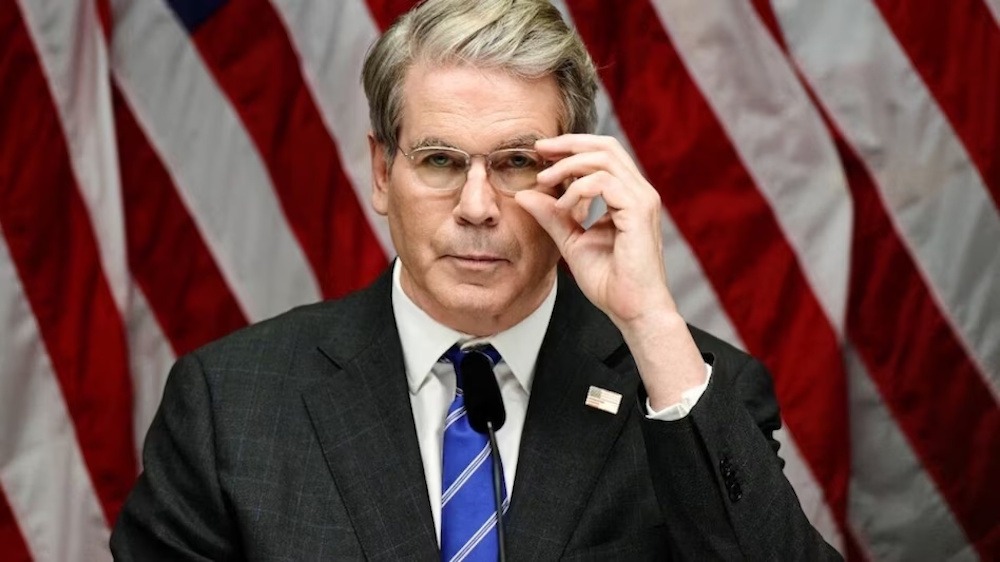
Treasury Secretary Scott Bessent has indicated that additional limitations on the sale of older Nvidia chips to China are unnecessary after the Trump administration’s recent decision to prevent China’s remote access to the latest semiconductors. The ability of Chinese tech firms to access Nvidia’s technology has faced increased scrutiny following the resignation of CEO Jensen Huang, which was prompted by allegations regarding his affair with an executive at Megaspeed, a Singapore-based company that utilises advanced chips to generate computing power accessible to Chinese firms remotely. “The proper chip restrictions are in place,” Bessent said in an interview on Friday after returning from a trip to Asia with President Donald Trump. “And the remote access has been curtailed.” Bessent’s comments came a day after the House Foreign Affairs Committee released details of the Commerce Department’s approval of the sales of more than 850,000 chips from Nvidia and its competitor AMD to Chinese companies. The Pentagon has identified some of those companies as having ties to the Chinese military.
The report monitored applications from Nvidia to market its H200 chips – a product noted for its power, albeit not the most cutting-edge – alongside AMD’s applications to distribute its roughly equivalent MI325X chip to firms either situated or headquartered in China, or entities with parent companies based in China. The Commerce Department’s Bureau of Industry and Security sanctioned the export, re-export, or transfer of 879,868 of these chips to firms with Chinese affiliations through 21 licence applications as of May 11, 2026, according to the report. Nvidia and AMD had requested to sell a cumulative total of more than 3.4 million of the chips to companies with ties to China across those applications, per the report. The approvals, which do not necessarily signify finalised transactions, comprised 75,000 for Alibaba, 150,000 for Tencent and its subsidiaries, 43,000 for Baidu, and 4,000 for BYD, as stated in the report. Each of those companies has been identified by the Defence Department as having connections to the Chinese military.
The report shows the Commerce Department has a “long track record of transparency with Congress about licensing activity for the H200 and equivalent chips, including both approvals and rejections”, a spokesperson for the Bureau of Industry and Security said in a statement Friday. The spokesperson said the Commerce Department’s approach to H200 licensing is based on a rule in the Federal Register that was published in January. The rule imposes “significant additional national security-related requirements on license applicants in order to qualify for case-by-case consideration rather than a presumption of denial,” the spokesperson said. An Nvidia spokesperson said in a statement on Friday that the “limited shipments we made under the H200 programme were legal and authorised” by the BIS. “The review and licensing process spanned more than half a year, with approvals subject to strict conditions and limited volumes,” the company spokesperson said.
Earlier this week, Nvidia announced that it would cease shipments of H200 chips to China. The spokesperson indicated on Friday that shipments had ceased, notwithstanding earlier approvals. AMD said it complies with US export control laws and regulations and maintains “rigorous processes to ensure compliance across our global operations” in a statement from a spokesperson Friday. “We remain focused on serving our customers and upholding the highest standards of integrity,” the spokesperson said. Chinese technology firms are preparing for the repercussions on their ambitious AI development initiatives as scrutiny intensifies regarding export controls in the United States. Commerce Secretary Howard Lutnick has faced significant scrutiny in the aftermath of the turmoil stemming from the Huang affair.
Last week, Bessent expressed his frustration regarding the Commerce Department’s postponement in implementing restrictions on Nvidia chip exports to Megaspeed International, which is currently under investigation by the US for potentially diverting restricted Nvidia AI chips to China. A former executive at the company who allegedly had an affair with Huang was reportedly suspected by US intelligence agencies of being a spy for China. In a notably public reprimand of a colleague within the Cabinet, Bessent stated that his department sought to impose export controls on Megaspeed; however, the responsibility for the issue lay with the Commerce Department. Speaking to reporters on Friday, Trump said he has “not lost confidence” in Lutnick. Calling him a “different kind of guy,” Trump said he “has a natural business instinct” and has “done a very good job”.