US Congress could ban Chinese cars by year-end
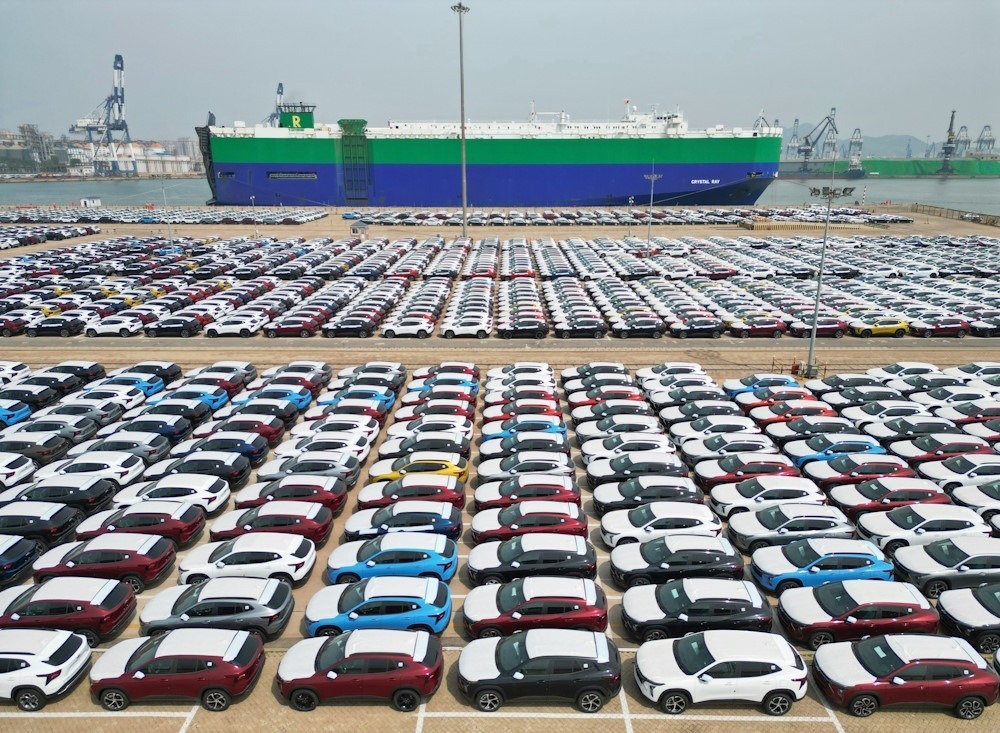
Lawmakers in Washington are nearing an agreement to prohibit Chinese automobiles from entering the US market, as reported by sources. This development follows urgent negotiations that seek to protect Mercedes-Benz Group AG, which has approximately 20 percent ownership by Chinese stakeholders. Republicans and Democrats from auto-producing states are collaborating on an initiative to deliver a bill to President Donald Trump by year-end, according to sources. If enacted, the lucrative US car market would be effectively closed off to automakers like BYD Co. and Geely Automobile Holdings Inc., whose affordable, technology-rich electric vehicles have swiftly captured market share in Europe and South America. Chinese automobiles face significant barriers to entry in the US market, primarily due to high tariffs and stringent regulations on Chinese vehicle technology enforced by the Commerce Department.
Enshrining a ban into law would advance those measures to tackle escalating concerns regarding national and economic security threats stemming from China’s aspirations to dominate the global auto industry. Details regarding the measure are still under negotiation. On Wednesday, Republican Senator Bernie Moreno provided automaker representatives with an update regarding potential modifications to previous legislation intended to prevent Chinese connected vehicles from entering the US market. This includes provisions that would exempt Mercedes from an outright prohibition, according to sources. Representatives from the automaker sector expressed general support for the initiative outlined by Moreno; however, a spokesperson from Mercedes raised some concerns, and discussions are still ongoing, according to sources. Proponents are striving to advance the measure prior to the commencement of the next Congress in January, according to sources. “We continue to meet with all stakeholders who have a shared interest in ensuring this important legislation becomes law in this Congress,” Mercedes said in a statement.
A bill advanced by a Senate panel earlier this year would have prohibited manufacturers that are more than 15 percent owned by Chinese entities from selling cars equipped with technology capable of transmitting data. Mercedes, having actively lobbied for amendments to that legislation, is approximately 10 percent owned by BAIC Motor Corp., a state-owned automotive manufacturer from China. Li Shu Fu, the billionaire founder of Chinese carmaker Geely, possesses nearly 10 percent of Mercedes’ shares, thereby exceeding the previous bill’s 15 percent threshold. Lawmakers are engaged in discussions with various stakeholders, including Mercedes, and have conveyed a sense of optimism regarding the potential for an agreement to be finalised as soon as this week, according to a source. Provisions under discussion encompass more lenient regulations for firms holding passive ownership stakes devoid of voting rights, alongside considerations regarding the structuring and verification of such an approach.
Republican Senator Katie Britt of Alabama, a significant center for Mercedes’ sport utility vehicle production, stated that she has collaborated with Moreno on the bill and is confident that both Mercedes and Alabama will be safeguarded. “We understand that there will be some adjustments that have to be made, but feel good about Mercedes continuing to be able to thrive in our state and across the country,” she said. Banning Chinese cars would also contradict the more permissive approach adopted by Europe and Canada. Chinese automakers have rapidly penetrated the European market, resulting in heightened competition with domestic brands. The EU has begun to retract following the swift expansion of Chinese automakers in its market, having reached an agreement with China last month to limit imports of hybrid vehicles into the bloc.