Asian markets hit worst week since 2020 as AI euphoria fades
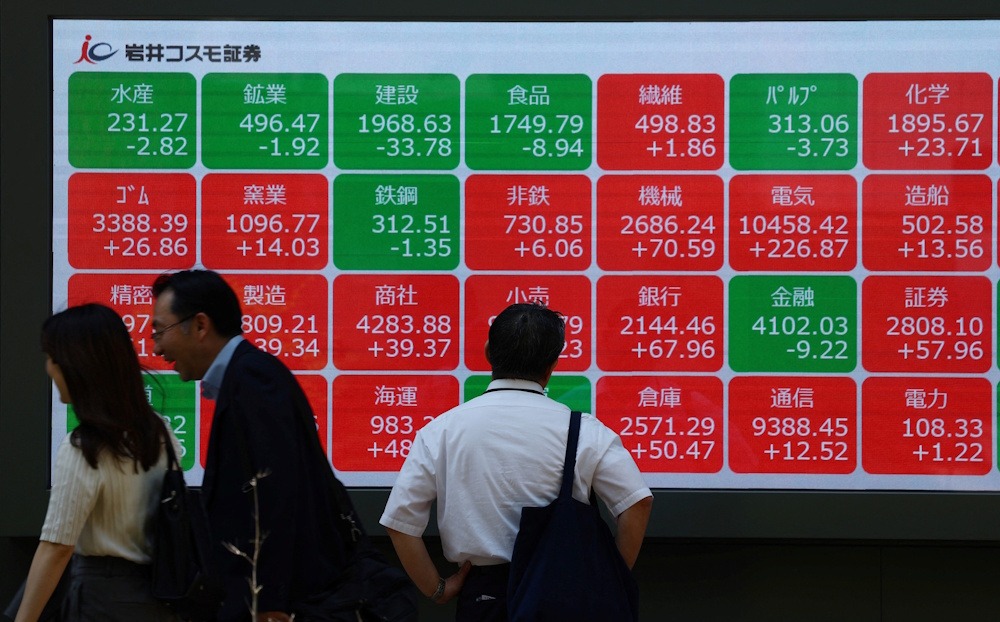
Asian shares declined on Friday, poised for their most significant weekly drop since 2020, as Anthropic’s market entry did not succeed in rekindling investor confidence in the AI sector, while the dollar continued its ascent driven by safe-haven inflows. MSCI’s broadest index of Asia-Pacific shares outside Japan experienced a decline of 3.2 percent, marking its most significant single-day decrease in over a month. The gauge has now declined by 8.3 percent this week, marking its most significant downturn since March 2020. Japan’s Nikkei experienced a decline of 4.1 percent, positioning it for a weekly decrease of 6.8 percent. Meanwhile, South Korea’s KOSPI saw a drop of 4.4 percent, indicating a potential weekly loss of 7.1 percent. Taiwan shares experienced a decline of 5 percent on Friday, culminating in a 16 percent drop for the week, marking their most significant weekly decrease since 1991.
The movements in Asia came on the heels of declines exceeding 2 percent for the S&P 500 and the Nasdaq Composite, as Anthropic, the first publicly traded frontier AI company, experienced a significant surge in its shares during a historic debut; however, this euphoria did not extend to other stocks. “Risk aversion intensified as investors continued to unwind crowded positioning and reassess the broader macro backdrop following Anthropic’s record-shattering IPO,” said Preston Pagli. He added that Nvidia’s blowout earnings earlier in the week did not serve as the reset markets had anticipated, while sentiment worsened further after Anthropic’s IPO did not ignite a broader rally. Further contributing to the prevailing apprehension, a report on AMD from a media outlet affiliated with the short-selling fund Hunterbrook Capital has raised alarms regarding the chipmaker’s connections to Chinese entities, some of which are associated with blacklisted firms. This situation could potentially attract increased regulatory scrutiny from US authorities toward the sector.
The AI trade has faced significant challenges due to Jensen Huang’s exit from Nvidia, the increasing support for the anti-data-centre movement following the Democrats’ success in the US midterm elections, and apprehensions regarding the escalating debt levels within the sector. “No one headline drove the roll though some pointed to an AMD short report which tapered overall sentiment. Overall, it just felt like more questions than answers out there today with most wondering what gets this tape to feel better?” said Goldman Sachs analysts in a trading note. Asset managers and hedge funds reportedly net-sold macro products while simultaneously net-buying segments of consumer and financials. This trend is occurring amidst persistently poor liquidity, which is further complicating price action. US stock futures indicated additional declines, as S&P 500 futures decreased by 0.2 percent and Nasdaq futures fell by 0.6 percent during trading in Asia on Friday. As risk sentiment deteriorated, the US dollar continued its ascent driven by safe-haven demand, bolstered by increasing expectations of a more hawkish Federal Reserve.
Fed funds futures indicate that a quarter-point rate hike next month is virtually assured, as per CME Group’s FedWatch tool. The dollar index last traded steady at 103.86, after rising to its highest since April 2025 this week, and is now on track to post its fourth consecutive week of gains. In the realm of government debt, US Treasury yields experienced a decline as the significant selloff in equities prompted investors to seek refuge in safe-haven bonds. The yield on benchmark 10-year Treasury notes remained unchanged at 5.02 percent, close to a one-week low. The 2-year yield reached 4.749 percent, in contrast to a US close of 4.779 percent. Oil prices exhibited relative stability following a prior surge, as reports of tanker disruptions in the Strait of Hormuz counterbalanced the influence of increasing US crude inventories and projections indicating a global oil surplus. Brent crude futures increased by 0.4 percent to $92.37 a barrel; however, they are still poised for a third consecutive week of declines. Non-interest-bearing gold declined by 2.5 percent to $3,533.40 per ounce, positioning itself for a weekly loss of 9 percent.