Restricted Nvidia Blackwell Chips Surface at Shanghai Data Center
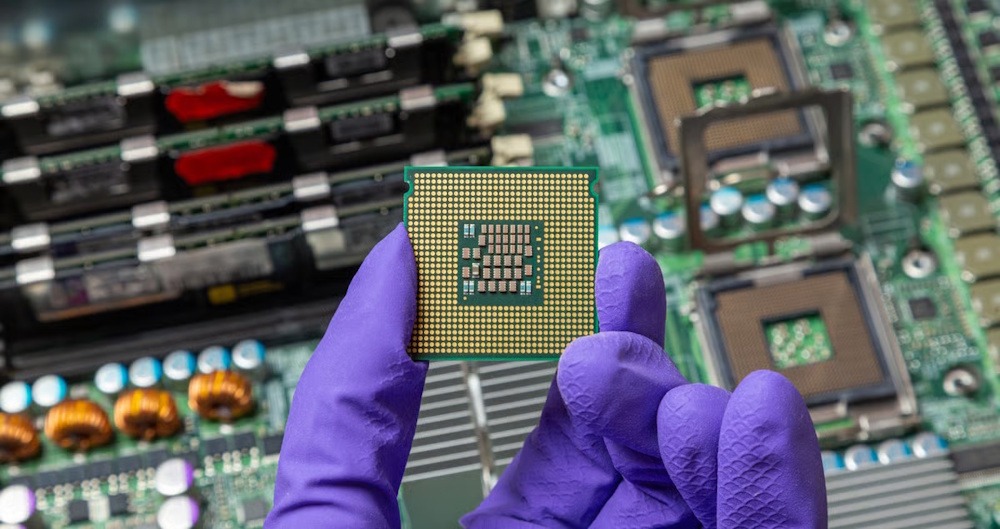
A pair of Chinese firms have implemented Nvidia Corp’s advanced Blackwell semiconductors within a data center in Shanghai, associated with Alice Huang, a central figure in the ongoing controversy surrounding the US chipmaker. The gear installed at the Yangtze River Delta Project included a GB300 NVL72 rack, among Nvidia’s most powerful products, according to a serial number specified in documents submitted to Chinese regulators in November. Shanghai Shuoyao provided the hardware as collateral to secure a loan of 96 million yuan from Shanghai Innovation Bank, as indicated in filings from the lender. A second firm, Shanghai Kezhan, which is under the control of a Tokyo-based parent company, detailed a GB200 server that similarly utilises Blackwell chips at the facility. That description was included in documents when it secured a loan of 90 million yuan in late 2025 from a finance-leasing firm entirely owned by a local Shanghai government agency. Nvidia shares experienced a decline of up to 2.6 percent, reaching a price of $145.39 following the opening of markets in New York on Friday.
The submissions indicate for the first time that Nvidia’s Blackwell processors have been integrated into a Chinese data center associated with Alice Huang and Megaspeed. These processors were, until recently, Nvidia’s most powerful data center products, and they have consistently been prohibited from being shipped to China without a US licence. President Donald Trump has clearly stated his opposition to the export of these chips – utilised by OpenAI and Anthropic PBC for training their most advanced models – to the Asian country, at least for the time being. Nvidia Chief Executive Officer Jensen Huang, meanwhile, once claimed they were too big to smuggle: a standard two-metre-tall GB300 NVL72 server rack, which contains 72 Blackwell Ultra chips and 36 Grace processors, can weigh more than 1,500 kilograms and is about the size of a gigantic fridge. Nvidia and its recently reinstated CEO are facing significant scrutiny in recent weeks due to their inability to prevent the diversion of the company’s products to China, a shadow trade that US officials estimate to be worth billions of dollars.
It remains uncertain how the GB300 rack arrived in the country, specifically at Shanghai Shuoyao or this particular site, which local media reports is intended to accommodate up to 800,000 servers. By inputting the serial number for the product into a public warranty database, it was discovered that it was manufactured by Taiwan’s Gigabyte Technology Co, which assembles Nvidia chips into servers and racks. The database additionally supplied a model designation corresponding to the serial number, which aligns with a GB300 NVL72 server rack produced by the Taiwanese manufacturer. This type of equipment frequently changes ownership multiple times – encompassing local distribution networks – prior to its installation in data centers. In numerous instances, goods that were eventually illicitly imported into China were initially marketed to entities in unrestricted regions.
Source provided the rack’s serial number to Gigabyte, seeking information about to whom Gigabyte had originally sold the hardware and when. It declined to answer those questions, citing company policy. The firm “conducts all business in compliance with applicable laws and regulations”, a spokesperson said in an emailed statement. “All transactions are subject to our internal compliance requirements and the relevant laws and regulations in effect at the time.” Shanghai Shuoyao – the company that procured the GB300 rack and offered it as collateral – is active at the data centre linked to Alice Huang and also has significant overlap with Singapore-based Megaspeed, which is under US investigation over concerns that it smuggled Nvidia chips to China, as per reports. Shanghai Shuoyao, confirmed this month in a rare public statement that it is one of Megaspeed’s service providers, describing the partnership as “limited to ordinary commercial cooperation”. Megaspeed, meanwhile, utilised a rendering of the Yangtze River Delta Project in 2024 to characterise its largest data center to investors, referring to the site as a “specific area” facility in an unnamed country.
Reports lacks evidence indicating that Megaspeed directly diverted Nvidia hardware, and Megaspeed has refuted any allegations of misconduct in relation to the US investigation. The company has not responded to multiple enquiries regarding the Yangtze River Delta Project. Nor has Nvidia, which for years maintained that there was no black market for its products and did not respond to enquiries for this story. The Trump administration has placed Megaspeed on a US trade blacklist this month, highlighting a considerable risk of its involvement in chip diversion. Alice Huang founded Megaspeed in 2023, a neocloud that received a prestigious endorsement from Nvidia within just four days of its establishment, subsequently becoming the chipmaker’s largest customer in Southeast Asia. She also has connections to several companies that invested in the Yangtze River Delta Project, which has Kang Wei serving as its president. Kang has been characterised at times as the romantic partner of Alice Huang, according to sources. It remains uncertain the extent to which operators have progressed toward their overarching objective for that project, which, at 800,000 servers, would align with the scale of hyperscale facilities utilised by entities such as OpenAI. It remains uncertain what combination of servers they intend to employ. The parameters outlined in the construction plans – specifically, the total processing power in relation to the energy input – would be exceedingly challenging to meet with chips from Chinese firms like Huawei Technologies Co.
Nonetheless, the smuggled hardware revealed in the filings constitutes merely a small portion of what would be required. These documents exclusively address hardware utilised as collateral for loans, presenting a limited view of the operators’ aspirations. They also highlight the awareness among certain Chinese financial institutions, including those with governmental connections, regarding the influx of restricted hardware into China and their readiness to extend capital based on those assets. The leasing company that extended credit to Shanghai Kezhan or Shanghai Innovation Bank, which, in addition to the funds it provided to Shanghai Shuoyao, also issued a 200 million yuan loan to another entity known as Shanghai Longjie, similarly secured with restricted Nvidia chips as collateral. Shanghai Longjie, sharing the same parent company as Shanghai Shuoyao, revealed in regulatory filings that it possesses servers equipped with Nvidia’s earlier Hopper-generation chips. These chips are prohibited from being shipped to China without authorisation from Washington, as reported. That hardware was produced by Super Micro Computer Inc and Dell Technologies Inc. It remains uncertain whether the shipments received approval from the United States.
There are additional Hopper chips involved in the Yangtze River Delta Project. Shanghai Kezhan, the company that detailed the GB200 server in filings last year, also revealed that it possesses 32 servers equipped with H200 chips. These products featured a Gigabyte prefix in their model name; however, the absence of serial numbers in the documents rendered them more challenging to trace. Shanghai Kezhan is located approximately half a kilometre from the Yangtze River Delta Project, within the same commercial complex where Shanghai Shuoyao sought engineers for the development of Nvidia H100 and H200 chips – both of which are restricted models. In February 2024, both of these firms expanded their business activities to include “imports and exports,” as reported by Qizhidao, a company information provider. The same month, Megaspeed’s original parent – the Chinese gaming giant 7Road – acquired 16.7 per cent of Shanghai Kezhan through a subsidiary that the gaming company purchased from Alice Huang in 2019. The remaining 83.3 percent of Kezhan is ultimately owned by NeXPower Japan, as reported by Qizhidao.
Japan’s official companies registry recorded a solitary entity, NeXPower, which was founded in March 2025. Caixin, reported that the Tokyo firm is under the control of Alice Huang. There was a communication via the intercom indicating that they were engaged in work and would not be addressing enquiries from the media. The registered address of the company’s director was identified as a vacated residence. In May 2025, records compiled by Big Trade Data indicate that Shanghai Kezhan received a shipment valued at $11 million, transported from Malaysia to Shanghai Pudong International Airport with the company listed as the consignee. The customs document characterised the shipment as “storage chassis”, which denotes a framework designed to accommodate the elements of a storage server. However, the product code assigned was 847150, which signifies computing servers. The shipment’s unit price was $264,108, which is excessive for a storage chassis – yet falls within the price range of servers utilising Nvidia’s Hopper chips.