Nvidia turmoil sparks tough hunt for Jensen Huang’s replacement
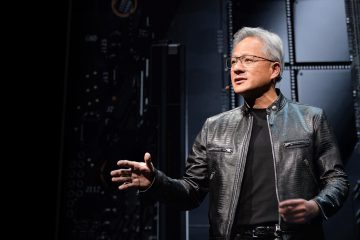
Nvidia Corp. is in pursuit of a successor to its prominent Chief Executive Officer Jensen Huang, a formidable task for the leading chipmaker globally. The company has engaged an external firm to identify potential candidates in light of reports concerning multiple extramarital affairs involving Huang. Finding a replacement will prove challenging; for over three decades, Huang has integrated profound technical expertise with operational acumen in a uniquely hands-on capacity, significantly influencing Nvidia’s strategic direction. In addition to creating the AI accelerators that currently lead the artificial intelligence sector, Huang has transformed the company into a pivotal player that manages an extensive network of customers, suppliers, partners, and investments.
Here is an overview of executives who are expected to attract the attention of headhunters: Chief Financial Officer Colette Kress is the most recognised executive at Nvidia, following Huang, particularly in the eyes of investors. Boards frequently rely on finance chiefs for immediate stabilisation; however, they are typically regarded as a temporary solution rather than a sustainable long-term option, particularly within technology firms. Vise President Ian Buck oversees Nvidia’s offerings for data centers, including its AI chips. He is a well-known figure among Nvidia customers and is also the creator of CUDA, the software framework that enhances the utility of its chips for AI applications. Nevertheless, he does not possess the operational experience that investors typically seek in the leadership of a substantial publicly traded firm. Arm Holdings Plc. Chief Executive Officer Rene Haas leads a prominent chip design firm that maintains a strong collaboration with Nvidia. A former Nvidia executive, Haas now oversees a complex network of customers and partners, possessing unique insights into the AI chipmaker and the wider technology landscape.
In 2020, Nvidia attempted to acquire Arm, a subsidiary of SoftBank Group Corp., but the deal ultimately failed due to antitrust concerns. Advanced Micro Devices Inc. Chief Executive Officer Lisa Su heads the primary rival to Nvidia regarding the technology provided and the clientele served. Under her leadership, AMD has overtaken chipmaking pioneer Intel Corp. in technological prowess, with its stock experiencing an impressive surge of nearly 170-fold. Nonetheless, AMD remains significantly smaller than Nvidia, and its AI chips have considerable progress to make before achieving a comparable level of adoption as those of Nvidia. Apple Inc. Chief Hardware Officer Johny Srouji has spearheaded one of the most effective in-house silicon initiatives in the sector, managing the bespoke chips that drive the iPhone, Mac, and various other Apple products. His track record provides substantial credibility in chip design, product integration, and long-term technology roadmaps.
However, a significant portion of his experience has been cultivated within Apple’s meticulously regulated environment, and he has yet to demonstrate the high-profile salesmanship for which Huang is renowned. Amazon.com Inc. Web Services chief Matt Garman is another executive who, akin to Huang, integrates technical and operational expertise. He oversees a large enterprise that leases computing power from an extensive network of data centers, incorporating Amazon’s proprietary chips. One criticism directed at him is that Amazon appeared to have initially fallen behind competitors such as Microsoft Corp. or Google in developing AI infrastructure. Micron Technology Inc. Chief Executive Officer Sanjay Mehrotra possesses a deep understanding of navigating the complexities of a semiconductor firm amid fluctuating market conditions. He has overseen an increase of over 2,700% in the company’s shares, driven by rising memory prices attributed to demand fuelled by AI.
However, his background is primarily anchored in memory and manufacturing, rather than in the architecture of graphics processing units and the associated software ecosystem. Google’s Amin Vahdat manages the company’s tensor processing unit program, positioning it as a competitor to Nvidia’s supremacy in AI chips. His technical credentials are formidable; however, akin to several engineering-heavy candidates on the list, he possesses less experience in managing a vast public company characterised by Nvidia’s scale, commercial complexity, and investor scrutiny. Three of Huang’s family members are employed at Nvidia – his children Spencer, Madison, and son-in-law Nico Caprez. As Vise President of Global AI Infrastructure Growth, Caprez occupies the most significant position among the three and is recognised for his substantial engagement in dialogues concerning neoclouds and various data center deployments. Huang has expressed that he does not want to pass on the responsibility of managing Nvidia to his children, emphasising that they “have to go earn it.”