Trump’s Economic Policies Fuel Voter Discontent
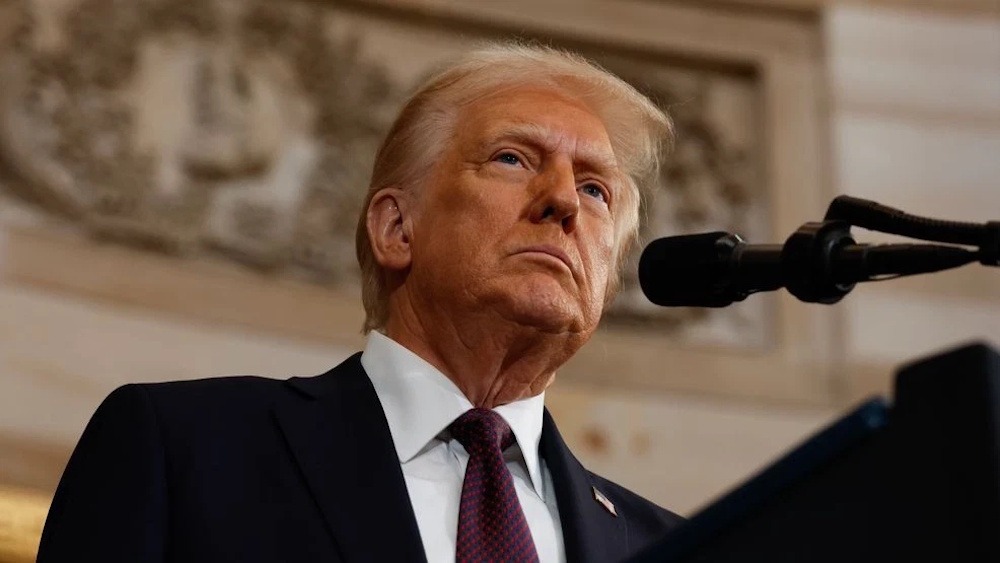
President Donald Trump and Republicans in Congress were elected in November 2024 to address economic challenges. Now it’s November 2026, and Americans express a heightened sense of discontent compared to two years prior. So, it’s the economy, indeed. However, in regard to James Carville, the situation is not as straightforward as it may seem. America’s economy is in surprisingly robust condition. Unemployment is low – sufficiently low for economists to deem the US economy as being at “full employment.” Overall consumer spending, the foundation of America’s economy, has shown considerable resilience. And the AI revolution has ignited an economic engine of such magnitude that it is anticipated to emerge as the most significant spending boom in contemporary US history. If the economy is exhibiting strength, what has led to a discontent among Americans toward Republicans merely two years following their electoral victory? Inflation has resurfaced, and voters have made a direct correlation between Trump’s key policies and their economic concerns. Tariffs.
Lax AI regulation. Strict immigration restrictions. Particularly the conflict involving Iran. “If it weren’t for the war in Iran, this would be a very different midterm election,” said Heather Long. Americans still haven’t adjusted to the significant jump in the price of … well, pretty much everything … since 2021. Inflation had returned to more manageable levels in the final year of Joe Biden’s presidency; however, this development failed to persuade voters to extend their support to Democrats in the upcoming 2024 elections. And that anger regarding the elevated cost of living has persisted throughout Trump’s return to office.
Nonetheless, Trump and the Republicans presented a relatively persuasive economic narrative during the initial months of this year.
- The US economy gained the most jobs in January since 2024.
- Manufacturing jobs began to improve after 14 months.
- Big tax returns from the Republican-passed One Big Beautiful Bill Act were hitting bank accounts.
- Mortgage rates fell below 6% for the first time in three years.
- AI stocks kept the stock market at record highs.
- January and February 2026 saw consumer inflation near its four-year low of April 2025.
Then America engaged in conflict with Iran, resulting in a significant shift in circumstances. Oil prices have reached their highest levels in four years. Diesel prices have reached an unprecedented level. Petrol prices have reached unprecedented levels on an Election Day. Americans may despise inflation, yet they become especially incensed regarding elevated fuel prices. Gas prices are prominently displayed on large billboards throughout the city, and the act of refuelling a vehicle serves as a regular reminder of the increased expenses consumers are facing. High gas and diesel prices have contributed an additional $1,150 in costs for the average US household since the onset of the conflict, as reported by researchers. As fuel prices increased, bond yields experienced a significant surge, leading to a corresponding rise in mortgage rates, which have recently escalated at their quickest rate in three years.
After three consecutive years of wage increases surpassing inflation, that pattern reversed in March. Rebounding inflation has been eroding workers’ take-home pay consistently, resulting in a decline in the average American’s real pay since Trump resumed office. It is not unexpected that Americans recall the economic conditions during Trump’s initial term with a sense of nostalgia. Throughout the entirety of Trump 1.0, the purchasing power of Americans’ hard-earned dollars consistently outpaced rising prices, with wage increases nearly doubling the rate of inflation during his initial four years in office. In October 2024, a poll indicated that Americans preferred Trump over Vise President Kamala Harris as the more effective steward of the economy, with a margin of 15 percentage points. No surprise there: Biden’s net approval on the economy stood at -31 points in the final poll conducted prior to his withdrawal from the race. Trump’s ratings are currently lower than those of Biden. By a significant margin: His net approval on the economy stands at -46 points, as indicated by an October poll.
Trump 2.0 presents a markedly distinct narrative compared to Trump 1.0. For a significant number of Americans, it appears that expenses are escalating uncontrollably, rendering the American Dream increasingly elusive. The Trump administration and congressional Republicans have attributed the poor state of financial affairs to the Democrats, suggesting that these conditions were inherited from their predecessors. However, certain policies implemented by Trump, particularly his contentious military engagements, evidently exacerbated the cost of living for Americans. It is not solely the increase in petrol prices that has contributed approximately $75 monthly to individuals’ expenditures. Voters link various expenses to Trump and the Republicans, with certain costs inflating their monthly bills by hundreds of dollars.
For example:
- Republicans’ reluctance to extend Affordable Care Act subsidies in 2025 raised Obamacare premiums 58% this year.
- Trump’s second term raised electricity prices 8.7%. Trump has supported AI expansion unchecked.
- Trump’s immigration policies and tariffs have escalated auto repair costs 12.3% since taking office.
- They raised homebuilders’ costs 13.3%.
- The Tax Foundation estimates that Trump’s tariffs cost the average American household $820 this year.
“Let’s say, for the sake of argument Biden totally screwed up: That in no way exonerates Trump,” said Steven Durlauf. “Inflation has been badly managed by Trump. Voters have to place responsibility with the administration’s policies.” All the evidence indicates that the voters are indeed doing just that. That is a significant factor contributing to the Republican party’s poor performance in the recent midterm election on Tuesday. Inflation constitutes merely a segment of the broader narrative. Many Americans perceive that the economy has excluded them from its benefits. The K-shaped economy illustrates this disparity: Wealthier Americans, with investments in the stock market and home ownership, are considerably more insulated from rising costs compared to their less-affluent counterparts, who are increasingly reliant on living pay cheque to pay cheque. A significant aspect of the issue lies in the scarcity of viable pathways to attain the American Dream.
A considerable undersupply of childcare services and housing has rendered many individuals unable to afford these necessities, thereby restricting access even for those who possess the means. “The middle-class ideal is becoming increasingly unobtainable,” said Durlauf. The same is becoming evident in the labour market. While remaining comparatively robust, the job market is not experiencing the same level of growth as it did in the immediate aftermath of the pandemic. Mass layoffs have not yet established themselves as a standard occurrence; however, for individuals currently unemployed, the process of submitting applications often seems to vanish into oblivion. “Another way to say low-hire, low-fire job market is lack-of-opportunity job market,” Long said. In the current economic climate, a significant number of Americans find themselves in a state of stagnation.