World Bank-IMF meetings fail to deliver for developing nations
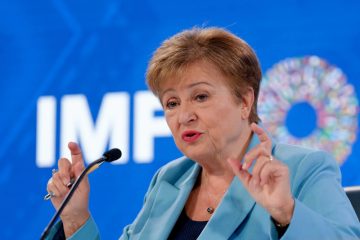
Last week’s gatherings of the International Monetary Fund and World Bank provided no fresh insights for the developing world regarding the challenges posed by an escalating conflict in West Asia, the ongoing war in Ukraine, increasing debt obligations, and the looming threat of an AI bubble. Once again, lower-income countries find themselves adversely affected by the repercussions of wealthier nations’ policies: escalating debt service costs, increasing inflation, and the looming threat of further economic disparity exacerbated by the AI boom. What they received was the conventional guidance from global lenders: to reduce fiscal deficits and expedite economic reforms to draw in greater private sector investment. Kristalina Georgieva, the inaugural IMF chief hailing from a developing nation – Bulgaria – asserted that advanced economies were, in reality, the most significant culprits regarding budget imbalances. She observed that the debt levels of developing countries had indeed decreased in recent years, yet the increase in bond yields elsewhere has led to a rise in their borrowing costs.
Average debt service payments have more than doubled over the past decade to 14 percent of government revenue, thereby crowding out essential sectors such as education and healthcare, she stated. At a panel on Saturday, Georgieva noted that numerous issues persist, particularly concerning AI: “We are in a place where we have many more questions than we have answers. And my alert to everybody is: Do not fall for the guys that pretend they have the answers. They are tricking you.” Josh Lipsky said the meetings had missed their opportunity to come up with guidance or ways to help. “It’s hard to talk about the developing world when the advanced economies don’t have their act together and are at risk of a fiscal crisis,” he said. “And that’s on top of political situations in many of these countries that makes development aid not a priority at the moment.” Mauricio Cardenas expressed that numerous policymakers are burdened by a profound apprehension that “something really bad could happen,” yet they lack a concrete strategy to steer through the uncertainties ahead. “The IMF and World Bank are not particularly well prepared for this new phase. They understand that something is going on, they bring in experts on AI,” he said. “But in the end, there’s no kind of specific, concrete advice on how to be prepared for something where you don’t really understand how it’s going to unfold.”
The geopolitical tensions that have affected both institutions since Russia’s invasion of Ukraine in 2022 – complicating coordinated efforts – were also apparent in Bangkok when nearly half the delegates at an IMF steering committee exited during the address by Russia’s finance minister. The Houthi attacks on Riyadh airport resulted in a delay for the head of that committee, Saudi Finance Minister Mohammed Al-Jadaan, who was compelled to undertake an overland journey to Qatar in order to board a flight. Bangkok served as a poignant illustration of the difficulties confronting developing nations, still partially inundated following the September floods that inflicted nearly $200 million in damage to Thailand’s industrial sector. Kate Pickett, a professor at the University of York, urged policymakers to prioritise inclusive growth over imposing stringent structural reforms on developing countries. “If inequality increases, if poverty deepens, that will increase their costs in the long term,” she said. “It’s not enough to describe an economy as resilient. It’s only resilient for the rich and the privileged.” Ayhan Kose, deputy chief economist at the World Bank, stated that the global economy has navigated its most significant energy shock – stemming from the US-Israeli conflict with Iran – more effectively than anticipated.
However, although a global recession has been averted, he noted that growth projections for both developing and advanced economies have deteriorated compared to previous assessments. Growth had already diminished in half of advanced economies, while in developing countries collectively, it had decelerated notably to approximately 3.6 percent from 4.4 percent. “People are really worried because resilience today is not a guarantee for resilience tomorrow,” he said. “Now they are worried about what will be the next shock, because every six months, if not every three months, there is a new shock.” While no specific initiatives were announced, he said the World Bank remained focused on helping developing countries prepare for advancements in AI, in part by mobilising more private capital, now at triple the levels of 2022. Yet it, too, must grapple with significant declines in official development assistance and ongoing difficulties in securing foreign investment in developing nations. “The reality on the ground is the reality on the ground,” he said.