Republicans Rethink Trump Tariffs After Midterm Election Losses
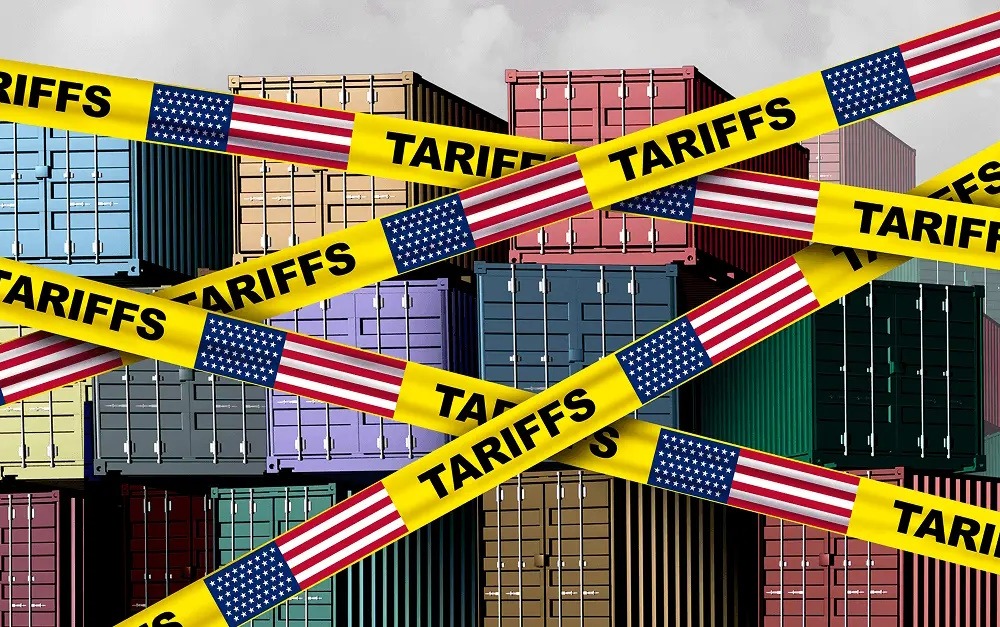
In the two years following President Donald Trump’s introduction of a series of aggressive tariffs on the United States’ global trading partners, the potential for a stock market backlash has emerged as the most significant constraint on his agenda. The midterms may have just altered that dynamic. Despite a consistent series of polls indicating Americans’ disapproval of Trump’s tariffs, Republican lawmakers predominantly refrained from openly contesting the president’s trade policies, perceiving the potential political repercussions of opposing him as excessively significant. However, the election results from last week indicate that there could be a significant political cost associated with that loyalty. Democrats achieved notable successes in the elections, converting seats in traditionally Republican states where constituents have felt the impact of Trump’s tariffs. This includes agriculture-centric regions like Iowa and Kansas, as well as northern border states such as Maine and Michigan. “Many Republicans were kind of whistling by the political graveyard by ignoring the tariff issue, but now it’s come front and center,” Brian Darling said. “Republicans are going to have to take a hard look in the mirror and take a second look at their position on tariffs.”
Historically, opposition to tariffs has been a fundamental aspect of Republican economic policy, whereas Democrats have frequently supported tariffs as a means to safeguard domestic industries and workers, especially those in unions. Trump’s extensive application of tariffs, a fundamental aspect of his broader strategy, represented a notably uneasy shift for certain Republicans, especially those facing re-election who were apprehensive about losing in primaries should they oppose Trump. While one of Trump’s stated goals in imposing higher tariffs was to boost US-based employment, many employers have been hesitant to expand their workforce, considering the unpredictable trade landscape with Trump frequently changing policies. The effect on prices, in contrast, has been more immediate. Tariffs have resulted in increased costs for both imported goods and domestically produced products in the United States. According to a September study conducted by economists at the New York Federal Reserve, approximately 26% of tariff increases are ultimately transferred to consumers.
Nationally, two-thirds of voters indicated that Trump’s tariffs negatively impacted the national economy, based on the nationwide findings. Almost the same proportion indicated that they negatively impacted the local economy as well. “Any member who is up for re-election in 2028 has got to be looking at what happened here in 2026 and wondering if they need to be more active opposing the tariffs so that this doesn’t become an attack line against them in 2028,” said Brian Pomper. Whether any newfound opposition can translate into meaningful change, however, remains an open question. Even if Republicans are prepared to confront Trump’s displeasure, they encounter another significant hurdle: his veto authority. Congress has the ability to repeal the tariffs or limit the president’s authority regarding tariffs with a simple majority in both chambers. However, should the president choose to veto the measure, it would require two-thirds majorities in both the House and Senate for lawmakers to successfully override the veto. As of Thursday afternoon, with one Senate race and 12 House races yet to be determined, Democrats and their independent allies maintain control of 55 out of the 100 Senate seats and 255 out of the 435 House seats. Even if they voted unanimously, they would still require a minimum of 12 Republicans in the Senate and 35 in the House to successfully override a presidential veto.
Absent sufficient Republican backing, Trump may exercise his veto power over any legislation aimed at curtailing his tariff authority, a possibility he has explicitly indicated he is willing to accept. “I’ll become Mr. Veto,” Trump said in an Election Day interview on the New York Post’s Pod Force One before results came in. Nevertheless, despite lacking sufficient votes to override a veto, the increasing Republican backing for the reduction of specific tariffs may provide Trump with a motivation to withdraw his stance to circumvent a confrontation with his party, Darling noted. The White House has indicated that it has no intention of halting Trump’s tariff agenda. “Putting a stop to American workers, farmers, and businesses being ripped off by lopsided trade agreements has been a key foundation of President Trump’s Make America Great Again movement since he first came down the escalator. President Trump will never waver from putting Americans and America First,” White House spokesman Matthew Middleton told in a statement.
Still, Trump has shown some willingness to rein in certain tariffs. After markets plunged following his April 2 “Liberation Day” tariff announcement, he delayed many of the sweeping duties just a week later. He also demonstrated signs of restraint in anticipation of the midterms: With less than two weeks remaining until Election Day, he granted exemptions for certain products, such as plywood and packaging materials, from the 50% duties on Canadian goods that he had instituted during the summer. That followed exemptions for road salt and cement. In both instances, the now-defeated Republican Senator Susan Collins claimed responsibility for obtaining the relief. During the summer, Trump issued a threat to increase tariffs on Canadian automobiles to 50%, effective January 1. A White House official informed that the administration is currently engaged in negotiations with Canada to finalise new trade terms, which may involve a revision of the auto duties. Democrats have indicated that reversing Trump’s tariffs will be a primary focus when the new Congress assembles at the beginning of 2027, with Canadian tariffs identified as an initial target.
House Minority Leader Rep. Hakeem Jeffries, anticipated to ascend to the role of Speaker of the House, stated promptly following the elections that prioritising the repeal of Trump’s tariffs should be a central focus for the party in its initial 100 days. However, Democrats may not be fully cohesive in that initiative, especially regarding tariffs that receive backing from organised labour. There are still going to be some Democrats that are still kind of old-school labour union Dems that don’t go along with this’, said Scott Lincicome, vice president of general economics and trade at the Cato Institute. Steel and aluminium tariffs, which Trump raised to 50%, could present significant challenges for rollback due to the robust support they enjoy from unions, he added. The Canadian tariffs may provide the most evident foundation for fostering bipartisan backing. Trump imposed them under a law from the Great Depression era that permits a president to establish tariffs as high as 50% when another nation discriminates against American products. No other president has applied it that way; however, it is presently encountering legal challenges.
Democratic Senator Ron Wyden, anticipated to assume the chairmanship of the Senate Finance Committee in January, is spearheading efforts in the Senate and has prioritised the issue of Canadian tariffs. “Voters gave Democrats a mandate to rein in Trump’s tariffs that are raising prices all across our country, and to stop the president from abusing our trade laws in the future,” Wyden told in a statement. “It is my hope that Republicans will acknowledge the election results and join Democrats to roll back Trump’s tariffs and lower prices for American families. If not, it will be crystal clear whose side Republicans are on,” he said. Some Republicans have started to recognise that the party’s stance on tariffs might have incurred a political price. Texas Republican Sen. Ted Cruz, whose state experienced significant Democratic advancements in the recent elections, attributed voters’ dissatisfaction with the cost of living as a crucial element influencing the outcomes. “Tariffs have made everything too expensive,” Cruz wrote in a post on X last week. “Understandably, people were pissed off, and elected Republicans didn’t do enough to address their very real pain,” he later added.
However, Cruz has consistently supported Trump’s tariff agenda in Congress. He opposed all five Senate resolutions in 2025 aimed at repealing the president’s tariffs, which included provisions addressing duties on Canada, Brazil, and numerous other nations. Republican Representative Don Bacon, who is set to retire, has demonstrated a greater propensity to diverge from the president’s positions. He was one of six Republicans who aligned with Democrats in February to vote for the repeal of Trump’s tariffs on Canada, marking a notable criticism of the president’s trade policy. At that moment, House Speaker Mike Johnson remarked that Trump was “not upset” with Republicans who opposed the tariffs. “He understands what’s going on. It’s not going to affect or change his policy. He can veto these things if they come to it,” Johnson told. Trump, however, subsequently took to Truth Social to issue a cautionary note to Republicans contemplating similar defections. Bacon informed that he was uncertain if the Republicans’ willingness to resist Trump’s trade agenda had increased since the midterm elections. “It should,” he said. “Trump’s tariffs killed the GOP this election.”