Democrat victories in Texas cost Tesla and SpaceX $130 billion
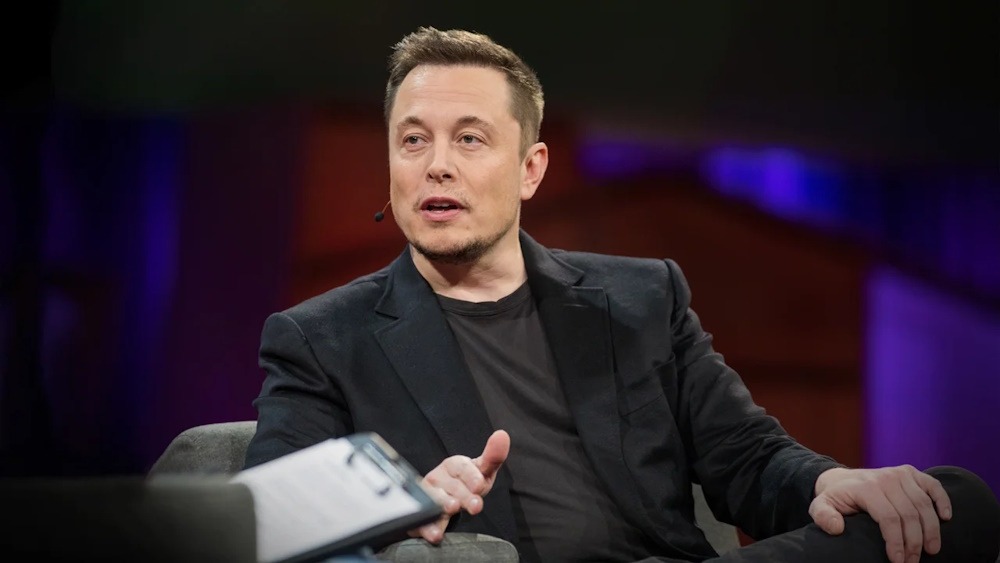
Elon Musk’s Texas-based empire is facing increased investor scrutiny following the unexpected victories of Democrats in his adopted state, which contributed to their control of Congress. Shares of Tesla Inc. and Space Exploration Technologies Corp. experienced declines of 3.3% and 3.8%, respectively, following the success of Democratic candidates in the state’s gubernatorial and Senate races, resulting in a loss of nearly $130 billion in combined market value on Wednesday. The party’s decisive nationwide victory introduces an additional layer of risk, given Musk’s status as a notable Republican donor. Ahead of election day, market observers cautioned that a Democratic majority at the polls could enhance the party’s capacity to obstruct artificial intelligence advancement, examine Musk’s behaviour, and obstruct a projected merger between Tesla and SpaceX. Securing control in Texas provides Musk’s political adversaries with a more straightforward avenue to impede his operations, circumventing the possibility of a veto from the White House. “Texas turning blue creates a new political challenge for Musk, especially given how heavily he has invested in making the state the center of his business empire,” said Ivan Feinseth.
The broader market, along with the majority of Tesla’s technological counterparts in the Magnificent Seven, experienced gains on Wednesday, notwithstanding the blue wave. This movement reflects investor sentiment that a Democrat-controlled Congress may curtail the extensive spending on AI, which is currently consuming free cash flow. Both Tesla and SpaceX maintain their headquarters in Texas, where Governor-elect Gina Hinojosa campaigned, in part, against the unregulated growth of data centers. The outcome of the Texas Senate race was perceived as a reflection of voter sentiment toward the Republican donor, as indicated in exit polls. Few CEOs exhibit as strong a connection to President Donald Trump and his political party as Musk, the world’s wealthiest individual as of Tuesday. He has contributed nearly $450 million to Republican party funds, with $205 million directed specifically toward Texas races, while also encouraging his 240 million X followers to oppose Democratic candidates. “Guess my election-interfering space lasers didn’t work this time,” Musk joked on X, adding that “data centers in space looking pretty appealing right now.”
While relocating into the atmosphere may be years away, moving his companies to another state is a feasible option. Musk relocated to Texas in 2020, subsequently bringing Tesla with him the next year, driven by pandemic-related conflicts with California health authorities, issues surrounding affordable housing and commuting in the Bay Area, as well as SpaceX’s established operations near Brownsville. “I’m not convinced that it will be easy from a legal perspective to simply halt his businesses,” said Andrew Rocco. However, “if the Democrats are successful in stopping Musk’s ambitions, he will need to pivot to a new state.” Musk and his enterprises occupy a pivotal position amidst a range of contentious issues: Tesla and SpaceX are advancing in the AI competition, their prospective mega-merger prompts regulatory scrutiny, and the availability of a military variant of the Starlink satellite service has emerged as a source of friction among the US, Ukraine, and Russia. Tesla shares experienced a significant increase of 34% from their late-July low to Tuesday’s close, driven by investor optimism regarding AI initiatives and the prospective merger with SpaceX.
The rocket, satellite, and AI firm, which ascended into the ranks of the world’s most valuable companies upon its public debut earlier this year, generates billions of dollars through contracts with the US government. The stock has largely remained stable since its June debut, maintaining a market valuation of $1.9 trillion. David Meier indicated that the risk for Musk and his company lies in potential near-term retributions. Already, Musk has assessed the significance of the US political landscape: a strategy to unveil a Tesla-SpaceX agreement by the first half of next year, while Trump remains in office, was already in motion. The election result may accelerate that timeline. “Speeding it up is the logical response,” said Adam Sarhan, chief executive officer of 50 Park Investments. “A Democratic Congress seated in January raises scrutiny risk on a deal of this size.” Shares of Musk’s companies have demonstrated a notable responsiveness to electoral outcomes historically. Following Trump’s re-election in 2024, Tesla’s stock experienced a remarkable increase of over 90% within just a little more than a month.
The gains unwound as Musk’s relationship with Trump deteriorated and investors became fatigued with Musk’s diversion at the Department of Government Efficiency. On Wednesday, shares of smaller, pure-play EV makers Rivian Automotive Inc. and Lucid Group Inc. surged on the anticipation that a Democrat-led Congress would support environmentally friendly legislation, while Tesla experienced a decline. Even in the absence of political challenges, significant uncertainty persists regarding Musk’s companies. The Tesla-SpaceX merger is currently in an exploratory phase, with both companies incurring substantial expenditures on product development. Furthermore, initiatives related to robotaxis, robotics, and Martian colonies are still several years from realising significant revenue potential. “It’s not hard to think that people like Musk are going to have a rough time over the next two years,” said Matt Maley.