What Moves Crude Oil Prices? A Guide for Crypto Traders

An oil inventory draw can coincide with falling prices. A production cut can produce little reaction. For crypto traders entering crude oil futures trading, these responses make more sense once the headline is compared with what the market expected.
Oil prices reflect the balance between available supply and demand, plus expectations about how that balance will change. Barrels must be produced, transported, stored and refined. Understanding those physical constraints helps explain why some headlines move the market sharply while others fade.
For traders following crude oil markets on BYDFi, these supply and demand factors provide useful context before evaluating a perpetual futures position.
Supply changes depend on the barrels that reach the market
OPEC production decisions attract attention because they can alter expected supply. An announced cut, however, does not automatically remove the same volume from the market. Actual output, compliance with production targets and changes elsewhere all affect the result.
Spare capacity matters as well. If other producers can replace disrupted supplies quickly, a shutdown may have a smaller effect than it would in an already tight market. The likely duration of the disruption and available inventories also shape the response.
The U.S. Energy Information Administration explains that oil supply and demand respond relatively slowly to price changes in the short term. Producers cannot bring major new projects online overnight, and consumers cannot immediately replace vehicles or change fuel use. Prices may therefore need to move substantially to balance a sudden shortage or surplus.
When assessing a geopolitical or weather headline, identify the affected production, transport route or refinery. A credible threat to oil flows can influence prices before a disruption occurs, but the size and persistence of the move depend on how that threat develops.
Demand connects oil to the wider economy
Economic activity influences demand for gasoline, diesel, jet fuel and other petroleum products. Stronger transport and industrial activity can support consumption; weaker activity can reduce expected demand.
For traders who already follow macroeconomic releases for Bitcoin, the extra step is to connect the release to fuel use. A weaker growth outlook may reduce expected oil consumption even when current production has barely changed.
The U.S. dollar adds another influence because oil is predominantly priced in dollars internationally. A stronger dollar can make oil more expensive for buyers using other currencies, potentially weighing on demand. That relationship is conditional. A major supply disruption can outweigh currency effects, and oil and Bitcoin do not have a fixed trading relationship.
Inventory reports need an expectations check
Inventories provide a buffer between production and consumption. A build can indicate that supply exceeded demand over the reporting period, while a draw means stored barrels helped meet demand. The EIA’s inventory explanation also describes how seasonal patterns and expectations influence storage decisions.
The headline crude figure needs context. Refinery maintenance can reduce crude processing and contribute to a crude build. Gasoline and distillate inventories help show what is happening further along the supply chain. Comparing stocks with typical levels for the same season is more informative than judging a weekly change in isolation.
Consider a hypothetical report. Traders expect crude inventories to fall by three million barrels, but the reported decline is one million. Stocks still fell, yet the draw was two million barrels smaller than expected. That can weaken the bullish interpretation of the headline. It does not guarantee that prices will fall, because product inventories, refinery activity and other news may change the assessment.
For trading oil futures around a release, compare the actual result with expectations, then examine the supporting figures before treating the initial price move as confirmation.
Futures prices reflect timing as well as direction
Crude oil prices quoted for immediate delivery and crude oil futures prices for different delivery months can diverge. The delivery date matters because the market may expect today’s shortage or surplus to ease or worsen.
When later-dated prices exceed nearby prices, the structure is called contango. It can encourage storage if the price difference covers storage and financing costs. When nearby prices exceed later-dated prices, the structure is called backwardation, which can reflect stronger demand for immediately available barrels.
Neither structure provides a guaranteed directional signal. For a trader holding dated futures, the price difference between contracts also matters when moving a position into a later expiry. Financial positioning and hedging activity can influence price movements alongside these physical-market factors.
Know which oil contract you are trading
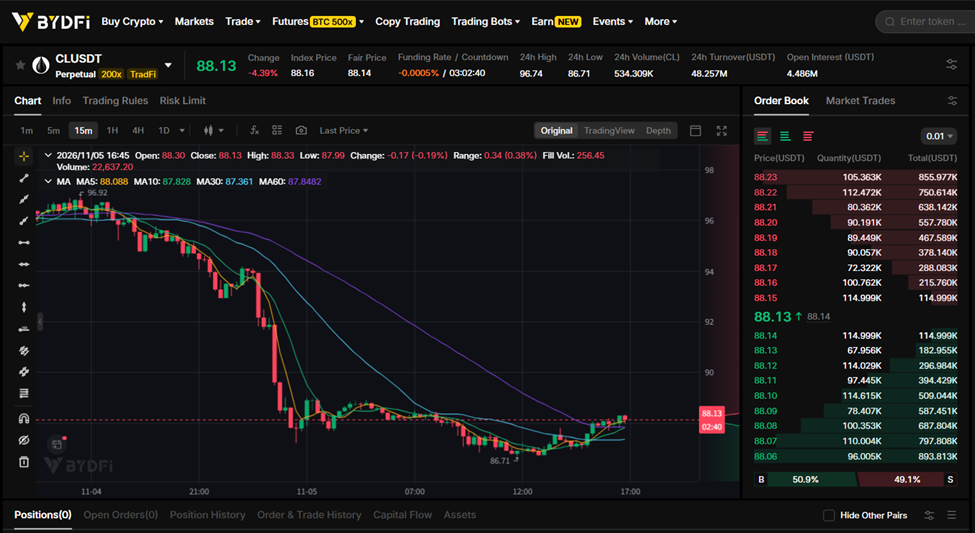
Conventional oil futures have specified expiry and settlement terms. A perpetual contract has no scheduled expiry and uses a different structure, including funding arrangements that can affect holding costs.
For crypto traders considering a multi asset trading platform, BYDFi crude oil futures provides one product to examine where available. BYDFi’s product information describes CLUSDT as a USDT-margined perpetual linked to WTI crude oil prices. It should be assessed using its own pricing, margin and funding rules rather than treated as interchangeable with a particular delivery-month WTI contract.
Before placing an order, check the contract specifications, fees, liquidation rules and the distinction between its last, index and fair prices. Those details determine how an oil-market view translates into a position and its risks.
Match trading hours to your risk plan
Crude oil futures trading hours depend on the venue and contract. Check the current schedule, its time zone, maintenance breaks and holiday changes. A familiar crypto interface does not establish when an oil instrument accepts trades.
For day trading crude oil futures, mark inventory releases and relevant macroeconomic announcements on the same schedule. If a release falls near a break or outside your intended holding window, account for that before entering.
Write down the market assumption behind the trade, the evidence that would invalidate it and the maximum loss you can accept. Size the position around the planned exit and contract exposure, allowing for fees and possible slippage. Stop orders may execute at a worse price during fast moves or gaps.
After a major release, check whether the new information actually changes the supply-demand assessment. A price spike alone does not establish that the original trade idea still holds. When reviewing an oil position on BYDFi, revisit the contract’s funding, margin and exit settings alongside the market news.