Nike Dropped From S&P 100 as Growth Model Falters
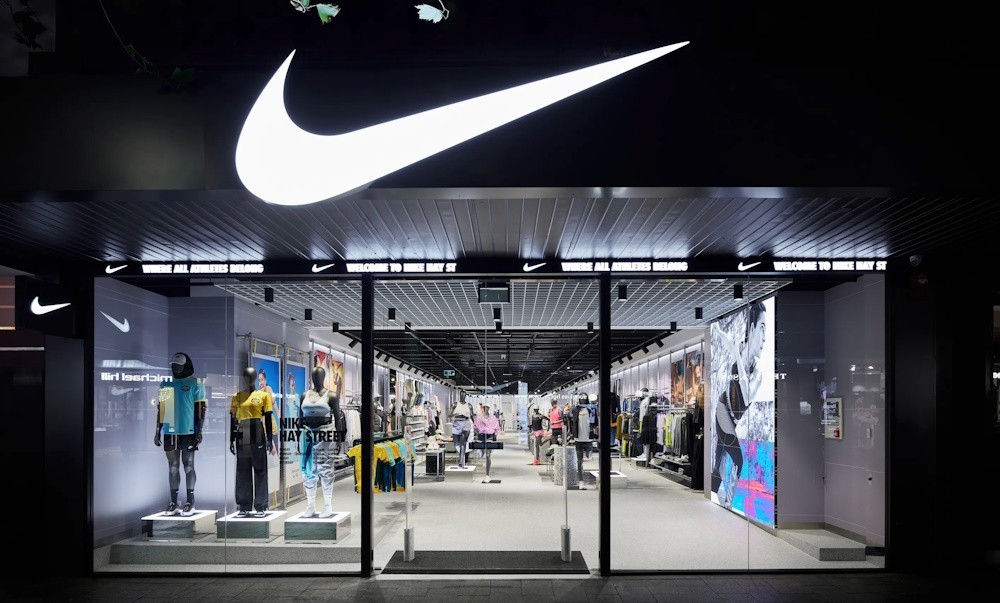
Nike will not be a part of the S&P 100 from September 21. A sharp decline in its market value has resulted in the sportswear giant’s exclusion from an index that monitors the 100 largest companies in the S&P 500. After 18 years, S&P Dow Jones Indices will remove Nike from its indices before the US market opens on September 21 as part of its quarterly rebalancing, S&P Global announced on Friday. Nike will continue to be part of the broader S&P 500. Nike’s shares closed at 38.40 on Friday (September 4), valuing the company at approximately 57 billion, a substantial decline from around 280 billion at its peak in 2021. For years, Nike has constructed its growth strategy by focusing on direct sales to consumers, especially through its own retail outlets (Nike Direct) and digital platforms (Nike Digital), while simultaneously decreasing reliance on conventional retailers. That strategy was designed to enhance the company’s control over customer relationships and stimulate growth. In contrast, direct and digital sales have experienced a decline, whereas wholesale activities have started to show signs of recovery. What has transpired with Nike’s previously effective growth model?
In 2020, the company characterised its Consumer Direct Acceleration strategy as a digitally enabled phase of its growth plan, positioning Nike Digital and its own stores at the core of the marketplace, in conjunction with selected strategic partners. According to the company, direct selling provides a brand with enhanced control over pricing, customer data, presentation, and the overall consumer experience. It can also diminish reliance on retailers. The issue was that the direct model failed to sustain the growth that Nike had anticipated. Nike’s revenue decreased to $46.3 billion in FY2025 from $51.4 billion in the financial year 2023-24, reflecting a 10 percent decline. Nike Direct revenue decreased by 13 percent to $18.8 billion, whereas Nike Brand Digital experienced a decline of 20 percent. Wholesale revenue experienced a decline as well, albeit a more modest 7 percent. Gross margin decreased by 190 basis points to 42.7 percent, as Nike attributed this decline to increased discounts, shifts in channel mix, and reserves for inventory obsolescence. The deterioration persisted into FY2026, albeit with a more nuanced landscape emerging. Revenue remained largely unchanged at $46.39 billion. Wholesale revenue experienced a 6 percent increase, reaching $27.5 billion, whereas Nike Direct saw a decline of 6 percent, totalling $17.7 billion. Within Direct, Nike Brand Digital experienced a decline of 12 percent.
The financial disclosures indicate that the company, which previously sought to distance itself from traditional retailers, is now re-establishing its wholesale distribution network. Nike’s challenges have emerged alongside the increasing fragmentation of the sportswear market. Specialist brands have established robust positions within specific categories, notably in running, an area where Nike previously held a commanding presence. On, the Swiss sportswear company, reported net sales of CHF 3.01 billion in 2025, reflecting a 30 percent increase from the previous year. Sales are anticipated to increase by a minimum of 23 percent in constant-currency terms by 2026. Its growth has been constructed upon a premium positioning, emphasising running-led product innovation and a combination of direct and wholesale sales. Hoka, a subsidiary of Deckers Brands, has maintained its trajectory of expansion. Revenue increased by 15.9 percent to $2.59 billion in FY2026, driven by an 18.2 percent rise in wholesale sales and a 12 percent growth in direct-to-consumer sales. New Balance, the privately held US sportswear company, reported global sales of $9.2 billion in 2025, reflecting a 19 percent increase from the previous year, thereby achieving its fifth consecutive year of double-digit growth. The company’s products have achieved significant traction in both performance and lifestyle segments, as it persists in investing in running, wholesale partnerships, and its direct-to-consumer operations. New Balance’s growth is noteworthy as it indicates that Nike faces competition not only from emerging brands like On and Hoka but also from established rivals that have successfully enhanced their appeal to consumers.
In China, Nike encounters progressively robust competition from domestic brands. ANTA Sports, one of China’s largest sportswear companies, reported revenue of Renminbi 80.2 billion in 2025, reflecting a 13.3 percent increase from the previous year. The company reported that its market share in China attained a historic high during the year. While this does not imply that On, Hoka, New Balance, or ANTA Sports are responsible for Nike’s decline, their growth underscores the competitive environment in which Nike is currently situated. Smaller, more focused brands have successfully captured consumer interest by providing specialised product offerings. Nike’s response has been to reintegrate sport and product innovation as the focal point of its strategic approach. According to the company’s filings with the US Securities and Exchange Commission, it is expediting the introduction of new products while reducing the supply of certain existing footwear to recalibrate its portfolio and accommodate newer offerings. Greater China has emerged as a significant hurdle for Nike in its pursuit of a more comprehensive recovery. The company delineates its operations into four geographic segments: North America, Europe, the Middle East and Africa, Greater China, and Asia Pacific and Latin America.
Greater China includes mainland China, Hong Kong, Macau, and Taiwan. Nike’s Greater China revenue decreased from $7.55 billion in FY2025 to $6.59 billion in FY2026, reflecting a 13 percent decline on a currency-neutral basis. Footwear revenue experienced a decline of 15 percent, while Direct revenue saw a reduction of 12 percent, and digital sales fell by 29 percent. Nike attributed the pressure to diminished store traffic, increased discounting, and elevated inventory levels throughout the market, impacting both sales and profitability. Nike is navigating a more competitive landscape in the Chinese sportswear market, where ANTA Sports is experiencing significant growth in its domestic arena. The company’s latest annual report indicates a strategic shift in which Nike Brand Digital is being repositioned as a full-price platform, accompanied by a reinvestment in wholesale distribution. It is additionally allocating resources toward enhancing the presentation of its brands in physical retail environments and amplifying marketing efforts surrounding products and significant sporting events. The data indicates that this transition is already apparent. In FY2026, Nike Brand wholesale revenue increased to $27.5 billion, up from $25.9 billion, whereas Direct revenue decreased to $17.7 billion, down from $18.8 billion. In North America, wholesale revenue experienced a 14 percent increase, whereas Direct saw a decline of 6 percent. The company is currently attempting to integrate its direct consumer engagement with broader physical distribution, enhanced product innovation, and a heightened focus on sports.