Goldman looks for $500 billion AI infrastructure investors for Nvidia
Goldman Sachs is engaging with prospective investors regarding their involvement in Nvidia’s $500 billion AI financing initiative, having utilised its established relationship with the chipmaker to obtain a significant position in the arrangement, according to sources. US insurers, money managers, and banks are anticipated to constitute the primary investor base for the financing, according to one source, while asset managers intend to maintain a significant portion of the financing, as noted by a second source. Nvidia announced on August 10 that it has formed a partnership with six major financial institutions, including Goldman, to develop compute platforms designed to generate over $500 billion in third-party capital for AI infrastructure. The move underscores the increasing demand for AI computing capacity, attracting institutional investors as governments, companies, and startups compete to expand data centers to accommodate AI workloads. Goldman can offer junior capital and private credit financing via its asset management division, while its investment banking sector can assist in placing the debt into private credit funds and, ultimately, public debt markets, according to the second source.
The initial source indicated that the firm engaged in discussions with a diverse array of investors regarding such structures, encompassing banks, asset managers, insurers, and private credit firms. The Wall Street bank’s central role as the sole lender on the deal, alongside alternative asset management giants such as Blackstone and Apollo, signifies the culmination of years of ties with Nvidia. Goldman Sachs has provided advisory services to Nvidia on multiple transactions and various technology financing deals where the chipmaker participated as an investor, as reported by Dealogic. The bank was also among the lead underwriters on the chipmaker’s $25 billion bond sale in June and served as an exclusive financial adviser on Nvidia’s $6.9 billion acquisition of Mellanox Technologies in 2019. The bank’s technology teams maintain close ties with Nvidia, with the relationship extending to the highest levels of both companies, according to a second source and a third source familiar with the matter.
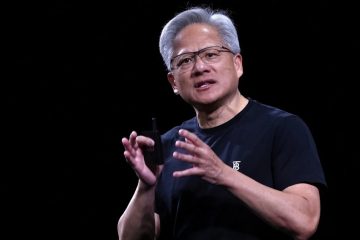
Less than two years prior, Goldman Sachs CEO David Solomon engaged in an interview with Nvidia CEO Jensen Huang during a technology conference organised by the Wall Street firm. “Jensen came, approached us with the idea, and we said we’d love to talk to you about it,” Solomon told in a joint interview with Huang and executives of other partner firms after the Nvidia financing plan was unveiled on Monday. Nvidia, which went public in 1999 in an initial public offering led by Morgan Stanley, is now valued at approximately $5.2 trillion, positioning it as the most valuable publicly listed company in the United States. Analysts have recently observed that the financing requirements for artificial intelligence are substantial, with the leading four hyperscalers intending to allocate over $5 trillion by 2030 toward technology and data centers. That scale of investment is likely to render private capital an increasingly significant source of funding. The demand has prompted firms to investigate alternative methods of financing transactions.
The structure of Nvidia’s financing diverges from previous AI infrastructure agreements that relied significantly on vendor assurances, exemplified by Broadcom’s residual-value guarantee on approximately $30 billion of senior debt supporting Anthropic’s AI chip financing. Nvidia CEO Huang stated on X that the company has the capacity to backstop up to $125 billion, which represents 25% of the potential deals. The objective is to establish a market for AI compute that is backed by assets, enabling debt to function similarly to conventional securities. This could potentially reduce funding costs and attract a wider range of investors, according to a second source. “This appears to be a pivot away from vendor-financing,” said Bank of America analyst Vivek Arya in a note. “The burden sits with the consortium, not (Nvidia’s) balance sheet.”