US Raises Transshipment Concerns Over India-China Trade
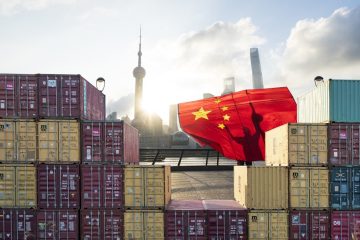
India has been categorised in Tier 1 of a recent White House classification concerning nations that may be utilised to redirect Chinese goods and circumvent US tariffs. This development could lead to heightened examination of shipments originating from India as New Delhi and Washington advance toward a trade agreement. The 25-page report, titled “The Great Transshipment Scam”, identifies more than 40 countries as part of what the US calls a “shadow transhipment network”. India is classified as a Tier 1 “Diversified Scale Leader”, alongside Canada, the European Union, Israel, Japan, Mexico, South Korea and Taiwan. The classification does not assert that the Indian government or all local exporters are intentionally engaging in tariff evasion, nor does it introduce a new tariff against the country. The report indicates that Tier 1 economies possess extensive and varied manufacturing and trading infrastructures, wherein the risks associated with transshipment may be challenging to distinguish from legitimate trade activities. The US alleges that Chinese exporters have increasingly utilised third countries for limited processing, assembly, repackaging, relabelling, reinvoicing, or alterations in shipping routes to create the appearance that goods originate outside of China. The practice gained prominence following the imposition of Section 301 tariffs on Chinese goods by the US in 2018, as indicated in the report.
Washington contends that directing goods thru intermediary nations may enable Chinese manufacturers to maintain their access to the US market while circumventing elevated duties specific to China. Transshipment in itself does not constitute an illegal activity. Routing Chinese goods thru another country does not constitute tariff evasion on its own. The issue arises when goods fail to undergo sufficient processing to be classified as originating from the third country, yet are nonetheless declared as such. India, Mexico, and Vietnam were identified as the leading hubs for goods originating from China among the countries examined in 2025. The report estimates that approximately $67 billion worth of goods were transshipped thru these three countries. The report identifies the Pune-Gujarat-Chennai production belt, encompassing pumps and compressors under HS 8413-8414, as a significant corridor of potential transshipment exposure. The report does not attribute tariff evasion to the Indian government or any specific Indian company. The report characterises certain facilities as “screwdriver factories,” where imported components are subjected to minimal assembly primarily to facilitate a different country-of-origin claim. The White House report estimates the annual value of potentially illegal transshipment at between $40 billion and $303 billion, depending on the methodology used.
Its central estimate places the annual illegal transshipment figure at $75 billion. Depending on the assumed tariff differential, the report estimates associated tariff revenue losses at $19 billion to $34 billion. It separately estimates a range of $19 billion to $26 billion in foregone federal revenue resulting from the broader economic impact. The report recognises that a decline in direct Chinese exports to the US, coupled with increasing exports from other nations, does not, in isolation, constitute evidence of tariff evasion. Some of the shifts may indicate authentic alterations in production, investment, and sourcing. Washington is currently advancing toward more rigorous customs screening. US Customs and Border Protection is in the process of developing an AI-based system known as “Detective Border” aimed at identifying suspicious shipments. The system is anticipated to analyse the declared country of origin in conjunction with shipping routes, component content, factory capacity, container markings, and X-ray images to identify discrepancies. White House trade adviser Peter Navarro has issued a cautionary note regarding importers who may have misrepresented the origin of their goods, indicating that they could be subject to retrospective tariffs, potentially affecting shipments dating back approximately one year.
The report emerges as India and the US engage in negotiations for an interim reciprocal trade agreement. A framework announced in February included commitments to establish rules of origin, ensuring that the benefits of the agreement primarily accrue to India and the US. The final agreement remains unsigned at this time. The most recent evaluation from the United States may lead to stricter requirements regarding origin rules. Indian exporters utilising Chinese components may be required to furnish more substantial proof regarding the degree of processing, manufacturing, or value addition performed in India for goods to be classified as Indian-origin products, as reported. For companies with intricate supply chains connected to China, this may result in increased compliance expenses, additional documentation requirements, and heightened customs risks when exporting to the US. For now, however, the White House report does not impose a penalty specific to India or alter the existing tariff rate on goods from India.