China Exports Rise 36.3% Under Trade Rebalance Pressure
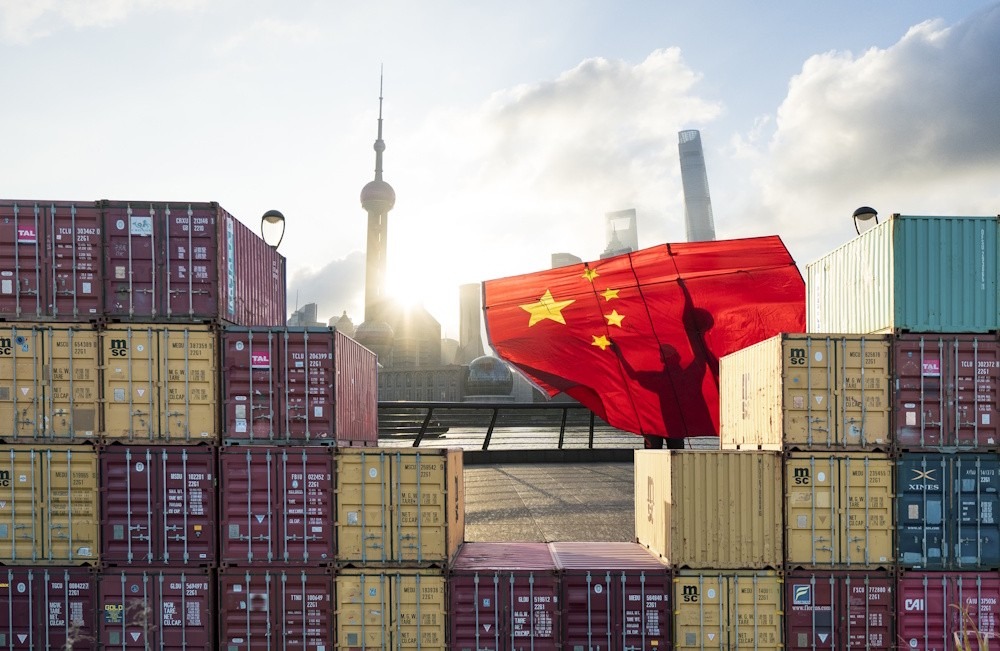
China’s exports experienced a remarkable increase of 36.3 percent in September compared to the same month last year, according to a report. This growth positions the country to surpass the previous year’s record trade surplus, even as pressure mounts from trading partners, notably the European Union, to achieve a more balanced trade relationship. The exports data, which exceeded economists’ expectations, accelerated from the 25 percent growth observed in August. High-tech goods, including semiconductors and automobiles, have significantly contributed to the increase in shipments abroad. According to data, the pace of export growth in September reached its highest level since February. Imports increased by 31 percent in September compared to the same month last year, marking an acceleration from the 28.2 percent rise observed in August. China recorded a $133.5 billion trade surplus last month, widening from $119.1 billion in August. For the first nine months, China’s trade surplus reached $938 billion, with expectations increasing that it could exceed last year’s full-year record of $1.2 trillion. Robust exports have significantly contributed to China’s overall economic growth this year, particularly as domestic consumption and investment have remained lacklustre, hindered by a prolonged downturn in the real estate sector.
However, China’s export resilience is now confronted with increasing challenges, according to Ecaterina Bigos. “While US-China trade tensions have eased somewhat, the EU’s push to rebalance directly targets high-value exports,” she stated. The US has initiated a continuous investigation into China and other trading partners regarding their surplus industrial capacity this year. Nevertheless, Washington and Beijing reached an accord last month to prolong their trade truce and reduce tariffs on $60 billion worth of goods. The 27-nation EU has been facing significant challenges in addressing a trade deficit that surpasses $1.1 billion daily with China. EU trade chief Maros Sefcovic, after his recent visit to Beijing where he engaged with his Chinese counterpart Wang Wentao, announced that an agreement has been established with Beijing, which entails a reduction of Chinese hybrid car imports into the EU by fifty percent over the coming years. Many of China’s trading partners are confronting subdued growth prospects and harbour concerns regarding their manufacturing sectors being overwhelmed by exports from China, noted Eswar Prasad, a professor of economics and trade policy at Cornell University.
Policymakers have highlighted the depreciation of the yuan, China’s currency, against the US dollar and other currencies, which has made Chinese exports more competitively priced abroad relative to goods from other nations, thereby exacerbating trade imbalances. China has stated that it has “no need or intent” to seek competitive advantages through currency devaluation, asserting that its trade growth is a result of its industrial competitiveness in the global market. Between January and September, China’s semiconductor exports experienced a remarkable increase of 108.1 percent year-on-year in value, according to customs data. Exports of automatic data processing equipment and parts surged by 54.6 percent, while automotive exports experienced a 54.3 percent increase, propelled by heightened global demand for Chinese electric vehicles and hybrids. China’s trade surplus and its high-tech export model rely on open markets, as noted by Bigos. Although diversifying exports into regions like Southeast Asia and Latin America may provide some assistance, it cannot entirely replace the demand from Western markets.
The country’s dependence on high-tech exports may encounter obstacles as certain leaders within the US technology sector advocate for a global deceleration in artificial intelligence development due to safety concerns. “A slowdown in the global AI investment cycle could pose a greater threat to China’s export growth than trade restrictions imposed by other countries,” said Max Zenglein. Chinese leaders have established an annual economic growth target of 4.5-5 percent for 2026. It is poised to unveil its economic growth figures for the July-September quarter next week. This week, the International Monetary Fund revised its forecast for China’s 2026 economic growth to 4.5 percent, a decrease of 0.1 percentage point from its earlier projection, citing that the nation’s strong exports could not entirely compensate for domestic vulnerabilities. Chinese officials have emphasised the necessity of strengthening domestic demand; however, analysts contend that this has not yet emerged as a priority for the current year. This observation comes despite the recent introduction of measures aimed at stimulating the economy, such as subsidies for homebuyers’ mortgage interest payments.