U.S.-China Tensions Persist Amidst Trump-Xi Summit’s Chivalry
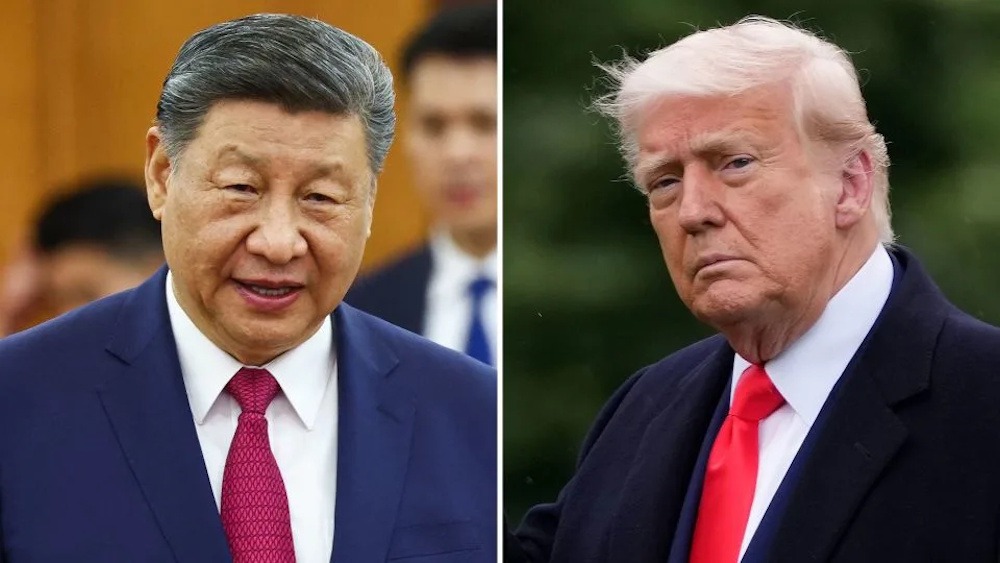
Significant disparities remain between the United States and China, notwithstanding the recent summit in Washington between Chinese President Xi Jinping and his American counterpart, Donald Trump, which was characterised by an unusual warmth, according to a close aide to Trump. Both parties continue to grapple with longstanding issues that existed prior to Xi’s recent visit, as noted by Republican Senator Steve Daines, a close aide to Trump and a significant communicator between Washington and Beijing, in an interview with the Hong Kong-based South China Morning Post. “So that’s again why it’s really important to keep the dialogue going between two countries because both sides admit we’ve got some serious differences. But the answer is not to retreat. The answer is to stay engaged,” Daines said. Daines, who played a pivotal backchannel role prior to Xi’s visit, was addressing US Ambassador to China David Perdue’s claim that Beijing was “weaponising” its dominant position in critical minerals.
Rare earths, crucial for a variety of products from smartphones to fighter jets, continue to be a significant point of dispute between the two largest economies globally. A White House fact sheet on last week’s summit indicated that both parties would persist in addressing US concerns regarding supply chain shortages related to rare earths and other critical minerals, aiming to restore shipments to suitable levels. During Xi’s visit, the two sides also announced a two-month extension of the October 2025 trade truce reached in Busan, South Korea, which included China’s commitment to increase critical metals supplies to the US. China constitutes approximately 70 percent of the worldwide rare earth mining sector and nearly 90 percent of the processing activities.
Taiwan continues to be a significant area of disagreement between Washington and Beijing. On enquiries concerning the ambiguity surrounding US arms sales to Taiwan, Daines remarked that Trump was “probably one person that has that answer”. And “It’s going to be an ongoing topic. It’s not going away,” he said. The White House had suspended a $14 billion arms package for Taiwan, which included advanced air and missile defence systems, just prior to Trump’s visit to Beijing in May, despite receiving congressional approval. An earlier USD 11 billion US arms sale announced in December elicited a robust response from Beijing.
During their meeting on September 24, Xi urged Trump to explicitly oppose Taiwan independence, according to the Post. China asserts that Taiwan is an integral part of its territory and has pledged to achieve reunification with the self-governing island, even if it requires the use of force. Following their Washington summit, Trump and Xi reached an agreement to reconvene at the APEC gathering in Shenzhen next month, subsequently leading to another meeting at the Group of 20 summit in Miami in December. As the forthcoming meeting draws near, Daines indicated that he has maintained “close contact with a lot of folks who will be there”. And “At this point, I don’t have another trip planned to China, but that could always change,” he said.