Gulf oil companies spend billions on transportation routes

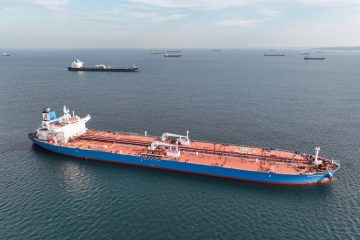
Six months ago, the process of exporting oil from the Persian Gulf was relatively uncomplicated: Produce crude at the lowest possible cost, transport it via the quickest route, and sell it to the nations willing to pay the highest price. Those days have concluded. Shipping thru the Strait of Hormuz, historically the most efficient route for exports, continues to be significantly restricted due to the ongoing conflict in Iran. Much of the oil transiting the strait is transported by tankers manoeuvring thru a perilous gauntlet of Iranian attack drones, or operating without their location devices activated. At a minimum, 17 seafarers have lost their lives in the region. Gulf countries, historically significant producers of a substantial portion of the world’s oil, are now focused on reducing their reliance on the constrained maritime route. They are constructing or enhancing pipelines and other infrastructure that can circumvent it, while significantly increasing storage capacity in regions such as Asia.
These endeavours illustrate the transformative impact of the war on the oil industry in the Persian Gulf. They will incur costs in the billions and require years for completion, yet both companies and governments regard them as vital safeguards in a region marked by increasing volatility. Even if a cease-fire between the United States and Iran materialises, Gulf exporters acknowledge that dependence on a singular transit route poses a risk they can no longer afford to accept. Over time, these actions may reduce Iran’s influence in the region. Prior to the commencement of military strikes by the US and Israel on Iran on February 28, approximately 20 million barrels per day of crude oil transited thru the Strait of Hormuz. Crude exports via the strait have decreased to approximately 3.7 million barrels per day as of last week, as reported. The frenzy of activity for lasting workarounds to the strait is evident throughout the region. In Fujairah, a port city in the United Arab Emirates adjacent to the Gulf of Oman, crews are engaged in continuous operations to establish a secondary crude line that runs parallel to an existing pipeline, which transports oil from onshore fields in Abu Dhabi.
The project seeks to enhance the nation’s bypass capacity to 3.6 million bpd, facilitating the transport of nearly all of Abu Dhabi’s onshore crude to international tankers, thereby eliminating the necessity for vessels to navigate thru the Strait. Plans for a liquefied gas export facility on the eastern coast are under consideration as a strategy to circumvent the Strait of Hormuz, according to Peter van Driel. Television. In neighbouring Saudi Arabia, the state oil giant, Aramco, is expediting a multi-billion-dollar expansion of its East-West Pipeline. Constructed amid the Iran-Iraq conflict in the 1980s, the 1,201-kilometer pipeline traverses the Arabian Peninsula, ultimately reaching the Red Sea port of Yanbu. Aramco’s chairman, Yasir O Al-Rumayyan, referred to it as the kingdom’s economic “lifeline,” having successfully rerouted approximately seven million bpd since Iran effectively closed the Strait of Hormuz.
Saudi officials are actively pursuing the addition of one million to two million barrels per day, while also contemplating the establishment of a smaller parallel pipeline dedicated to refined oil products. “In terms of exporting our crude, we are looking at actively increasing optionality right now,” said Amin Nasser. Kuwait is engaged in discussions with Saudi Arabia and other Arab nations regarding the construction of a pipeline that would link its oil fields to ports on the Red Sea or in Oman. Iraq and Jordan have reinitiated previously stalled plans for a pipeline capable of transporting up to one million barrels per day to the Port of Aqaba, located off the Red Sea, as reported by state television in Jordan. Iraq is accelerating efforts to reconstruct a compromised oil pipeline intended to transport crude oil from its Kirkuk fields to the Mediterranean coast of Syria. Gulf nations are strategically enhancing their physical insurance policies thru the expansion of storage facilities in countries such as South Korea, Japan, and India.