Fed’s Kevin Warsh Signals Shift in Central Bank Communication
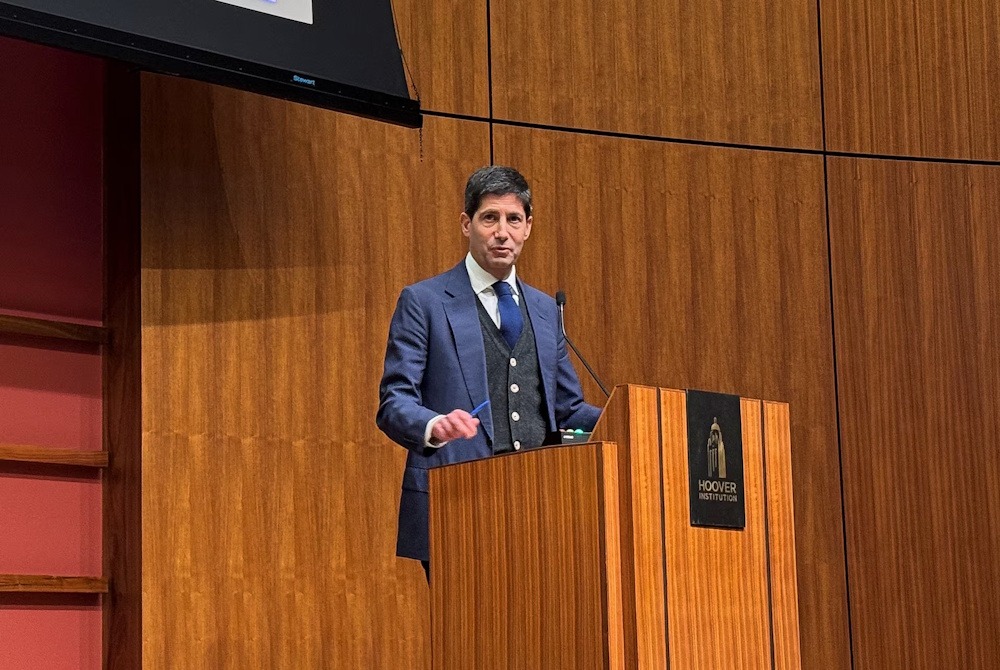
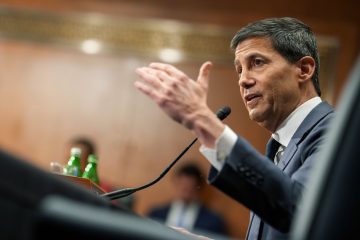
Kevin Warsh, the incoming leader of the US central bank, suggests that the Federal Reserve is overly vocal regarding the economy. In the course of his confirmation hearing last month, Warsh contended that Fed officials “speak quite frequently” and emphasized that “truth-seeking is more important than repetition.” He stated “If one has a press conference, one aims to convey significant information.” Since the 1990s, officials from the Federal Reserve have consistently provided insights on the economy through various channels. Warsh, who is set to officially commence his four-year term on Monday, proposed eliminating certain aspects of that communication through “a new framework” and “new tools,” although he refrained from providing specifics. Analysts suggest that Warsh’s perspective holds some validity; periods of uncertainty complicate the ability of Federal Reserve officials to forecast the trajectory of the economy and interest rates. However, it would represent a significant change for the Fed if Warsh opts to reduce the frequency of news conferences or eliminate the quarterly economic projections provided by officials.
“Communication isn’t trivial,” Loretta Mester stated in an interview. “Engagement with market participants, the public, and Congress is crucial; however, there may be opportunities to enhance communication for greater effectiveness.” Throughout the majority of its 113-year existence, the Federal Reserve’s decisions regarding interest rates have often been shrouded in ambiguity. No policy statements, routine public comments, or news conferences were issued by the chair. Market participants were required to deduce the Federal Reserve’s actions regarding its benchmark lending rate through observed fluctuations in the market. The introduction of the post-meeting policy statement in 1994 marked a significant shift under the leadership of Fed Chair Alan Greenspan. Subsequent chairs continued to enhance the Fed’s communication arsenal. Ben Bernanke became the inaugural Federal Reserve chair to conduct a formal conference in April 2011. “I have always been a strong proponent of disseminating comprehensive information to enhance public understanding of your actions,” he stated, “to aid the markets in grasping your intentions, and to ensure accountability to the public regarding your actions.” The post-meeting conferences serve to inform market expectations and influence long-term interest rates.
A survey conducted this month revealed that economists and analysts advocate for the continuation of press conferences following each rate-setting meeting by the Fed. “The Fed sending signals on what it’s likely to do in the future is very useful because it quickly affects financial conditions,” stated Derek Tang. “For instance, in 2022, officials utilized their projections and speeches to convey their commitment to increasing rates in order to combat high inflation, which enabled them to refrain from raising rates even further, as their communication had already accomplished part of the task,” he added. However, there are instances when the future of the US economy remains uncertain. Periods characterized by significant uncertainty naturally diminish the effectiveness of Federal Reserve communication, as conditions can shift rapidly, according to Mester, the former president of the Cleveland Fed. When President Donald Trump introduced stringent tariffs last spring, Federal Reserve officials, including Chair Jerome Powell, cautioned about the potential for markedly increased inflation and diminished economic growth. However, those early remarks did not withstand the test of time as Trump moderated his tariffs and businesses played a role in preventing a significant rise in consumer inflation.
This year, the conflict between the US and Israel with Iran has further complicated the Federal Reserve’s ability to evaluate the economy. Throughout the previous year, the Federal Reserve’s policy communications have repeatedly underscored that the economic outlook remains “uncertain.” “Warsh does have a point on the Fed’s forecasts,” Tang remarked. “It’s crucial to avoid being overly attached to a single perspective, which is precisely why the committee responsible for rate-setting at the Fed consistently emphasizes that the forecasts should not be interpreted as a binding commitment.” Despite Warsh’s potential reduction in his own communication, he remains unable to exert control over the twelve presidents of the regional Federal Reserve banks, according to Tang. However, it seems that a portion of individuals aligns with Warsh’s perspective. One-third of participants in the Brookings survey indicated that Federal Reserve regional presidents “should speak in public less frequently.”