Kevin Warsh Faces Key Test on Fed Policy and Independence
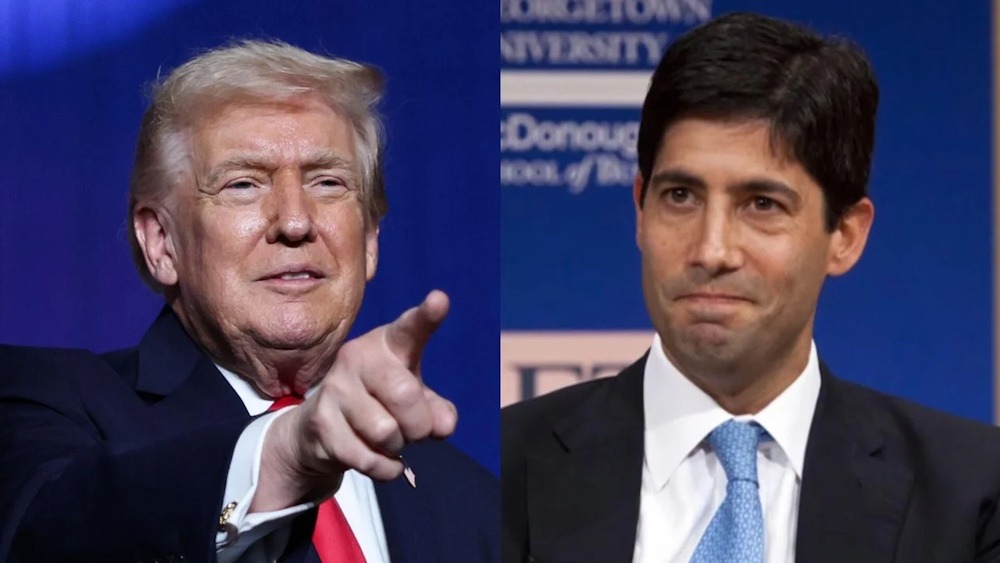
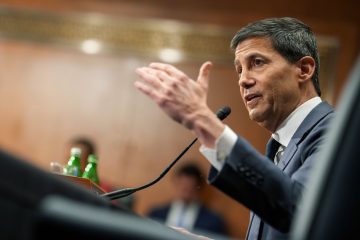
Kevin Warsh has devoted years to critiquing the Federal Reserve for its excessive actions. More recently, he has indicated that it may require taking the contrary approach. That tension will be at the forefront Tuesday during his confirmation hearing before the Senate Banking Committee, presenting the initial significant challenge of how President Donald Trump’s nominee to succeed Fed Chair Jerome Powell might alter monetary policy amid ongoing seismic shifts in the global economy. Before nominating Warsh in late January, Trump stated, “I fully expect whomever I pick to push for lower borrowing costs.” Nonetheless, the Fed operates as an independent, self-funded entity that establishes monetary policy free from any political influence. It is a standard that Warsh would be anticipated to maintain. Warsh finds himself at the center of a significant conflict, and Tuesday will present the initial chance to discern which direction he favors: catering to Trump or safeguarding the independence of the Federal Reserve. “I do not believe the operational independence of monetary policy is particularly threatened when elected officials — presidents, senators, or members of the House — state their views on interest rates,” Warsh plans to tell senators, according to his prepared remarks.
In his remarks, Warsh asserts that central bankers ought to consider “a diversity of views from all corners” while also being capable of forming their own perspectives on monetary policy, emphasizing that “Fed independence is largely up to the Fed.” Warsh’s previous statements indicate a preference for a more streamlined and disciplined Federal Reserve, one that prioritizes restraint over communication and the extensive powers the Fed adopted following the 2008 global financial crisis, particularly regarding the significant expansion and utilization of the central bank’s balance sheet. The hearing will provide Warsh, who held the position of the youngest-ever Fed governor from 2006 to 2011, the chance to reaffirm those plans. It will also enable him to convey his perspective on the implications of the US-Israeli conflict with Iran for interest rates this year — whether the Fed should reduce rates to bolster a struggling economy, increase them to combat energy-driven inflation, or maintain the current rates to assess the global economic repercussions. However, he is expected to encounter inquiries from Democratic senators regarding his assets valued at $100 million, as revealed in his recent filings with the Office of Government Ethics. The filings, however, provide scant information regarding some of his most significant holdings, referencing confidentiality agreements.
If confirmed, Warsh would need to divest from those holdings, a commitment he has agreed to uphold. “Without the ability to review Mr. Warsh’s holdings in public and in detail, it is impossible to determine whether Mr. Warsh is holding an interest in institutions he would be responsible for regulating as Fed Chair,” Democrats on the Senate Banking Committee stated in a report released Monday. The foremost inquiry regarding Warsh is his strategy for further diminishing the Fed’s $6.7 trillion portfolio — a challenge that numerous investors assert could prove challenging to achieve without triggering a destabilizing credit squeeze. During the Great Recession, under the leadership of former Chair Ben Bernanke, the Federal Reserve undertook significant purchases of Treasuries and mortgage-backed securities as part of an experimental approach aimed at revitalizing the economy’s slow recovery during that period. Investors assert that it was a reasonable response to the financial meltdown of 2008; however, the central bank’s three subsequent rounds of large-scale asset purchases sparked considerable controversy. By the mid-2010s, the balance sheet emerged as a crucial tool in the Fed’s arsenal to combat economic crises, leaving a significant impact on the financial system as well.
The Fed’s balance sheet expanded once more amid the pandemic recession, as central bankers took decisive action to stabilize markets and mitigate the impact on the US economy. By May 2022, the portfolio reached nearly $9 trillion; however, it began to gradually shrink as the Fed acted to tame inflation by removing that stimulus from the economy, in addition to hiking rates. The Fed announced late last year that it had completed the process of allowing the assets in its portfolio to expire and roll off, resulting in a reduction of its total holdings. However, during that period, Warsh remarked that those efforts fell short. He stated that continuing to reduce the balance sheet could be crucial for achieving lower borrowing costs. “The Fed’s bloated balance sheet, designed to support the biggest firms in a bygone crisis era, can be reduced significantly,” he wrote. “That largesse can be redeployed in the form of lower interest rates to support households and small and medium-size businesses.” One way Warsh could fulfill that promise is by collaborating with the Treasury Department on the Fed’s asset purchases, in what some have referred to as a new Treasury-Fed Accord, although Treasury Secretary Scott Bessent dismissed that notion last month. Despite Warsh’s views on Fed policy taking a complete 180, Wall Street continues to anticipate that he will seek to construct an argument for eventually lowering interest rates.
However, undertaking such actions now proves challenging, following the Consumer Price Index’s surge in March, which rose at the fastest monthly rate since 2022 to an annual rate of 3.3%, marking the highest level in nearly two years. Last week, Bessent acknowledged that it is not the appropriate moment to reduce rates, expressing in an interview with Semafor that the Fed ought to “wait and see” how the situation with the Iran war unfolds first. Since his nomination was announced, Warsh has not made any public comments regarding Fed policy, leaving it uncertain whether he aligns with Bessent, who serves as Trump’s top economic official. Most Fed officials have indicated in their recent public speeches that maintaining the current stance is the most prudent strategy for the time being. This includes those who previously advocated for rate cuts, such as Fed Governor Christopher Waller, who was also considered for the position of Fed chair by Trump. Certain officials, including Chicago Fed President Austan Goolsbee, have indicated that there may not be justification for lowering rates at any point this year.
For Warsh to lower rates, he must secure the support of the majority of the Fed’s 12-person rate-setting committee. The Fed’s rate decisions are based on consensus, and although the Fed chair sets the agenda for each meeting, they do not possess unilateral power to dictate the direction of rates. In an interview, Warsh stated that the Fed is due for “regime change” and that the institution has “lost its way.” And “That’s not just about the chairman; it’s about a whole range of people,” Warsh stated. “It’s about changing their mindset and their models, and frankly it’s about breaking some heads because the way they’ve been doing business is not working.” He remarked that there’s “plenty of deadwood” at the central bank, suggesting that he would reduce headcount, should he be confirmed. The Fed chair possesses the authority to adjust the size of the central bank’s workforce in Washington, D.C., which consists of approximately 3,200 employees, indicating the possibility of further layoffs at the institution. Last year, Powell announced a plan to gradually reduce the Fed’s workforce in the coming years to around 2,000, trimming staff by 10% each year until that goal is achieved.