Powell, the most experienced Fed chair, leaves office
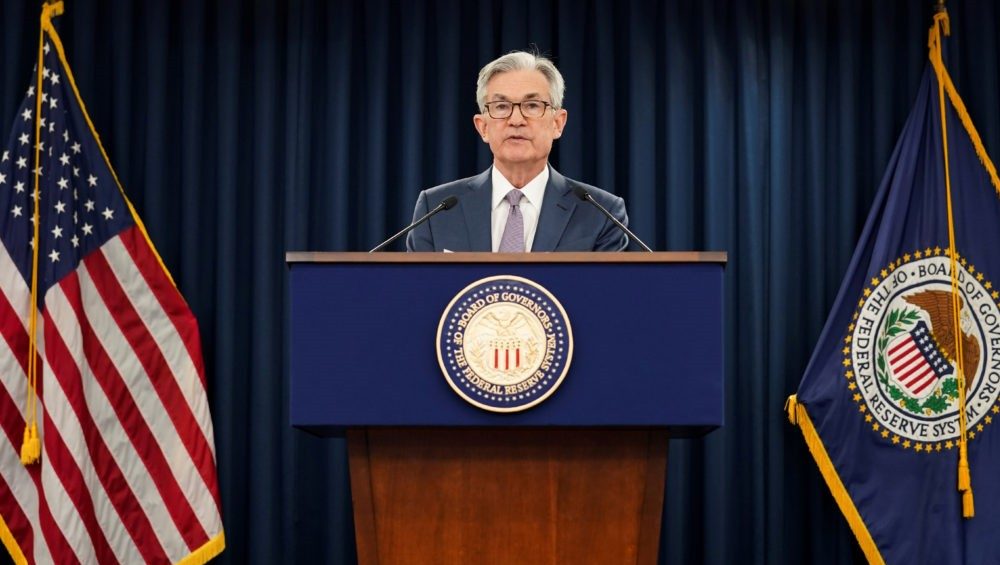
The most pronounced economic contraction in the annals of American history, the peak inflation rate observed in over four decades, vigorous political assaults emanating from the White House, and an unprecedented global energy crisis. These represent notable occurrences that transpired during the eight-year tenure of Jerome Powell at the Federal Reserve, an institution responsible for overseeing the economy to attain maximum employment and stable prices. Powell’s term concludes on Friday, as the Senate has now confirmed Kevin Warsh to assume leadership. The departing Federal Reserve leader is recognized for his steady approach, characterized by collaboration and decisiveness, according to remarks from some of his former colleagues. Powell’s leadership has been acknowledged as pivotal in the Federal Reserve’s adept management of various economic crises in recent years, positioning him as potentially the most seasoned Fed chair in the institution’s 113-year history. “It’s difficult to consider another Fed chair who encountered such a series of challenges to the US economy,” Patrick Harker stated. “One must indeed look back to Marriner Eccles to find a Federal Reserve chair who confronted circumstances akin to those faced by Jay [Jerome Powell]. He addressed the challenges posed by the Great Depression and the Second World War,” he remarked regarding Eccles. The Covid-19 pandemic represented Powell’s most formidable challenge in leading the world’s most influential central bank, according to economists and former Fed officials. “The pandemic was not anything that the Fed had experienced before,” stated Loretta Mester. “It was a health situation that had implications for the economy, fiscal policy, and monetary policy.”
The abrupt closure of businesses in the spring of 2020 resulted in unprecedented contractions in gross domestic product, the most comprehensive indicator of economic performance, as well as a significant drop in consumer spending, which is essential to the vitality of the US economy. The unemployment rate surged to 14.8% in April 2020, marking the highest level since the Great Depression. Financial markets experienced a rapid decline, achieving the fastest transition to bear-market conditions on record as anxious investors flocked to cash, consequently triggering a significant credit crunch. Powell promptly gathered his central bank peers for two exceptional emergency meetings in March 2020 to reduce interest rates to nearly zero and infuse liquidity into the financial system via a lending initiative. Powell characterized the Fed’s emergency measures as a “unprecedented” initiative to “forcefully, proactively, and aggressively” bolster the economy. The objective, as articulated by Powell, was to construct a “bridge” towards economic recovery. These initiatives, in conjunction with the robust measures taken by Congress, are broadly acknowledged for mitigating the initial impact of the pandemic on the US economy. “The Federal Reserve’s Covid response effectively restored market stability and maintained access to credit,” Erin Lockwood stated.
However, the economy’s robust recovery from the pandemic-induced recession did not occur without challenges. In 2021, as companies sought to rehire employees they had previously laid off, they increased wages to attract talent from a workforce that had diminished during the pandemic for multiple reasons. American workers not only held a favorable position in the labor market, but they also possessed substantial savings accrued during the extensive shutdowns and pandemic-related stimulus payments. At that moment, supply chains were concurrently in the process of recuperating from the disruptions caused by the pandemic. All of these factors have created the conditions for the most significant inflation surge in four decades. However, at that moment, various policymakers, including Powell, asserted that any price pressures would probably be “transitory” — a term that Fed officials would subsequently come to regret. Inflation proved to be more persistent than initially anticipated, primarily driven by labor forces advocating for wage hikes to counteract rising prices, a phenomenon referred to as “second-round effects.” Ultimately, the Federal Reserve acknowledged the necessity of initiating rate increases, commencing in March 2022, marking the most assertive rate-hiking cycle observed since the 1980s. During periods of elevated inflation, the Federal Reserve increases its primary interest rates to temper an overheated economy and mitigate inflationary pressures; conversely, it generally lowers rates when unemployment is on the rise and economic growth requires stimulation.
However, given that monetary policy influences the economy with a delay, it had become too late to prevent inflation from hitting a four-decade peak in June 2022. At that moment, Powell cautioned about the essential “pain” that the Fed’s rate hikes might impose on households in its endeavor to control inflation. Despite the pressure of elevated borrowing costs on many Americans, particularly those from lower-income households, the US economy has demonstrated notable resilience, successfully sidestepping a recession. Critics of Powell often highlight the inflation surge as a significant error on the part of the Fed. Mester, a member of the Fed’s rate-setting committee at the time, remarked, “we did act too slowly,” while also noting that it was a “unprecedented situation” and that the ultimate outcome was uncertain for all involved. Harker reiterated that sentiment, characterizing it as a “misreading,” while noting that the Fed was not the only entity to have made an erroneous assessment. “The consensus of not just the Fed, but of the economics profession at the time, was that inflation was going to be transient,” Harker stated. “This was not merely an error by the Fed; it represented a significant miscalculation by forecasters on Wall Street and within the academic economics community.” Powell’s legacy will significantly hinge on his efforts to preserve the Federal Reserve’s autonomy in determining interest rates, free from political influence.
Shortly after Powell assumed the chairmanship in 2018, Trump began to voice criticisms regarding both him and the central bank for their reluctance to reduce interest rates. The criticism recommenced following Trump’s initiation of his second term. In the last year, the president has exerted an extraordinary level of pressure on the Fed in a bid to induce lower interest rates. Trump has asserted that lower rates are necessary to decrease the government’s borrowing costs and to stimulate economic growth. The Federal Reserve, nonetheless, determines interest rates in accordance with prevailing economic conditions and future projections, rather than succumbing to the pressures of a sitting president — a principle embedded in the congressional charter that founded the Fed in 1913, and also a fundamental aspect of the stability of the US economy. Powell has consistently emphasized this point: “Independence is what allows us to do our job.” And “It’s critical that we have that so that we can preserve price stability,” he told in March following the Fed’s rate decision that month. However, this has not deterred Trump from executing an exceptional pressure campaign aimed at influencing the Federal Reserve to align with his objectives. He has consistently disparaged Powell and has suggested the possibility of terminating his position; his supporters persist in framing a renovation of the Fed’s headquarters as indicative of mismanagement during Powell’s tenure; furthermore, the president is making efforts to remove Fed Governor Lisa Cook in a significant case that is set to be adjudicated by the Supreme Court.
Powell has mounted a defense. In January, he disclosed in a remarkable video statement that federal prosecutors were investigating the testimony he provided to Congress the previous year regarding the Federal Reserve’s renovations. Powell criticized those initiatives as a coercive strategy employed by the executive branch. Later that month, Powell participated in oral arguments at the Supreme Court regarding the Trump v. Cook case, demonstrating an atypical endorsement of Federal Reserve autonomy. Even at his concluding news conference as chair in April, Powell emphasized the significance of the Federal Reserve’s independence. “It’s not about the Fed or the institutions, it’s about the benefits of a central bank that makes decisions based on analysis and our best thinking rather than trying to help or hurt politicians,” he stated. In that speech, Powell also confirmed that he will maintain his position as governor on the Fed’s board until he concludes that the federal investigation into him has definitively come to an end. Powell stated that he does not plan to intervene in Warsh’s leadership, highlighting the significance of upholding the authority of the Fed chair. Powell provided the incoming Fed chair with some guidance. “Stay out of elected politics,” Powell stated. “To achieve democratic legitimacy, one must cultivate it through engagement with our elected representatives, necessitating considerable effort — and I have indeed exerted myself in this regard.”