Fed Officials Express Growing Concerns Over Iran Conflict
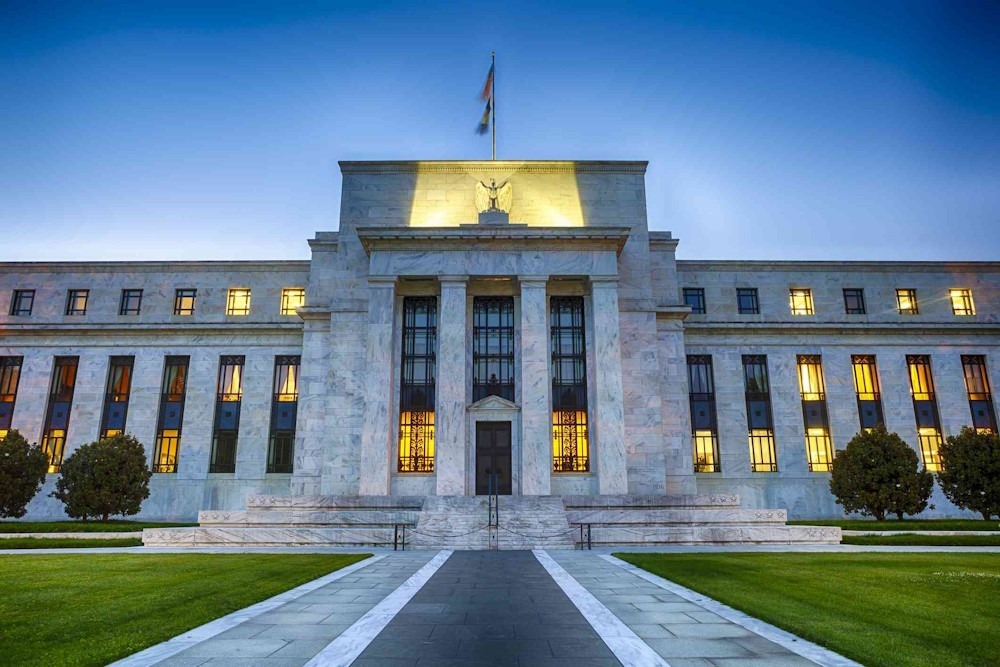
Tension is escalating among the policymakers responsible for managing inflation as the economic repercussions of the US-Israeli conflict with Iran expand. During the meeting of Federal Reserve officials on March 17-18, shortly after the onset of the war, Chair Jerome Powell remarked that any inflationary impacts would probably be temporary and could be limited to the energy sector, suggesting the possibility of at least one rate cut this year. At that moment, Wall Street held a positive outlook regarding Kevin Warsh, President Donald Trump’s nominee to replace Powell, anticipating that he would advocate for rate cuts, should he receive confirmation. However, the conflict in Iran has continued since that time and has now reached its tenth week. During the most recent Federal Reserve meeting in late April, the concerns of officials were clearly evident. Three officials expressed dissent regarding the Fed’s latest policy statement, opposing its “easing bias,” or the implication that rates might decrease further.
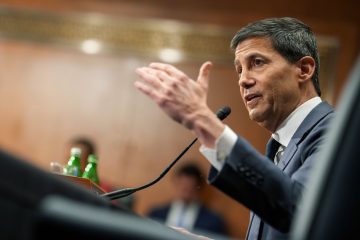
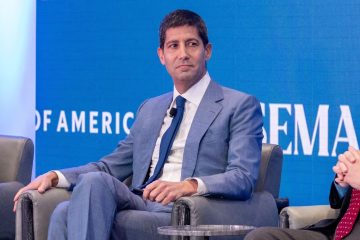
Officials including Beth Hammack, Lorie Logan, and Neel Kashkari expressed their dissent in statements, indicating that the Fed is not being transparent regarding the increasing likelihood of a rate hike. Experts suggest that they may not be the only members of the Fed’s 19-person rate-setting committee harboring such concerns, given that only 12 of them possess voting power at any given moment. “The opposition against the easing bias was likely broader than just those three,” stated Derek Tang. “But the question is, when will the dam break on inflation expectations? Inflation has been above their 2% target for a while now.” The Iran war has not only impacted oil but has also created challenges for businesses in accessing a range of essential commodities, including fertilizer, helium, and aluminum, subsequently driving up their prices. Businesses across various industries are now in a state of urgency, working to reconfigure their supply chains and develop strategies to mitigate the disruptions, as highlighted by the latest business surveys from the Institute for Supply Management. In ISM’s April survey, released Tuesday, a utility company stated it is “mitigating risk through early procurement, supplier diversification and strategic inventory positioning.”
The Federal Reserve Bank of New York’s Global Supply Chain Pressure Index surged in April to a reading of 1.82, a significant increase from March’s 0.68 and marking the highest level since 2022. “This echoes the severe shortages and supply disruptions that the world economy experienced in 2021 as it emerged from the pandemic,” stated New York Fed President John Williams during an event in New York on Tuesday. Logan expressed her concerns in a statement outlining her policy dissent last week, noting that it could worsen inflation: “The conflict in the Middle East raises the prospect of prolonged or repeated supply disruptions that could create further inflationary pressures.” In March, Powell stated, “Americans’ perception of prices will shape the Fed’s response to the Iran.” The Federal Reserve consistently monitors inflation expectations, especially in the long term, as these expectations can become self-fulfilling. If individuals anticipate that inflation will stay high in the upcoming years, they will modify their spending habits accordingly. It serves as a crucial indicator of trust in the Fed’s capacity to control inflationary pressures. In his speech on Tuesday, Williams stated that inflation expectations are “well anchored, despite the deluge of shocks.”
Kashkari, a dissenting voice at last month’s Fed meeting, expressed his views in a statement on Friday, noting he’s “somewhat comforted by the fact that both market and survey measures of long-run inflation expectations appeared well anchored at our 2 percent target.” However, just on Tuesday, a market-based measure of long-term inflation expectations rose to a three-year high. The 10-year inflation breakeven rate, defined as the difference between the 10-year Treasury yield and the 10-year Treasury Inflation-Protected Security yield, has reached 2.5%, marking the highest level since early 2023. “The longer inflation remains above 2%, the greater the risk that it becomes entrenched in expectations, making it harder to achieve the (Fed’s) goal,” Fed Vice Chair Philip Jefferson warned in March, shortly after the Iran war broke out.