Fed Keeps Rates Steady Amid Uncertainty
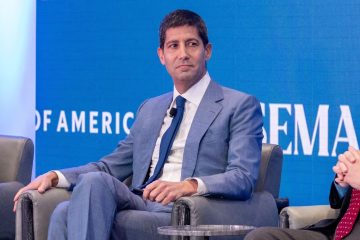
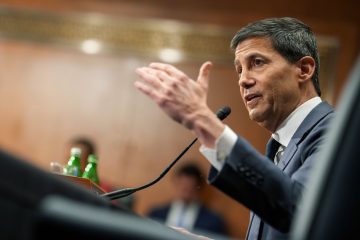
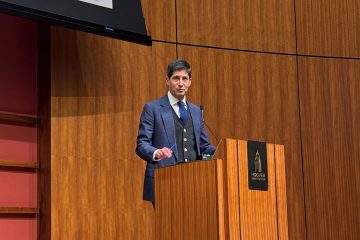
The Federal Reserve on Wednesday maintained interest rates at their current level for the third consecutive meeting, as several key policymakers expressed apprehension regarding persistently high energy prices, which are influenced by the ongoing US-Israeli conflict with Iran. Federal Reserve officials maintained the benchmark lending rate within a range of 3.5-3.75%, coinciding with Jerome Powell’s concluding meeting as chair prior to the expiration of his term on May 15. During the conference following the meeting, Powell affirmed his decision to resign as chair while continuing to serve on the board of the US central bank for the time being. He is currently fulfilling a concurrent term as a Fed governor, which is set to continue until January 2028. Powell emphasized the ongoing uncertainties surrounding the conflict in Iran and the increasing divisions within the Federal Reserve’s 12-member rate-setting committee. Kevin Warsh, President Donald Trump’s nominee to succeed Powell, is widely expected to advocate for further rate cuts this year. He cleared a significant hurdle in his confirmation process earlier Wednesday, positioning him firmly to take on one of the most influential roles in the global economy. The nomination is anticipated to progress to the full Senate for a conclusive vote.
However, despite Warsh’s preference for lower rates, there is presently no compelling economic rationale for a more accommodative monetary policy in the near term — a perspective that was communicated by three prominent Fed voters during this meeting. The decision to maintain the current stance was almost unanimous, with only Fed Governor Stephen Miran dissenting in favor of lower rates than the majority prefers for the sixth consecutive meeting. However, Fed presidents Beth Hammack of Cleveland, Neel Kashkari of Minneapolis, and Lorie Logan of Dallas “did not support inclusion of an easing bias in the statement at this time.” The most recent set of dissenting opinions highlights the challenges Warsh will face, should he be confirmed, in convincing the majority of the Federal Reserve’s 12-member rate-setting committee to support a reduction in interest rates. This marks the first occurrence since October 1992 of four dissents of any nature. Powell remarked that the dissents reflected a “vigorous” debate during the meeting, noting that a greater number of participants preferred the policy statement to convey a “neutral stance, so that a hike is as likely as a cut.” For several reasons, it will be challenging for any Federal Reserve official to advocate for immediate rate reductions: Energy prices continue to be high due to the conflict in Iran; consumer spending remains robust, contributing to increased corporate profits; while the US labor market is weak, it appears to have reached a point of stabilization; and the chair of the Federal Reserve does not possess unilateral power over the central bank’s interest rate determinations. “These are indeed challenging and complex decisions,” Powell stated.
“A forecast for each variable is essential; one must consider the duration required to return to target and assess the restrictiveness of policy. Therefore, it is only logical to expect a spectrum of opinions within the committee.” The Federal Reserve generally reduces borrowing costs when inflation is decelerating, unemployment is increasing (and potentially poised to rise further), or a combination of these factors — none of which are currently occurring. This situation permits Fed policymakers to exercise caution, remaining on the sidelines to observe developments before deciding whether to adjust rates, as articulated by several officials in recent public addresses, especially those who expressed dissent this week. Although the Fed chair possesses significant authority, steering the agenda for each Federal Reserve meeting, they hold merely one vote within a committee that operates on a consensus-driven approach. “As a soon-to-be former chair, I do understand how challenging it is to achieve consensus among nineteen strong-minded individuals,” Powell stated. The committee comprises 12 individuals with voting authority, alongside six additional members who engage in discussions without the right to vote. Powell will be the first Fed chair to continue serving on the board since 1948, when Marriner Eccles remained as a Fed governor for three additional years. “This is my last press conference as chair,” Powell stated, “And I will conclude with a few reflections.” And “First, I want to congratulate Kevin Warsh on his advancement out of the Senate Banking Committee this morning. This represents a significant advancement, and I extend my best wishes to him as this process unfolds.”
Powell indicated that his choice was influenced by the potential for the Justice Department to revisit the inquiry concerning him, as well as the testimony he provided to Congress the previous year regarding a renovation initiative at the central bank’s headquarters. DC US Attorney Jeanine Pirro, whose office is spearheading the investigation, stated last week that she will “not hesitate to restart a criminal investigation should the facts warrant doing so.” And “I’m awaiting the conclusion of the investigation with definitive finality and transparency,” Powell stated. “And I’m awaiting that. And I will leave when I believe it is the right moment to do so.” Powell addressed the Middle East conflict and its implications for the economy. Powell reiterated the sentiments expressed by various other Fed officials in recent discussions: The ongoing conflict in Iran complicates the trajectory of interest rates. The Federal Reserve’s most recent policy statement recognized this reality, noting that “developments in the Middle East are contributing to a high level of uncertainty about the economic outlook.” And “We are currently observing the developments in the Middle East and assessing their potential implications for the US economy,” Powell stated. “A segment of the population believes that there is no urgency to proceed with that.” Powell indicated that “of course, we will move to a hiking bias, if we want a hike,” while emphasizing that the Fed is not nearing a rate hike — at least for the time being. “Individuals are not expressing a need for an immediate increase,” he stated. “However, it constitutes a perfectly valid argument to engage in.”