Trump: The Iran deal will reopen the Strait of Hormuz ‘immediately’
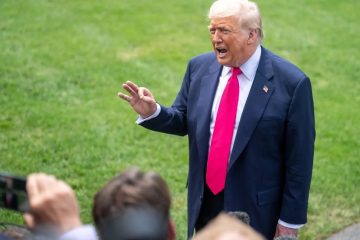
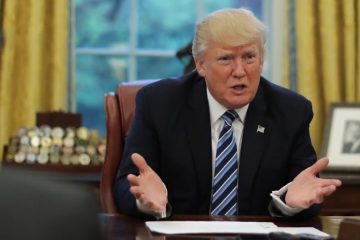
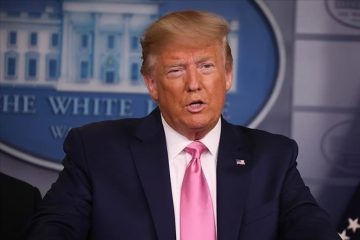
US President Donald Trump has declared Washington’s plan to seize Iran’s enriched uranium while simultaneously announcing that diplomatic talks with Iran are going well, but he warned that a final conclusion is still unlikely. The US President acknowledged that there was no assurance of success, but he described the current talks with Tehran as “very well” while speaking at the White House. “You know, it might not happen?” Regarding a possible agreement, Trump said, “Who knows,” but added, “But if it happens, it could happen over the weekend.” He added, “Anything can happen when you’re dealing with Iran.” Regarding maritime security, Trump expressed complete confidence that marine commerce through the crucial waterway will restart quickly and declared that the important Strait of Hormuz would reopen “immediately upon signing” a memorandum of understanding with Iran. “Regarding the transportation route,” Trump stated, “We’ve already had our mine sweepers there. It will open up quickly.” Additionally, the US president expressed his desire to keep the ongoing crisis in Lebanon, which has witnessed heavy Israeli strikes throughout its southern area, apart from the matter of reopening the strait. Trump said, “I’d like to have a separate thing, because it is, it is separate.” When asked about Iran’s enriched uranium stockpile, Trump reaffirmed his strong desire to secure the material, claiming that only China and the United States had the capacity to handle it.
Trump said, “I want to get it,” and then declared, “We will go get it.” Washington’s diplomatic confidence contrasts with remarks made in Tehran, where Iranian Foreign Minister Abbas Araghchi acknowledged that avenues of communication are still open but pointed out that there hasn’t been any significant progress in resolving the larger regional crisis. “Communications with the Americans have not been cut off, and messages have been exchanged regarding the need to stop aggression against Beirut, but no tangible progress has been made in the negotiation process,” Araghchi said in an interview with Lebanon’s Al Mayadeen television, which was reported. Strict requirements were laid out by the Iranian Foreign Minister for any official return to diplomatic negotiations. Araghchi noted that both parties were still going over draft texts that had been exchanged. “Returning to the negotiating table is conditional on ensuring the rights of the Iranian people, ending the war in Lebanon, and stopping tensions in the region,” he said. In response to Israeli threats to attack Beirut’s southern suburbs, Araghchi also issued a strong warning against any military action aimed at the Lebanese capital. “Any attack on Beirut will have grave consequences and will lead to a full-scale resumption of the war,” Araghchi told Al Mayadeen, stating that Tehran has previously made its position known to all sides.
“We won’t keep quiet,” he cautioned. “At the moment when Israel threatened to attack the suburbs of Beirut, we adopted a decisive stance and the Iranian armed forces were put on full alert for a counterattack.” He went on, “Our armed forces are ready to strike Israel if it attacks Beirut.” These sources of contention come after Trump declared on Tuesday that he had secured promises to end hostilities from both Israel and Hezbollah, portraying the development as a major accomplishment. Following a deadly attack at Kuwait International Airport, the security situation in the region is still extremely unstable. The Islamic Revolutionary Guard Corps of Iran has denied any involvement, with an IRGC spokesperson asserting that the damage was not the result of an Iranian attack but rather a failure of the US-made Patriot air defence system. The denial comes after Sheikh Hamad bin Jassim bin Jaber Al Thani, the former prime minister of Qatar, sharply criticised the strikes on Gulf governments as “astonishing” and “unjustifiable” on X and urged regional countries to take a united stand. Tehran has continuously justified its attacks by claiming that they are direct punishment for Gulf governments allegedly permitting the US to use their territory to conduct military operations against Iranian targets.
One person was killed and sixty-three people were injured in the airport hit, which is the first fatal occurrence in the Gulf since the truce went into force on April 8. The MEA vehemently denounced the attack on civilian infrastructure and affirmed that the dead was an Indian citizen, saying, “We again call on all parties to cease such attacks.” Saud Abdulaziz Al-Atwan described the offensive as a “heinous Iranian aggression” that resulted in “significant material damage to the building” and described 30 ballistic missiles and drones being launched. According to reports, after Terminal One was hit, activities were initially halted before gradually resuming. US Central Command declared it had “successfully defeated” the Iranian missile and drone attacks, while the IRGC insisted it only targeted the US Fifth Fleet headquarters in Bahrain and the Ali Al Salem Air Base in Kuwait in response to aggression involving an Iranian tanker and Qeshm Island. CENTCOM reported that “Two Iranian missiles fired at Kuwait fell short or broke apart en route, and three missiles launched at Bahrain were immediately intercepted by US and Bahrain air defence forces.” Later, CENTCOM wrote on X, “All Iranian attacks on American forces failed,” while Bahraini officials independently claimed to have intercepted multiple drones and three missiles.