Asian Shares Diverge, Dollar Rises Amid US-Iran Tensions
The dollar appreciated in Asia on Monday amid indications that negotiations between the United States and Iran had reached an impasse, effectively closing the crucial Strait of Hormuz and driving oil prices upward. US stock futures exhibited volatility, while in Asia, a select group of AI-related stocks bolstered share markets in Seoul and mainland China. President Donald Trump on Sunday dismissed Iran’s reply to a US proposal aimed at initiating peace talks to resolve the conflict, asserting that Tehran’s demands were “totally unacceptable.” An Iranian proposal conveyed to the United States emphasized the necessity for a cessation of hostilities across all fronts, the removal of sanctions imposed on Tehran, as well as reparations and acknowledgment of Iran’s authority over the Strait, according to reports from Iranian media. The conflict in West Asia is now entering its 11th week,” stated Bruce Kasman.
Energy prices have increased significantly; however, they continue to present challenges that are more akin to headwinds than insurmountable barriers to growth. The likelihood of a more pronounced shift increases with each passing week that the Strait of Hormuz remains closed, and our commodities team anticipates operational stress levels commencing around June. Since the onset of the conflict in late February, Iran has effectively closed the strait, thereby constricting a vital passage that typically facilitates the transport of approximately one-fifth of the global oil and gas supply. Brent oil futures experienced a swift increase of 4.5 percent in Asian trading, reaching $105.87 per barrel, while US crude saw a 5 percent rise to $100.24 per barrel. The dollar served as a store of liquidity during risk events, appreciating by 0.3 percent against the Japanese yen to reach 157.10 yen, while the euro declined by 0.28 percent to $1.1754.
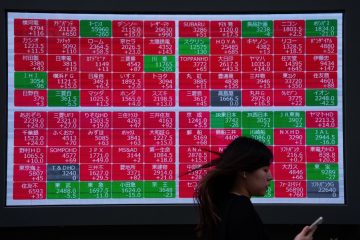
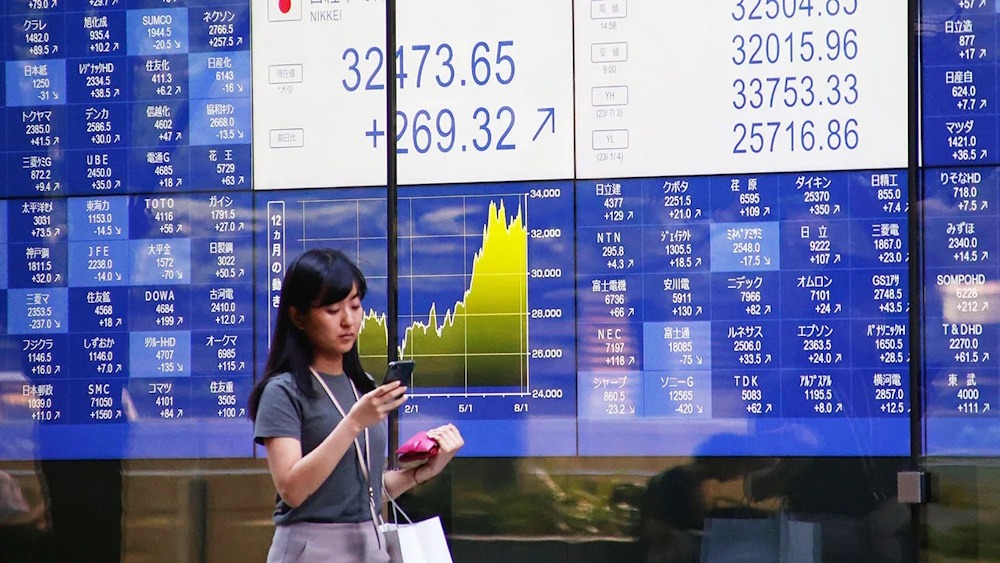
Japan is betting that a more aggressive stance from the Bank of Japan, coupled with support from US Treasury Secretary Scott Bessent, can enhance the effectiveness of yen-buying interventions and mitigate the ongoing decline of the currency. Europe and Japan serve as significant importers of oil, in contrast to the US, which operates as a net exporter. S&P 500 futures declined by 0.1 percent, whereas Nasdaq futures remained relatively stable. Equities reached unprecedented levels last week, driven by positive corporate earnings and a robust payrolls report. This week’s results feature the technology networking equipment company Cisco and the semiconductor equipment manufacturer Applied Materials. Nvidia and Walmart, both significant players in their respective sectors, are scheduled to report later this month. Japan’s Nikkei declined by 0.3 percent, negating previous advances. South Korea’s chipmaker-heavy KOSPI index experienced an increase of 5 percent.
China’s CSI300 blue-chip index experienced an increase of 1.2 percent, whereas Hong Kong’s Hang Seng Index saw a decline of 0.3 percent. Data released on Monday indicated that China’s producer prices surged to a 45-month peak, concurrently with an acceleration in consumer inflation driven by heightened global energy costs. The Gulf will feature prominently in discussions during Trump’s visit to China starting Wednesday, where he will engage in face-to-face talks with Chinese President Xi Jinping for the first time in over six months. Discussions surrounding trade, Taiwan, artificial intelligence, and nuclear weapons are poised to take place as stakeholders consider the extension of a critical minerals agreement. In commodity markets, gold declined by 0.5 per cent to $4,690 an ounce, receiving minimal support as a safe haven or as a hedge against inflationary pressures.