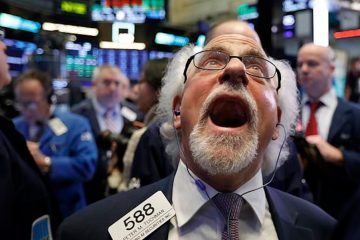
Asian Stocks Slide as Brent Crude Reaches 4-Year Peak
Asian shares declined on Thursday as oil prices surged to four-year highs amid concerns that the US may launch another strike on Iran. Despite mostly positive earnings from technology giants, investor sentiment remained subdued as they awaited Apple’s results. European stocks are preparing for a lower opening, as the pan-regional stock futures gauge declines by 0.8 percent. Investors are apprehensive that the European Central Bank and the Bank of England may signal an increase in interest rates later today, following the Federal Reserve’s decision to maintain its current rates. However, three members of the Federal Reserve board opted to eliminate the central bank’s easing bias, marking the most contentious decision since 1992. Outgoing Chair Jerome Powell also confirmed he would remain as a governor for the time being to uphold the institution’s independence as his successor Kevin Warsh, selected by low-rate proponent US President Donald Trump, approaches confirmation. The recent surge in oil prices has raised alarms, with Brent crude futures increasing by more than 6 percent on Thursday, reaching a four-year peak of $125 per barrel. This escalation follows reports indicating that the United States is contemplating further military intervention in Iran.
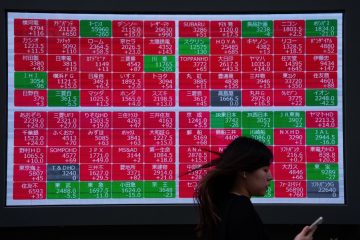
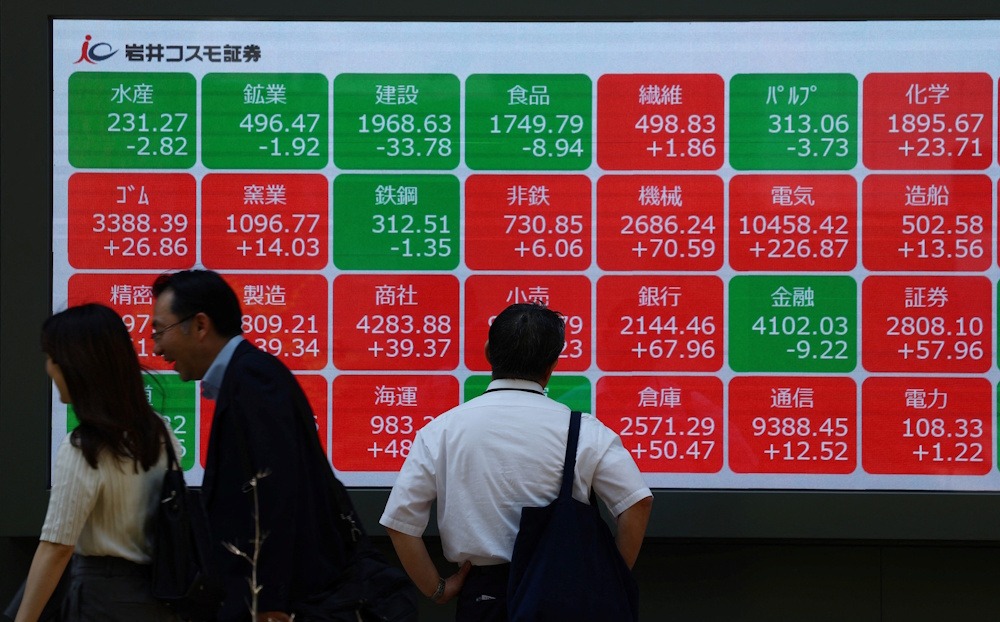
Consequently, MSCI’s broadest index of Asia-Pacific shares outside Japan experienced a decline of 1 per cent on Thursday, yet it remained poised for a 15 per cent increase this month. Japan’s Nikkei experienced a decline of 1.4 percent, yet it recorded an increase of 16 percent in April. South Korea’s KOSPI reached a new all-time high before declining by 0.8 percent. China’s blue chips exhibited little movement, while Hong Kong’s Hang Seng index experienced a decline of 1.2 percent. “The future path of the Iran conflict is still extremely uncertain … All outcomes are still on the table: escalation, impasse and peace, with starkly different implications,” said Luke Yeaman. Central banks are observing the prevailing outcome before committing to any decisive actions. Much like vessels navigating the Strait of Hormuz, they are maneuvering through a perilous landscape, with threats present at every corner. In Asia, futures on Wall Street retraced earlier gains that were driven by the technology sector. Nasdaq futures experienced a decline of 0.3 percent.
Earnings from Google parent Alphabet exceeded expectations, resulting in a 7 percent increase in its shares during after-hours trading. Results from Microsoft and Amazon.com were robust, enhancing expectations for Apple later on Thursday. Meta Platforms faced disappointment as it increased its annual capital spending forecast to invest billions more into artificial intelligence infrastructure, resulting in a 7 per cent decline in its shares. Global bonds experienced significant declines on Thursday, as the surge in oil prices and a hawkish stance from the Federal Reserve prompted a selloff in Treasuries. Markets swiftly adjusted their expectations, eliminating any anticipation of rate cuts from the Fed this year, while presenting a roughly equal probability of a rate hike by the upcoming spring. US Treasury yields increased to a one-month high, while the dollar appreciated broadly, surpassing 160 yen. Benchmark US Treasury yields increased by 1 basis point to 4.4298 percent, following a rise of 6 basis points overnight to 4.434 percent, marking the highest level since late March.
The yield on 10-year Japanese government bonds increased by 4 basis points to 2.500 percent, marking the highest level since June 1997. Australia’s 10-year government bond yields increased by 6 basis points to 5.066 percent. The US dollar experienced an uptick alongside rising yields, remaining close to its peak in over two weeks. It increased by 0.1 percent to 160.50 yen after rising 0.4 percent overnight to 160.48 yen, approaching levels that have historically prompted intervention. The Japanese currency has depreciated over 2 percent since the onset of the US-Israeli conflict regarding Iran on February 28. Investors have established the largest short yen position in almost two years, wagering that neither interest rate increases nor the possibility of intervention will provide support.