South Korean stock market surpasses UK’s as ninth largest
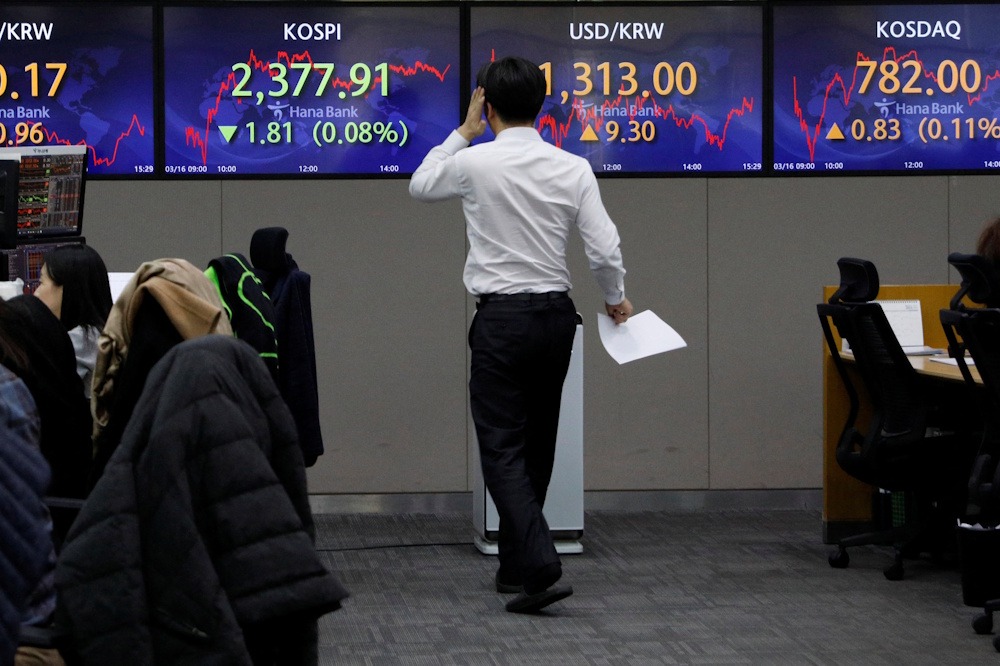
South Korea has surpassed the UK to emerge as the world’s eighth-largest stock market, driven by a vigorous rally in its technology leaders associated with artificial intelligence. The total market capitalization of Korean-listed companies has surged more than 45 per cent this year to $4.04 trillion, while the UK’s has climbed about 3 per cent to $3.99 trillion, according to data. The UK market was approximately twice the size of Korea’s as recently as the end of 2024. The rise in Korean stocks highlights the global shift towards companies associated with artificial intelligence, which has propelled gains in the two largest publicly traded firms in the Asian nation: Samsung Electronics Co. and SK Hynix Inc. The two memory-chip giants now represent over 40 percent of the total market capitalization of the benchmark Kospi index, which comprises more than 800 constituents.
A further tailwind has been provided by President Lee Jae Myung’s push to bolster equity prices through corporate governance reforms and pro-market policies. “The rapid ascent of Korea and Taiwan reflects a structural rebalancing in global equity markets, driven by their dominance in AI hardware rather than tactical asset allocation,” said Francesco Chan. “As the backbone of the AI supply chain — with a ‘super-cycle’ advantage in high-end foundries and memory — these economies are attracting sustained structural capital inflows.” The rally in Korean stocks reflects the trend seen in Taiwan, which in April surpassed the UK to emerge as the world’s seventh-largest share market. Taiwan’s advancements have been significantly driven by the world’s largest chip foundry, Taiwan Semiconductor Manufacturing Co., which currently represents approximately 45 percent of the island’s benchmark gauge. Taiwan’s stock market value, currently at $4.48 trillion, is nearing that of Canada.
The UK’s FTSE 100 Index has seen an increase of approximately 4 per cent this year, which is slightly lower than the MSCI all country world index, yet significantly trailing the remarkable gains of markets that have capitalized on the AI boom. The nation’s equity market, recognized as Europe’s largest, continues to be led by conventional sectors including financials, consumer staples, and energy-and-mining companies. “Support a much steeper trajectory for Korean and Taiwanese equities than for Europe,” said Patrick Kellenberger, highlighting the influence of factors like the potential of AI, global defense spending, and corporate government reforms. “Europe continues to grapple with the challenges of commercializing and scaling innovation. Creating the conditions for innovative firms to emerge and grow is critical — but also time consuming.”
Although equity values have surged for the Asian chip powerhouses, the economies in the region continue to be significantly smaller than those of the major European nations. South Korea’s gross domestic product is projected to reach $1.9 trillion this year, while Taiwan’s is estimated at $977 billion. These figures fall significantly short of the forecasts exceeding $3 trillion for Germany, the UK, and France, according to estimates from the International Monetary Fund. Currently, Wall Street strategists express optimism regarding Korean stocks, pointing to earnings upgrades driven by AI demand and appealing valuations. Goldman Sachs Group Inc. has elevated its Kospi target to 8,000, primarily fueled by a surge of over 200 percent in its earnings growth projection for 2026.