S&P 500 Rally Faces Bond Market Pressure
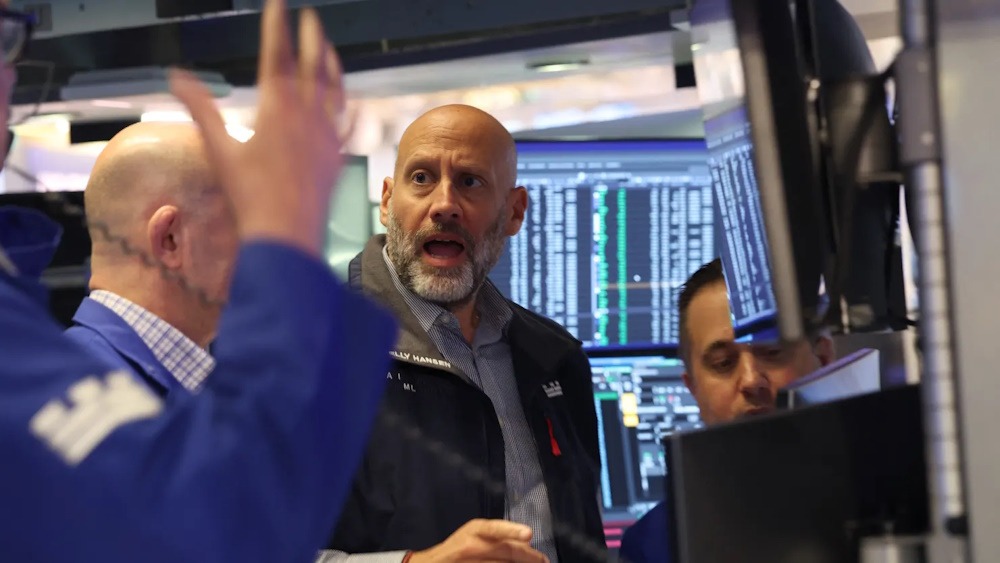
With Friday’s rise, the S&P 500 extended its winning streak to eight weeks, its longest since 2023. The reasons may seem familiar: strong corporate earnings and excitement for AI as investors disregard concerns about the conflict with Iran. However, in the bond market, negative sentiments are unsettling investors and may impede the ability of stocks to maintain their upward momentum. US Treasury yields, which have a significant impact on interest rates across the economy, are presently at their highest levels in a year. As bond prices decrease, yields experience an upward movement. Traders are currently expecting that the Federal Reserve will keep interest rates steady in the short term, with a possibility of an increase later this year, as suggested by CME FedWatch. The closure of the Strait of Hormuz has led to oil prices hitting four-year highs, concurrently driving inflation expectations upward. Increased Treasury yields lead to higher costs for loans and mortgage rates, adding further pressure on consumers during a period when sentiment is already at historically low levels, as evidenced by the University of Michigan’s comprehensive consumer survey.
When Treasury yields rise above one-year highs, “it gets harder for the stock market to ignore; it gets harder for everyone to ignore,” stated Rob Williams. It carries significant consequences for housing affordability. It impacts every facet. Corporate America continues to report strong profits. The S&P 500 is set to realise the most significant quarterly earnings growth rate since 2021, according to reports. The S&P 500 has recorded 18 all-time highs this year and is presently positioned less than 0.5% away from attaining yet another significant milestone. AI development and tax cuts from President Donald Trump’s “One Big Beautiful Bill Act” have boosted share values, notably in the technology and AI sectors. The S&P is weighted by market capitalisation, indicating that companies with greater market value exert a more significant impact on the index. Since the onset of hostilities with Iran, the S&P 500 has seen an increase of approximately 8.6%. However, during the same timeframe, an equal-weighted version of the S&P 500 has increased by less than 1%. “It’s just an increasingly narrow set of things that are working,” remarked Jeff Klingelhofer. “For now, at least, the market is concentrating exclusively on those elements, possibly neglecting certain warning signals.” Meanwhile, since March 30, the 10-year yield has risen from 4.34% to around 4.56%.
Klingelhofer acknowledged the favourable conditions for equities, particularly in relation to artificial intelligence. He expressed surprise at how investors appear to disregard the potential pressure on consumers stemming from markedly higher yields, even amidst warning indicators like increasing auto loan delinquencies. “I don’t think markets are appropriately focused on all of the potential headwinds,” Klingelhofer stated. Bond investors are pursuing higher yields as a safeguard against the inflationary pressures stemming from the protracted US-Israeli conflict with Iran, which has lasted for almost three months, coupled with apprehensions about the rising government debt in multiple countries. Meanwhile, “greed” is propelling the stock market, as indicated by the Fear and Greed Index. The index has indicated “greed” since April 15, when the S&P 500 reached its initial record high since the onset of the conflict. Treasury yields typically vary in accordance with expectations surrounding inflation and economic growth. While inflation is causing concern among certain investors, economic growth is simultaneously contributing to the increase in yields and stock prices. The Atlanta Federal Reserve’s daily tracker of economic growth estimates US GDP at a robust 4.3%. Unemployment in April held steady at 4.3%, a level regarded as comparatively low. “Steep moves in interest rates have the potential to undermine consumer resilience, but the current margin, while notable, is less immediately impactful on the average American,” said Kriti Gupta.
The stock market may overlook the rise in yields if investors focus on the strength of the economy. The scenario intensifies as attention shifts to persistent inflation, characterised by a robust economy juxtaposed with a fatigued consumer base. Ultimately, the situation is contingent upon oil prices and the geopolitical importance of the Strait of Hormuz. If oil prices continue to trade near $100 per barrel – up more than 68% since the start of the year – inflation concerns will persist and yields could rise further. A core measure of the Consumer Price Index that excludes food and energy saw an increase of 2.8% year-over-year in April. If core CPI rises above 3% year-over-year in the upcoming months, strategists at Barclays indicated that higher yields are more likely to exert pressure on stock prices. CPI tracks the standard price variations for commonly utilised goods and services. The stock market is capable of absorbing elevated yields provided that the economy continues to exhibit robust growth, Gupta at JPMorgan stated. However, should concerns regarding inflation escalate and bond market volatility rise, these factors may overshadow the optimistic projections for economic growth. And that line is what the US market is grappling with as the timeline shifts around a resolution to the conflict in Iran, she stated.