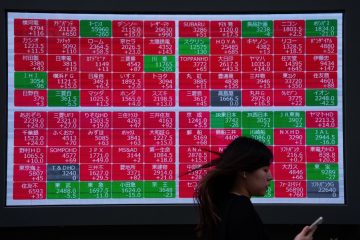
Asian shares dip following Wall Street decline
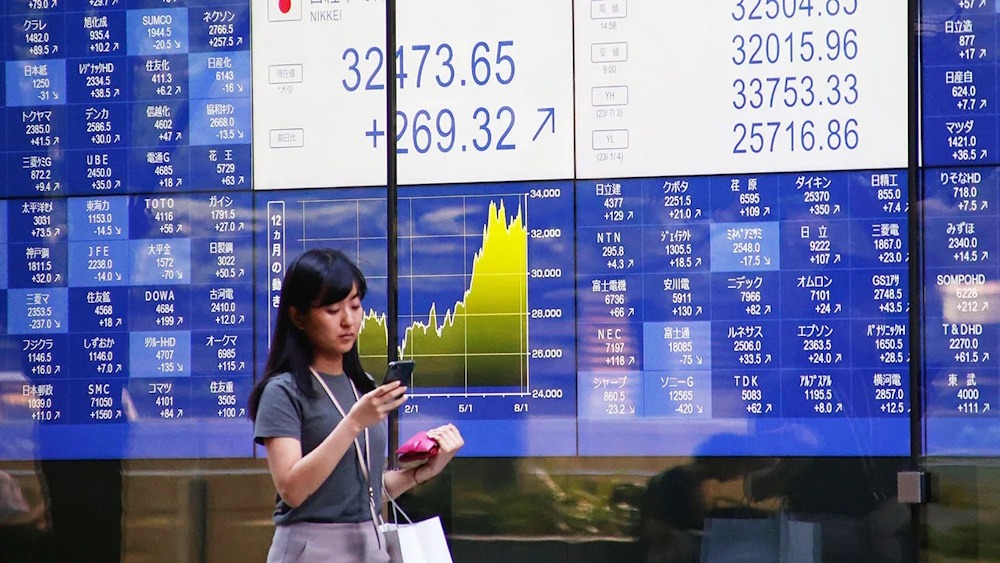
Asian shares experienced a pullback on Thursday, reflecting the declines observed on Wall Street, which ended a nine-day winning streak for the S&P 500. Oil prices declined following a significant increase on Wednesday, as renewed hostilities raised concerns about the stability of the US-Iran ceasefire. Early Thursday in Asia, Brent crude was down by $1.17, trading at $96.64 per barrel, while the benchmark US crude oil experienced a decline of $1.08, settling at $94.94 per barrel. Oil prices had increased the previous day following announcements from both the United States and Iran regarding their retaliatory actions in response to prior attacks or attempted ones. In share trading, Japan’s Nikkei 225 declined by 1.9 percent to 67,101.83 as traders opted to sell technology stocks in order to secure profits. Energy and technology behemoth SoftBank Group experienced a decline of 10.4 percent, whereas Shin-Etsu Chemical saw a decrease of 3.8 percent. Hong Kong’s Hang Seng declined by 1.3 per cent to 25,299.29, while the Shanghai Composite index experienced a decrease of 0.4 per cent, settling at 4,067.46. In South Korea, the Kospi experienced a decline of 1.7 percent, settling at 8,651.87. Meanwhile, Australia’s S&P/ASX 200 fell by 1.5 percent, reaching 8,657.40.
On Wednesday, the S&P 500 experienced a decline of 0.7 percent from its all-time high, marking its first decrease in 10 days, and concluded the trading session at 7,553.68. The Dow Jones Industrial Average fell by 1.2 percent to 50,687.07, whereas the Nasdaq composite decreased by 0.9 percent to 26,853.98. Palo Alto Networks contributed to the market’s decline, experiencing a drop of 5.6 percent despite reporting a quarterly profit that exceeded analysts’ expectations. Stocks experienced downward pressure due to rising yields in the bond market, which increased alongside the price of oil. The yield on the 10-year Treasury increased to 4.49 per cent from 4.46 per cent late Tuesday and from merely 3.97 per cent prior to the onset of the war. High yields globally are poised to impede economic growth and diminish valuations for equities and various other investment vehicles. They have already driven the average long-term US mortgage rate to its highest level in nine months, and they could restrict companies’ borrowing to construct the artificial-intelligence data centres that have recently bolstered the growth of the US economy.
Higher borrowing costs can adversely affect smaller firms, as many rely on loans to finance their growth. The Russell 2000 index, which represents the smallest US stocks, experienced a decline of 1.3 percent, outpacing the losses observed in the broader market. Reports released Wednesday on the US economy presented a mixed picture. One from the Institute for Supply Management indicated that growth accelerated more last month for US construction, agricultural, and other services businesses than anticipated by economists. The survey also indicated that businesses are experiencing the strain of elevated prices resulting from tariffs and increased oil costs. Stocks continue to hover close to their historical highs, despite the mounting pressures on the global economy stemming from elevated inflation levels. Oil prices continue to hover beneath their highs observed at the onset of the conflict with Iran, while optimism persists on Wall Street regarding a potential agreement between the United States and Iran to allow oil tankers to resume passage through the Strait of Hormuz.
Such a development would enhance the international circulation of crude oil and, ideally, lead to a reduction in its price. GameStop experienced a 6 percent increase following the announcement that its revenue for the most recent quarter had risen by 14 percent compared to the same period last year. It also announced a program to allocate up to $2 billion to its investors through the repurchase of its own shares. Macy’s experienced an increase of 0.6 percent, having fluctuated between gains and losses throughout the trading session. The retailer reported profit for the latest quarter that exceeded analysts’ forecasts, while indicating that an overhaul of its merchandise and improved customer service is resonating with customers. In other transactions early Thursday, the US dollar declined to 159.90 Japanese yen from 160.08 yen late Wednesday. The euro appreciated to $1.1610 from $1.1600.