Elon Musk brushes off Tesla’s rumoured China business sale
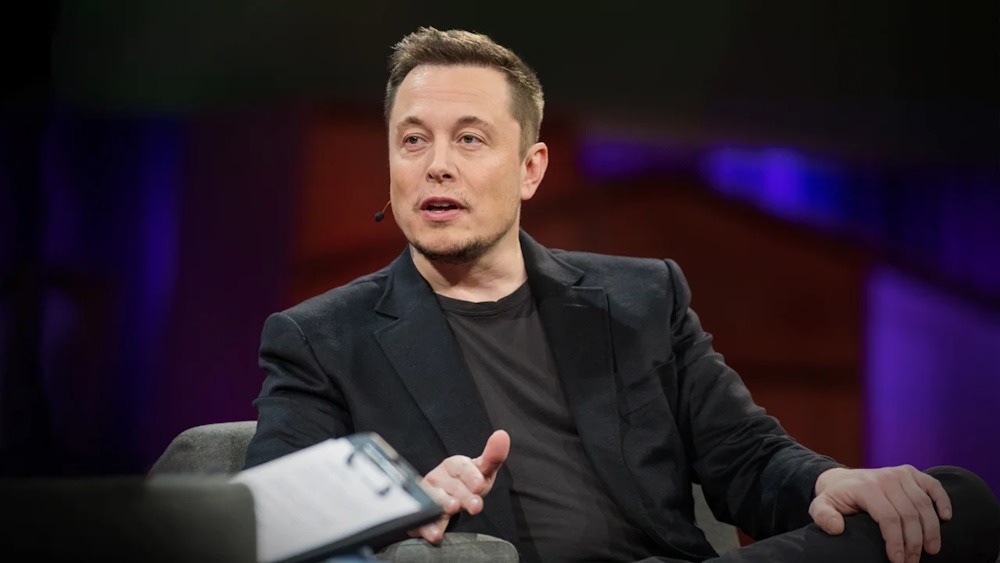
Elon Musk characterised a report as “fake news,” which claimed that executives at his electric vehicle company, Tesla, had been instructed to ready themselves for a separation of its China operations in anticipation of a possible merger with his space exploration enterprise, SpaceX. Tesla advisers have explored various avenues for a potential separation, encompassing options such as a spin-off, sale, or closure, as reported on Thursday. The timeline for any action regarding Tesla’s operations in China remains uncertain, and it is noted that these plans may evolve. “This has never even come up in a discussion ever,” Musk, the world’s richest person, said on his X social media account in response to the report. “Absurdly fake news”. A merger between Musk’s Tesla and SpaceX would present significant geopolitical and regulatory challenges, especially in China. This is due to SpaceX’s role as a key US defence contractor engaged in national security and satellite initiatives, contrasted with Tesla’s wholly owned manufacturing operations within China.
Tesla and SpaceX were unavailable for comment outside of standard business hours. Investors and analysts have long pondered the potential integration of Musk’s electric vehicle and aerospace enterprises, with discourse escalating during SpaceX’s unprecedented $75 billion initial public offering process. Musk had in recent years instructed Tesla executives to organise the company with a “laser” focus between its US and China businesses, aiming to ensure that in the event of geopolitical strife between the two countries, at least the US half of Tesla would survive, the source said In contrast to numerous foreign automakers, Tesla’s operations in the Chinese vehicle market are not organised as a joint venture with a domestic partner. Tesla’s Gigafactory Shanghai stands as its largest and most productive facility worldwide, functioning as a crucial export center for Europe, Canada, and the Asia-Pacific region.
The facility has historically represented over fifty percent of Tesla’s worldwide deliveries, boasting an annual production capacity exceeding 950,000 vehicles. Earlier this month, Musk indicated that a merger between Tesla and his other trillion-dollar-plus-valued firm SpaceX remains a possibility, noting the increasing overlap between the two companies. Analysts, however, have highlighted the “practical bottleneck” associated with obtaining regulatory approvals for both companies, especially in China, where national security concerns regarding SpaceX’s connections to the US government may present challenges. Giga Shanghai serves as a crucial export conduit, with China ranking as Tesla’s second-largest market worldwide, following the United States. However, the company encounters significant competition from domestic rivals like BYD. The source reported that executives have also deliberated on establishing a distinct sales entity to manage exports from the Shanghai plant. Tesla could establish distinct office systems and restrict direct access for China-based employees to other company units, it added.
SpaceX President and Chief Operating Officer Gwynne Shotwell has recognised possible advantages, stating in June that merging the companies “might make Elon’s life a little easier” by simplifying management across his enterprises. Through its China entity, Tesla achieved the lowest costs to manufacture its Model 3 and Model Y with the assistance of over 400 domestic suppliers, as previously stated by a Tesla China executive. Furthermore, it was noted that more than 60 of these suppliers also cater to Tesla on a global scale. Deliveries of China-manufactured Model 3 and Model Y vehicles experienced a year-over-year increase of 24.4% in June, while sales and exports from the Shanghai factory for the second quarter saw a rise of 32.8%. Tesla has stated that it sources locally over 95% of the components in the China-made Model 3 and the updated version of the Model Y.