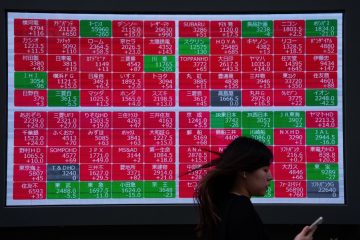
Stocks in Asia soar as tech companies see a boost in earnings
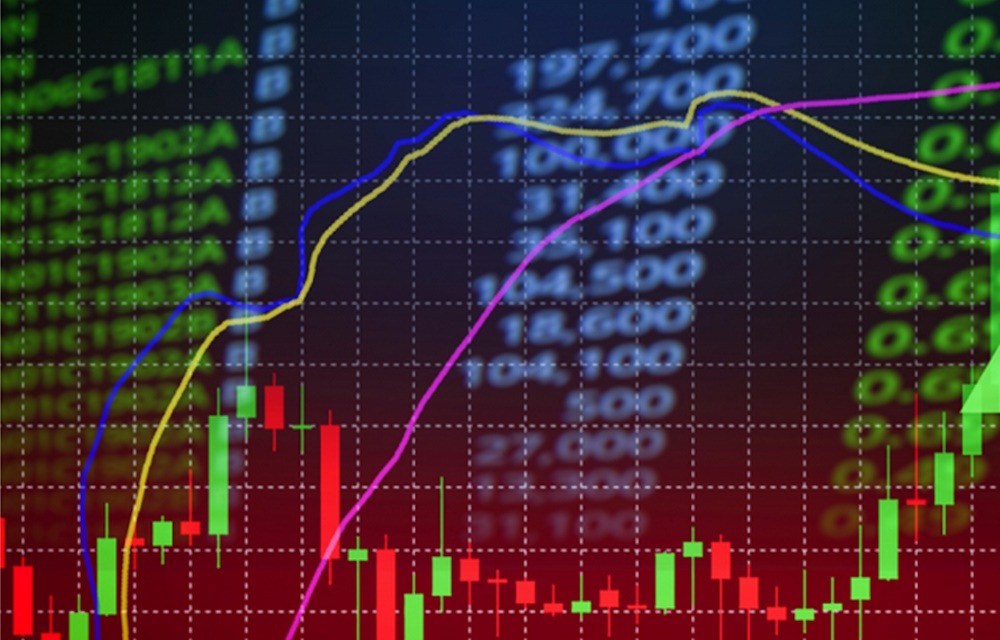
Asian stocks experienced an uptick on Thursday following announcements from US technology companies regarding substantial capital expenditure plans, which are expected to positively impact regional chipmakers. Concurrently, the intensifying conflict in the Middle East has driven oil prices to their highest levels in six weeks. Rising oil prices have reignited inflationary concerns, leading to short-term US Treasury yields reaching 17-week highs as traders speculate that the Federal Reserve may be compelled to increase interest rates sooner rather than later. Brent crude futures increased by 2 percent to $96 per barrel in early trading following the US’s initiation of a new series of strikes on Iran, while Yemen’s Houthis targeted oil tankers in the Red Sea. This escalation has broadened the conflict’s impact, creating uncertainty in global markets. Thierry Wizman stated that the increase in oil prices has rekindled worries regarding its effects on global growth.
Nearly five months of conflict have significantly reduced global reserves and heightened inflationary pressures across the globe. Analysts caution that the potential closure of both the Strait of Hormuz and Bab el-Mandeb in the Red Sea could severely disrupt shipping routes for over a quarter of the world’s oil and gas supply. “The worries about global growth are well-placed, we think,” said Wizman. Earnings from Alphabet and Tesla indicated a continued robust investment in AI infrastructure, with no signs of deceleration in spending. The search giant has increased its capital expenditure plans for the year, now anticipating expenditures in the range of $195 billion to $205 billion. A significant portion of the expenditure is anticipated to enhance the prospects of Asian chip manufacturers. That propelled South Korea’s KOSPI up more than 3 percent, driven by SK Hynix and Samsung Electronics. Japan’s Nikkei experienced an increase of 1 percent. MSCI’s broadest index of Asia-Pacific shares outside Japan experienced an increase of approximately 1 percent in early trading, positioning itself for a 3 percent rise for the week, thereby ending a two-week losing streak.
Gary Tan stated that a significant positive for Asia’s chipmakers is that robust cloud growth is validating increased AI capital expenditures, thereby reinforcing the notion that the hyperscaler spending cycle remains viable. “The bigger takeaway is that AI is rapidly moving from infrastructure to disruption, with hyperscalers increasingly using AI to challenge incumbent platforms across search and e-commerce, reinforcing the AI disruption trade,” Tan said. Much of the attention this earnings season will center on whether the substantial investment in AI is translating into meaningful profit growth and whether the elevated valuations of certain firms are justified. “We will still see a bit of a wary trading session ahead as the good news from earnings competes with the escalating conflict in the Middle East,” said Nick Twidale.
In currency markets, the Japanese yen remained in focus, trading at 163.1 per dollar, relinquishing its gains from the prior session following a report indicating that Bank of Japan officials were amenable to accelerating the pace of rate increases. The currency slipped to 163.23 on Tuesday, marking its lowest level since December 1986, as traders remained vigilant for indications of intervention from Tokyo. Japan’s finance minister has consistently delivered verbal warnings that have had minimal impact on the yen. “While the risk of FX intervention or stronger GPIF demand for domestic assets could help curb JPY weakness, neither is likely to fundamentally alter the JPY’s role as a funding currency,” said strategists. “A more durable shift towards the JPY becoming an investment currency would likely require the BOJ to accelerate the pace of rate hikes,” they said. The US dollar maintained its strength, bolstered by safe-haven flows and increasing expectations that the Federal Reserve will raise interest rates. Market participants are currently factoring in 42 basis points of interest rate increases for this year, with a complete hike anticipated for September.