AI Chip Optimism Lifts Asian Equities Ahead of US Inflation Data

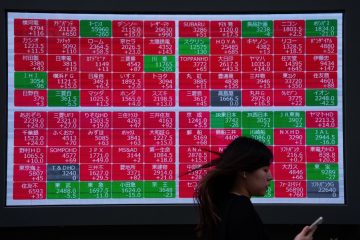
Asian equities experienced a notable increase on Thursday, driven by robust earnings and optimistic forecasts from semiconductor leaders Micron and Qualcomm. This development contributed to easing apprehensions regarding the fervent AI rally that has propelled global stock markets to unprecedented levels. Tech-heavy markets in Japan and South Korea experienced significant gains following Micron’s announcement that its customers had pledged $22 billion for its memory chips. Additionally, Qualcomm projects $15 billion in sales from its data centre business by 2029. MSCI’s broadest index of Asia-Pacific shares outside Japan experienced an increase of 1.3 per cent in early trading. Japan’s Nikkei experienced an increase exceeding 2 percent, whereas South Korea’s KOSPI, recognised as the top-performing stock market globally in 2026, saw a rise of 5.5 percent.
Futures for the S&P 500 increased by 0.5 percent, whereas Nasdaq futures surged by 1.8 percent. “Tech stocks received a massively needed shot in the arm after the bell when Micron delivered its earnings report,” said Tony Sycamore, market analyst, noting that data was suggesting broader cooling in positioning that could challenge tech’s momentum in the near term. Investor apprehension regarding the inflated valuations of AI-related companies, following a prolonged period of gains, has exerted pressure on markets in recent days, resulting in volatile trading sessions. Analysts, however, maintain a degree of scepticism regarding the potential for a prolonged rally in AI stocks, as concerns over valuations continue to persist. “It’s a positive from Micron,” stated Nick Twidale, who anticipates a significant upward movement following the earnings. “But I’m not sure how long the euphoria will last across the rest of the sector… I think valuation concerns will continue to weigh on sentiment moving forward,” he said.
Oil prices continued to fall as stranded tankers departed the Strait of Hormuz after a preliminary agreement aimed at resolving the US-Israeli conflict with Iran, alleviating worries about supply disruptions. Brent crude futures declined by 0.5 percent to $73.34 a barrel, approaching pre-war levels. US West Texas Intermediate declined by 0.38 percent, settling at $70.07 per barrel. Easing oil prices may alleviate some inflationary pressures; however, sustained elevated prices are expected to maintain upward pressure on the US Federal Reserve to implement interest rate hikes, with investors anticipating at least one increase this year. Thursday’s PCE inflation report is anticipated to indicate that core prices increased by 0.3 percent in May, resulting in an annual rate of 3.4 percent. Headline inflation is projected to be 0.5 percent for the month and 4.1 percent on a year-over-year basis.
Rising expectations of a rate hike have strengthened the dollar, positioning the Japanese yen close to its lowest level in 40 years and on the verge of further intervention from Tokyo. The yen was last at 161.73 per US dollar, not far from the two-year low it reached last week. A break below 161.96 would result in the yen reaching its lowest level since 1986. The dollar index, which measures the US unit against a basket of currencies, stood at 101.6 after peaking at 101.80 in the previous session, marking its highest level since May 12, 2025. The strengthening dollar has exerted pressure on gold, which fell below $4,000 an ounce for the first time in 2026. Spot gold last fetched $3,990 per ounce, remaining close to its lowest level since November.