Altcoins Face Selective Recovery as Bitcoin Dominance Persists
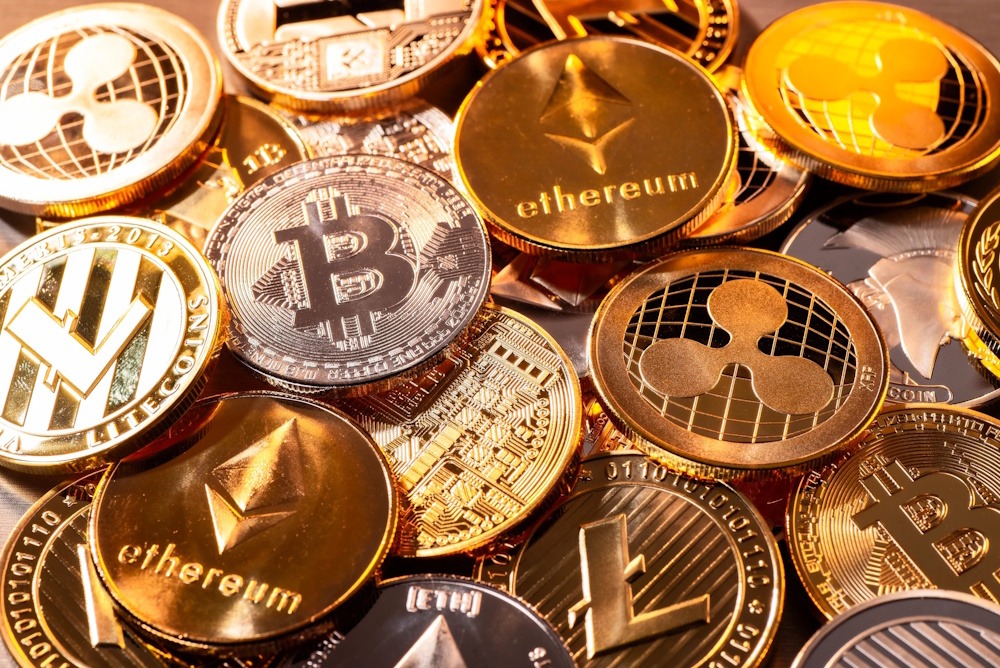
The five largest altcoins by market value — Ether, BNB, XRP, Solana, and TRON — continue to trade, on average, approximately 60% below their all-time highs. With over 740 million individuals globally now possessing cryptocurrency, a significant number persist in augmenting their holdings. What remains uncertain is the potential for a future resurgence of altcoin rallies. Bitcoin’s dominance indicates a prevailing sense of caution among investors as the market grows more discerning. Hyperliquid’s HYPE has distinguished itself in terms of perpetuals revenue, buybacks, and burns — the protocol’s Assistance Fund has allocated over $1.3 billion for the repurchase of HYPE from the open market. Solana excels in the domains of memes, real-world assets, stablecoins, and consumer applications, whereas Ethereum continues to serve as the foundational smart contract platform. Instead of a widespread altseason, the executives I consulted anticipate that capital will focus on projects that are generating actual revenue, drawing in users, and addressing concrete issues.
Chandler Fang posits that the forthcoming catalyst may emerge from beyond the realm of cryptocurrency. He anticipates a correction in equities during the latter half of 2026, which is likely to redirect liquidity towards digital assets, predominantly favouring the major players. “While altcoins should benefit, they will not be the main actors on the stage,” Fang stated in written responses. The opportunity he finds most compelling is the intersection of crypto and AI, where autonomous agents capable of holding wallets and transacting independently are naturally suited to blockchain infrastructure. Jason Rindahl anticipates a disparate recovery in 2026, influenced by the sequence of capital rotation. “I anticipate that capital will shift in a selective manner, initially towards bitcoin, followed by larger-cap assets such as Ethereum and Solana, before extending further along the risk spectrum,” he stated. When momentum returns, some of the first assets to rally are often the most speculative — tokens such as Fartcoin or Unicorn Fart Dust. They are liquid, volatile, and quick to attract retail traders. Observing those segments of the market serves as an indicator of whether the risk appetite is broadening beyond bitcoin, he added. The founders navigating the downturn are concentrating on distinct priorities. Ethereum’s Vitalik Buterin has delineated a more streamlined Ethereum Foundation that reduces its ETH sales while emphasising censorship resistance, transparency, privacy, and security. This approach positions the network as a safeguard against centralised authority.
Solana’s Anatoly Yakovenko maintains a strong emphasis on execution, highlighting the Alpenglow upgrade, which has the potential to decrease finality to approximately 150 milliseconds by the third quarter. Hyperliquid’s Jeff Yan has constructed one of 2026’s exceptional profit-generating entities, utilising perpetuals revenue to finance assertive buybacks and token burns. Charles Hoskinson of Cardano expresses a notably cautious perspective, cautioning about a potential wave of ecosystem failures in the latter half of 2026, as ADA hovers near multi-year lows. Gracy Chen expresses scepticism regarding the likelihood of this cycle yielding a conventional altseason. “It may be an era of increasingly differentiated winners and losers,” she stated. She anticipates that bitcoin dominance will stay high in the short term as the consolidation among low-utility tokens persists. Her most audacious forecast extends past the current economic cycle: by 2030, she anticipates that almost 10% of all global financial assets — including treasuries, money market funds, equities, and private credit — will be represented in tokenised form. Eric Wade contends that the most significant error investors commit is regarding altcoins as a homogeneous asset class. He categorises the market into three distinct tiers. The first consists of infrastructure linked to institutional demand — RWA tokenisation, settlement, and on-chain private credit — a sector that has consistently demonstrated growth.
Tokenised real-world assets have grown from approximately $5 billion at the beginning of 2025 to more than $30 billion by mid-2026, while on-chain private credit has consistently provided yields ranging from 8% to 12%, significantly surpassing treasury rates. The most definitive indication emerged in June, as the open lending network Morpho secured $175 million from venture capital firms Paradigm and a16z, in addition to traditional financial entities such as Apollo and VanEck. “That is what changes the conversation with treasuries and asset managers,” Dennis Bree stated in written comments. They can finally deploy on terms they recognise. The second tier, Wade argues, has largely disappeared: tokens with a compelling story but no revenue, no users, and often no active team, many of them down more than 70% since 2025. The third category is often overlooked by many investors — community-driven projects that persist in their development irrespective of macroeconomic conditions. That tier is where Wade posits the emergence of the next generation of winners, and it is also the origin point for both bitcoin and Ethereum. If another altcoin recovery occurs, it is improbable that it will resemble past bull markets.
This market increasingly favours revenue generation, user adoption, and integration with conventional financial systems, while sidelining speculative ventures. Momentum in RWAs, stablecoins, AI infrastructure, and potential regulatory tailwinds may bolster the forthcoming growth phase; however, it is improbable that these factors will elevate every token. For Bart Smith, the filter is these questions: “What’s the purpose? What problem does this solve?” he conveyed in a written response. The coins and chains that fail to provide answers will persist in their struggles, irrespective of macroeconomic conditions. The projects he anticipates will recover and appreciate are those that can do so. The forthcoming altcoin cycle is expected to resemble a stock-picker’s market rather than a rising tide, compelling traders and investors to adopt a more selective approach than ever before.