Trump’s 10% Tariffs Blocked by Court Ruling
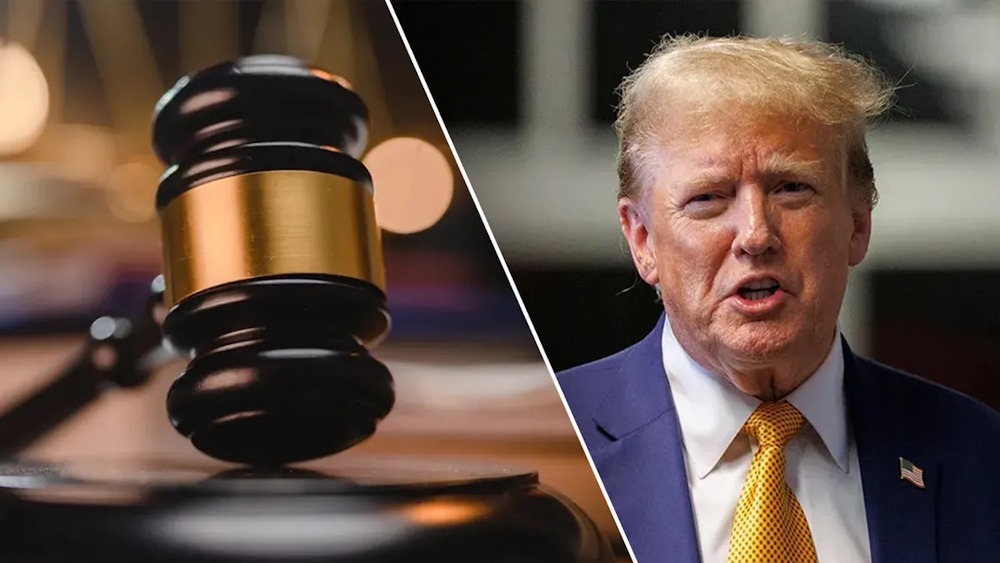
A federal trade court has ruled that President Donald Trump’s 10 percent global tariffs are unlawful, marking another setback for the administration’s economic agenda. This decision comes just months after the US Supreme Court vacated earlier levies imposed by Trump. A split three-judge panel at the US Court of International Trade in Manhattan on Thursday approved a request from a coalition of small businesses and around two dozen predominantly Democrat-led states to nullify the tariffs. In February, Trump enacted the 10 percent duties under Section 122 of the Trade Act of 1974, a provision that had never been utilized before. The court has temporarily halted the administration from enforcing the tariffs against the two companies that filed suit, as well as Washington State. It is important to note that the court did not issue a “universal injunction.” The panel determined that the other states did not have standing, as they are not direct importers. They contended that they suffered harm due to increased prices for goods, a result of businesses passing on the costs of tariffs.
In response to the ruling on Thursday evening, Trump remarked that, “we had two radical left judges who voted against it. So nothing surprises me with the courts. Nothing surprises me. So we always do it a different way. We get one ruling and we do it a different way.” The implications of the ruling for other importers currently subject to the contested levies remain uncertain at this time. Jeffrey Schwab, a senior counsel for Liberty Justice Centre, who represented the small businesses that filed one of the cases before the trade court, stated that the next steps would hinge on the administration’s response and whether the US Justice Department opts to appeal. A spokesperson for the Justice Department did not provide an immediate response to a request for comment. Jay Foreman commended the decision, stating that it took “a lot of guts and chutzpah” for small businesses to put themselves on the line. Foreman stated that his company has been remitting the disputed tariffs nearly every day since their implementation, estimating that they have already disbursed over $100,000 to date. In March, US customs authorities gathered approximately $8 billion in Section 122 tariffs, as reported by government data analyzed by We Pay the Tariffs, a coalition of small businesses. “Today’s ruling is more positive news for the small businesses that have been crushed by these illegal taxes,” Dan Anthony stated after the ruling. “The court should have gone further and blocked collection of these tariffs during any appeal.”
The trade court dismissed the administration’s argument that “balance-of-payments deficits” — a crucial criterion for imposing the Section 122 tariffs — was “a malleable phrase.” They determined that Trump’s proclamation imposing the levies did not adequately recognize that such deficits were present within the context of the 1974 law, instead utilizing “trade and current account deficits to stand in the place.” Judges Mark A. Barnett and Claire R. Kelly constituted the majority, while Timothy C. Stanceu expressed dissent. The decision marks another setback for the president’s initiative to impose tariffs without congressional input. Earlier duties — overturned by the Supreme Court on Feb. 20 — were issued under a different law, the International Emergency Economic Powers Act, or IEEPA. The justices determined that Trump had overstepped his authority, initiating a legal frenzy among importers seeking nearly $170 billion in refunds. The US Justice Department may contest the trade court’s recent ruling by appealing to the US Court of Appeals for the Federal Circuit, which previously ruled against the Trump administration in the last tariff dispute. The Trump administration is currently developing its forthcoming tariff plan; however, the implementation of these levies is still several months off. The US is currently examining numerous economies for instances of forced labor practices and surplus manufacturing capacity in accordance with Section 301 of the Trade Act, a procedure anticipated to lead to the imposition of new duties.
Meanwhile, the White House relied on the Section 122 tariffs to fill the void until July, when several trade investigations were expected to wrap up. The timing places Trump in a potentially unfavorable position as he approaches a summit next week with Chinese President Xi Jinping. Trump’s leverage may be further reduced as his capacity to unilaterally impose tariffs faces additional limitations. Section 122 permits presidents to impose duties of up to 15 percent for a duration of 150 days in circumstances where the United States encounters what the law characterizes as “fundamental international payments problems.” Prior to the implementation of tariffs by Trump, discussions among economists and policy experts revolved around the president’s capacity to establish a robust legal framework utilizing the statute. In a proclamation declaring the use of Section 122, Trump asserted that tariffs were warranted due to the US’s “large and serious” trade deficit. He also highlighted the negative net flows of income from investments that Americans hold overseas, along with other indicators that demonstrated the deteriorating balance of payments relationship between the US and the rest of the world.
According to the law, presidents possess the authority to impose tariffs on goods imported into the US for a limited duration to tackle issues related to the flow of money in and out of the nation. Concerns encompass “large and serious United States balance-of-payments deficits” and a “imminent and significant depreciation of the dollar.” In contrast to other legal avenues Trump may consider for imposing tariffs, Section 122 allows for action without the necessity of waiting for a federal agency to carry out an investigation to assess the justification of the levies. The small businesses and states that contested Trump’s application of the law in court contended that Section 122 became obsolete when the US abandoned the gold standard decades ago. It has been stated that Trump improperly conflated “balance-of-payments deficits” with US trade deficits to justify the use of the law. They further claimed that Trump’s order announcing the Section 122 tariffs was “riddled with omissions and mischaracterisations” regarding the interpretation of a balance-of-payments deficit. The trade deficit referenced by Trump is merely one aspect of assessing the nation’s balance of payments situation, the states asserted. The states contended that Trump’s new tariffs breach additional stipulations in Section 122, notably that such duties must not be discriminatory in their application. The states contended that Trump’s new tariffs inappropriately exempt certain goods from Canada, Mexico, Costa Rica, the Dominican Republic, El Salvador, Guatemala, Honduras, and Nicaragua.
The complaint states that the Trump administration acknowledged in previous litigation regarding his IEEPA tariffs that trade deficits “are conceptually distinct from balance of payments deficits.” The dispute regarding Section 122 arose concurrently with the intensifying legal battle over refunds stemming from Trump’s IEEPA tariffs. A different judge in the Court of International Trade, US Judge Richard Eaton, is overseeing the extensive refund effort and has mandated Customs and Border Protection to provide him with regular updates on a predominantly automated process that the government will employ to issue the majority of refunds. The US customs agency initiated a refund portal in late April, with the first wave of payments reaching importers’ bank accounts this week. Uncertainties persist regarding the extent of the refund claims process and the potential avenues available for consumers seeking recourse against businesses they believe inflated prices to offset the increased costs of the higher levies.