Trump Returns from China: Will He Strike Iran Again?
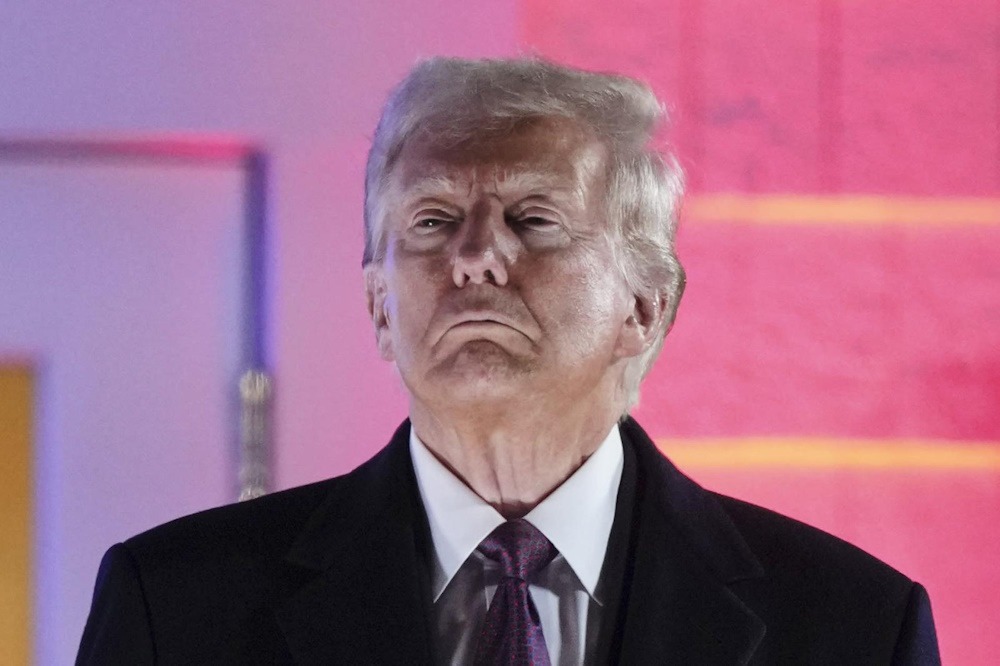
After returning from China on Friday, President Trump must make important decisions over Iran. His top aides have prepared plans for a return to military strikes in the event that Trump chooses to try to break the impasse with more bombs. According to the advisers, Trump has not yet decided on his next course of action. In an effort to persuade skeptical American voters that the costly and lethal military incursion into Iran was successful, officials from interested nations have been working to piece together a deal that would force Iran to reopen the Strait of Hormuz. However, just after departing Beijing on Friday, Trump reaffirmed to reporters on Air Force One that Iran’s most recent peace proposal was unacceptable. He remarked, “I looked at it, and if I don’t like the first sentence, I just throw it away.” Trump claimed to have spoken with President Xi Jinping of China, a critical ally of Tehran that relies on gas and oil sent over the strait, about Iran. However, he said that he did not ask Xi to put pressure on Iran, and the specifics of their conversations are still unknown. Trump must deal with conflicting views on the war. The president has not succeeded in preventing Iran from ever gaining a nuclear weapon, which he has frequently stated is the war’s ultimate goal, despite the fact that it has become a political burden for him and he has frequently appeared anxious to move on.
The Pentagon is preparing for the prospect that Operation Epic Fury, which was put on hold when the president announced a cease-fire last month, may resume in the near future, but under a different name. During testimony before Congress this week, Defense Secretary Pete Hegseth stated, “We have a plan to escalate if necessary.” Additionally, Hegseth stated that arrangements are in place for the surge of more than 50,000 troops currently posted to the Middle East to return to more regular deployments. The United States and Israel are making extensive preparations, the biggest since the cease-fire went into force, for the potential resumption of attacks against Iran as early as next week, according to two Middle East officials who spoke on condition of anonymity to discuss operational issues. Before departing for China on Tuesday, Trump declared, “They’re either going to make a deal, or they’re going to be decimated. So, we win in one way or another.” US officials stated that more aggressive bombing runs at Iranian military and infrastructure targets are among the alternatives if Trump chooses to resume military operations.
They said that another alternative would be to deploy Special Operations personnel on the ground to pursue nuclear items concealed deep underground. According to the officials, the deployment of several hundred Special Operations troops to the Middle East in March was intended to give Trump that choice. They may be employed as specialized ground forces in an operation targeting Iran’s highly enriched uranium at the nuclear facility in Isfahan. However, hundreds of support troops would also be required for such an operation; these troops would probably establish a protective perimeter and would be drawn into confrontation with Iranian forces. Military leaders admitted that there would be significant casualty risks associated with that choice. Iranian leaders have already declared that they are getting ready to resume hostilities. The speaker of Iran’s Parliament, Mohammad Bagher Ghalibaf, wrote on social media on Monday, “Our armed forces are ready to deliver a well-deserved response to any aggression; mistaken strategy and mistaken decisions will always lead to mistaken results.” And “The whole world has already figured this out. We are prepared for all options; they will be surprised.” Any military assault on Iran would probably resume where the conflict ended prior to the last-minute cease-fire between Iran and the United States on April 7. Prior to that deal, Trump had warned to begin destroying Iran’s “whole civilization” if it did not permit commercial vessels to cross the Strait of Hormuz without incident.
For days, if Iran’s government would not reopen the Strait of Hormuz to oil tankers, the president had threatened to order the US military to systematically demolish every bridge and power plant in Iran. According to US military authorities, the targets were directly related to the activities of Iran’s Islamic Revolutionary Guards Corps. However, the intentional destruction of civilian infrastructure in order to force a government is prohibited by the rules of war. Top Pentagon officials and military leaders have stated that the United States has rearmed its warships and attack aircraft in the area during the month-long bombing halt since the cease-fire started. The Joint Chiefs of Staff chairman, Gen. Dan Caine, stated last week to a Senate defense subcommittee that military officials “retain and continue to hold a range of options for our civilian leaders.” He refused to reveal what possible military action Trump would issue. More than 50,000 soldiers, two aircraft carriers, more than a dozen Navy destroyers, and several warplanes “remain ready to resume major combat operations against Iran if ordered to do so,” according to General Caine during a Pentagon briefing on May 5. Our present moderation should not be interpreted by any enemy as a sign of weakness.
However, military leaders admit in private that victory might be difficult. They claim that the US military has successfully targeted targets it set for itself, including as ammunition warehouses for the Islamic Revolutionary Guards Corps, Iranian ballistic missile launch sites, and other military infrastructure locations. However, US intelligence services claim that Iran has reclaimed access to the majority of its subterranean facilities, launchers, and missile locations. Iran has also reopened operational access to thirty of the thirty-three missile positions it maintains along the Strait of Hormuz, which might pose a threat to US warships and oil tankers passing through the small canal. According to reports, about 2,000 paratroopers and 5,000 Marines from the Army’s elite 82nd Airborne Division are in the area awaiting orders. If such an operation was approved, these forces could be employed to try to reach Iran’s nuclear material at its Isfahan atomic site, including protecting the perimeter to try to protect the special operators assigned to go in, according to military authorities. According to authorities, the military would require more soldiers on the ground to hold Kharg Island, a center of Iranian oil exports, but the forces might also be employed in an attempt to seize it.