Danish Pension Fund Excludes SpaceX for Governance Failures
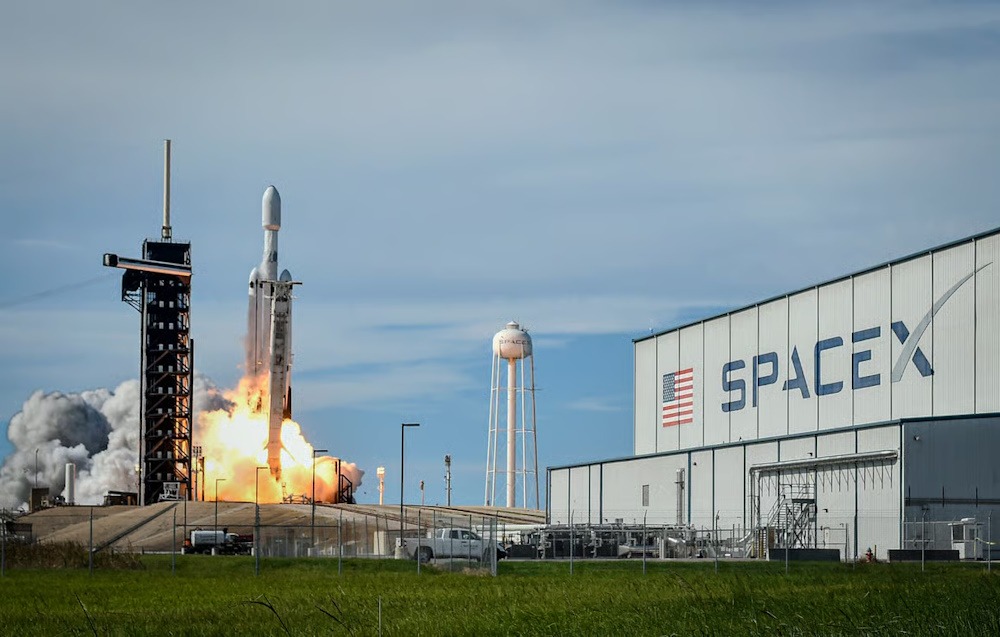
A $25 billion Danish pension fund that earlier this year garnered attention by divesting from Treasuries amid Donald Trump’s threats to seize Greenland now asserts it will refrain from investing in SpaceX. The company, which is targeting a valuation of at least $1.8 trillion in its initial public offering, is described as “grossly overvalued” and suffering from a “catastrophic governance structure,” according to Anders Schelde. SpaceX, having submitted its IPO filing on May 20, is anticipated to commence formal marketing of its offering in the coming month. Source indicates that the filing “reveals significant governance concerns,” notably that it grants Elon Musk “near-absolute control” of the company. Even if the valuation were reasonable, AkademikerPension would still feel compelled to blacklist SpaceX, Schelde stated. That’s as Musk is anticipated to hold approximately 80% of the voting rights, while concurrently fulfilling the roles of chief executive, chief technology officer, and chair of the board, he noted. AkademikerPension expressed that its concerns about SpaceX are echoed by multiple US pension funds.
In a letter published on May 14 and directed to Musk, New York City Comptroller Mark Levine, Marcie Frost, CEO of California Public Employees’ Retirement System, and Thomas DiNapoli, the State of New York Comptroller, expressed “serious concerns” regarding what they described as a “extreme governance structure” at SpaceX. SpaceX announced in February that it had acquired Musk’s xAI, which encompasses the chatbot, Grok, and the social media platform, X. The deal assigned SpaceX a valuation of $1 trillion at that time, while xAI was valued at $250 billion, according to reports. According to AkademikerPension’s calculations, SpaceX “cannot reasonably exceed” a valuation of $1 trillion, Schelde stated. Consequently, the pension fund “would not be able to justify” participating in the IPO “from an investment-return perspective.” Investors are effectively being asked to accept a “unprecedentedly low risk premium” for a “highly uncertain company,” where pricing appears to be driven more by Musk’s “narratives than by economic realities,” AkademikerPension stated.
Schelde stated that AkademikerPension would “like to be able to invest in SpaceX and its technologies” if it weren’t for the company’s perceived valuation and governance risks. “Our decision not to invest is therefore not a reflection of the quality of its technology or engineering expertise.” He stated that the Danish pension fund is likely to invest in OpenAI; however, earlier this month, OpenAI prevailed in a lawsuit brought by Musk, in which he alleged that the decision to move toward a for-profit structure was a betrayal of its original public-benefit mission. “OpenAI will most likely enter our passive equity portfolio following an IPO, assuming it becomes part of the relevant market indices,” Schelde stated. Whether the company will be included in its actively managed portfolios will depend on its IPO valuation and a risk assessment, he added.
Despite its modest scale, AkademikerPension has consistently attracted notice for its strategic choices. It divested its holdings in Tesla Inc. last year, expressing apprehensions that Musk was “in the process of destroying” the company’s brand and value. In January, AkademikerPension announced its decision to divest from Treasuries, citing its evaluation that the US government is “not a good credit.” In the context of SpaceX, the comprehensive risk evaluation indicates that AkademikerPension will refrain from engaging in the IPO or any secondary-market transactions related to the company, including through the indexed segment of its equity portfolio, as stated by Schelde. Goldman Sachs Group Inc., Morgan Stanley, Bank of America Corp., Citigroup Inc., and JPMorgan Chase & Co. are at the forefront of the IPO, collaborating with 18 additional banks.