Trump Slams SC for Tariff Ruling
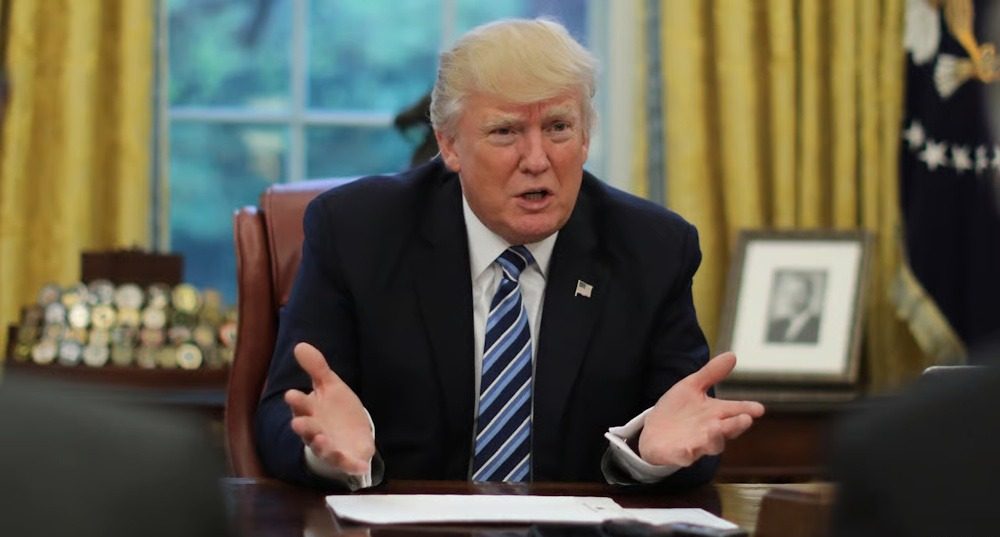
US President Donald Trump on Sunday expressed discontent with the Supreme Court regarding its recent ruling against his tariffs, asserting that certain Justices appointed by Republicans had not upheld their loyalty. He cautioned that forthcoming decisions, particularly those related to birthright citizenship, might pose risks to the nation. He also stated that by incorporating a “‘tiny’ sentence” in the ruling regarding the non-repayment of the funds, the nation could have conserved USD 159 billion. In an extensive statement on Truth Social, Trump specifically criticized Justices Neil Gorsuch and Amy Coney Barrett for their votes that diverged from his administration’s stance on tariffs. He stated, “I ‘Love’ Justice Neil Gorsuch!” He is an intelligent and principled individual; however, his vote against me and our nation regarding tariffs represents a detrimental decision. In reference to Barrett, Trump remarked, “I have, likewise, always liked and respected Amy Coney Barrett, but the same thing with her. They were appointed by me, and yet they have caused significant harm to our nation!”
Trump asserted that the court’s tariff ruling “cost the United States 159 Billion Dollars that we have to pay back to enemies, and people, companies, and Countries, that have been ripping us off for years.” He contended that the court might have mitigated the financial repercussions with a ‘tiny’ sentence” in the ruling. He stated, “They could have resolved that situation with a ‘tiny’ sentence, Any money paid by others to the United States does not have to be paid back. Why would they not have taken that action?” In a previous post on Truth Social, Trump reiterated his argument, stating, “Any money paid to the United States of America does not have to be paid back” – This assertion, if incorporated by the Supreme Court into its contentious Tariff ruling, could have resulted in a savings of 159 billion dollars for America! Trump expressed dissatisfaction with the tendency of Republican-appointed justices to showcase their independence by issuing rulings that are unfavorable to him. “Democrat Justices always remain true to the people that honored them for that very special Nomination,” he said. “They don’t waver, no matter how good or bad a case may be, but Republican Justices often go out of their way to oppose me, because they want to show how “independent” or, “above it all,” they are.”
While saying, “it’s really OK for them to be loyal to the person that appointed them to “almost” the highest position in the land, that is, a Justice of the United States Supreme Court,” he added later, “I don’t want loyalty, but I do want and expect it for our Country.” The US President issued a caution that the court may subsequently decide in opposition to his stance on birthright citizenship. He stated, “they will be ruling against us on Birthright Citizenship, making us the only Country in the World that practices this unsustainable, unsafe, and incredibly costly disaster.” He further argued that “a negative ruling on Birthright Citizenship, on top of the recent Supreme Court Tariff catastrophe, is not economically sustainable for the United States of America!” The trade agenda pursued by the Trump administration faced a new legal challenge as a federal court ruled on Thursday (local time) that the 10 per cent blanket tariffs were unlawful, representing a notable setback for the President’s key economic strategy, according to reports. A judicial panel at the US Court of International Trade reached a split 2-1 decision, concluding that the government did not present sufficient legal justification for the imposition of the levies under Section 122 of the 1974 Trade Act. This specific set of tariffs was implemented as a substitute following a Supreme Court ruling earlier this year that invalidated a broader array of duties.
It is reported that the court’s directive mandates the administration to promptly cease the collection of these duties from the plaintiffs in the case and to process refunds for prior payments. The current ruling, while applicable solely to the companies involved in the lawsuit, signifies a significant setback for the administration’s capacity to unilaterally alter trade policies via executive measures. The current legal disputes highlight the prevailing environment of “chaos and uncertainty” that characterizes the administration’s economic trajectory. In light of the Supreme Court’s February ruling deeming a significant segment of the initial tariffs unlawful, the President shifted focus to these contentious global duties, leveraging the previously untested powers granted by the 1974 Act. According to reports, the environment for businesses continues to exhibit volatility. While importers can now pursue refunds for payments made under the tariffs that the Supreme Court has previously invalidated, the reimbursement process is anticipated to be gradual and structured in tiers. Moreover, the timeline for the comprehensive implementation of the refund system is still unclear, and payments may encounter further delays should the administration enact new policies that modify the computation of these returns.