Trump Admin Fights to Maintain Tariffs Post-Court Ruling
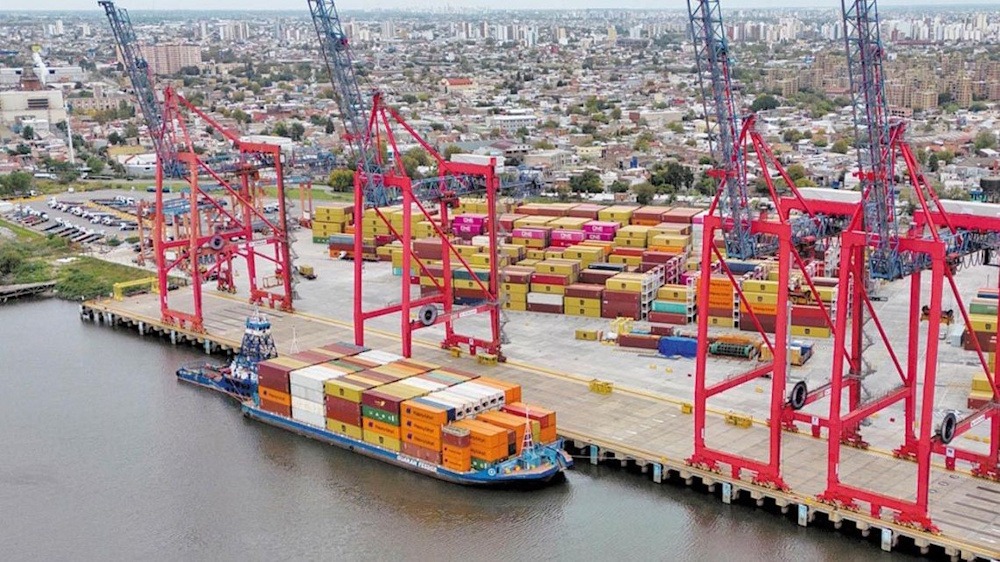
The Trump administration requested that the US trade court suspend a ruling which deemed the president’s recent 10% global tariffs unlawful during the appeal process, allowing importers to continue bearing the costs of the levies as the legal dispute unfolds. In a 2-1 ruling last week, a panel from the US Court of International Trade determined that President Donald Trump’s application of Section 122 of the Trade Act of 1974 to implement the tariffs was not valid. However, the court’s immediate injunction against enforcement applied solely to two companies that filed suit and the state of Washington. While the court’s order remains narrowly defined at this stage, the Justice Department contended in a filing on Monday that a significant number of importers subject to the Section 122 tariffs are expected to inundate the court with claims. The implementation of the decision would “severely undermine” Trump’s trade agenda and divert resources from the “vast effort” currently focused on refunding a previous set of global tariffs that were invalidated by the US Supreme Court, according to government lawyers.
The trade court dismissed the administration’s position that “balance-of-payments deficits” — a critical criterion for the imposition of Section 122 tariffs — was “a malleable phrase.” It was determined that Trump’s proclamation imposing the levies did not adequately recognize the existence of deficits as defined by the 1974 law, opting instead to substitute “trade and current account deficits” in its place. The government is currently awaiting a decision on its appeal, which is under consideration by the US Court of Appeals for the Federal Circuit. The Justice Department indicated in its filing on Monday that should the trade court and the Federal Circuit decline to suspend the ruling, the administration is prepared to submit an emergency request to the Supreme Court.
The justices earlier this year invalidated Trump’s global tariffs based on a different statute, the International Emergency Economic Powers Act, or IEEPA. A refund process was initiated in April; however, there remains ambiguity regarding the ability of all companies that paid the IEEPA tariffs to recover their funds. According to government data, over 170,000 importers have submitted deposits to address new tariffs under Section 122, impacting 13 million entries of goods since the implementation of Trump’s proclamation in February. In March, US customs authorities amassed approximately $8 billion in Section 122 tariffs, as per government data scrutinized by We Pay the Tariffs, a coalition representing small businesses. Sara Albrecht, chief executive officer of Liberty Justice Center, one of the groups involved in the litigation, stated that the prospect of future refunds “will never make these companies whole.”
“The Court of International Trade correctly ruled that the Section 122 tariffs are unlawful,” Albrecht stated. “The government’s motion to stay that decision only extends the uncertainty for American businesses that require stability, predictability, and the assurance of the rule of law.” US Trade Representative Jamieson Greer and Commerce Secretary Howard Lutnick presented declarations to the court on Monday advocating for the maintenance of tariffs until their scheduled expiration in July. Greer emphasized that the levies are “critical” for maintaining engagement with trade partners in negotiations. Lutnick characterized them as “the only global baseline currently restraining an unprecedented spike in import flows while the administration continues to address the United States’ balance of payments issues.”