Military-linked Chinese labs want Nvidia’s AI chips
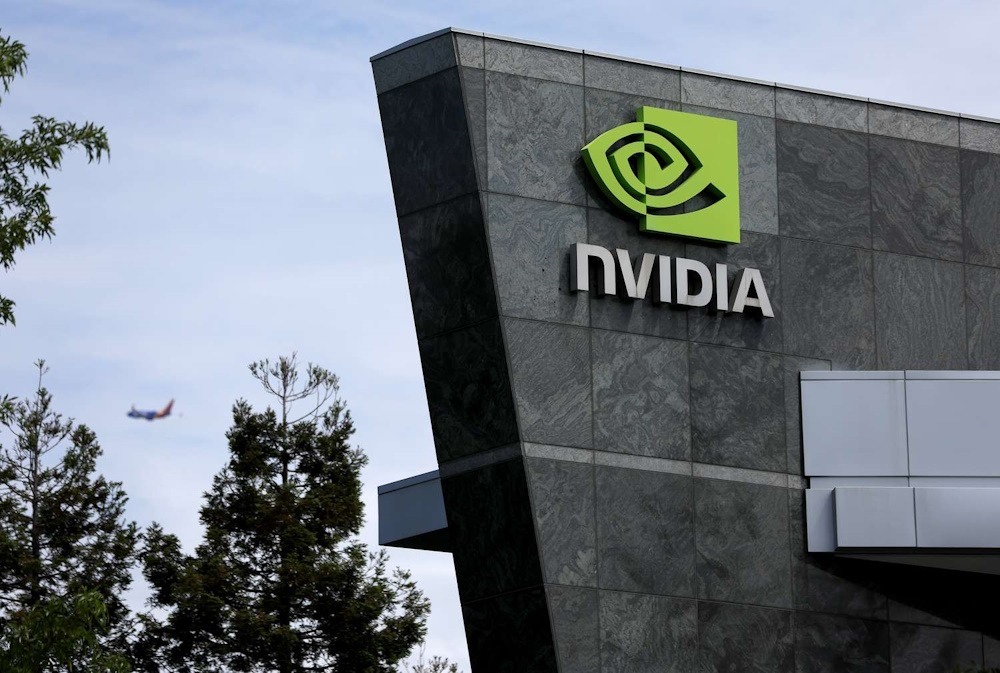
At least seven Chinese universities affiliated with the nation’s military and defence sector are pursuing access to Nvidia Corp.’s H200 chips, which represent the most advanced artificial intelligence processors permitted for sale in China by the United States, as indicated by an analysis of procurement records. Two institutions that have shown interest in the H200 chips — Beihang University and Northwestern Polytechnical University — are part of China’s “Seven Sons of National Defence,” a distinguished group committed to supporting the People’s Liberation Army. Both institutions have been placed on a blacklist by the US Commerce Department due to their contributions to the advancement of China’s military capabilities. Records indicate that Beihang’s School of Cyber Science and Technology, which claims to possess “national defence characteristics and aerospace advantages,” is seeking a lease for the utilisation of Nvidia chips. According to the records, NWPU’s School of Cyberspace Security is also in pursuit of renting access to H200s. The institution asserts that it undertakes significant national cyber responsibilities, possesses a national defence innovation team, and that numerous alumni subsequently serve in military units. It has identified over 25 Chinese universities and laboratories that collaborate with the nation’s military and defence sector, which are either currently utilising or aiming to acquire older-generation Nvidia chips, based on records that trace back to 2011. Six of the universities have been placed on the Commerce Department’s blacklist following an agency assessment that their collaborations with the PLA, which involve the development of missiles and nuclear technology, pose a risk to US national security.
Several blacklisted entities assert on their websites that they are currently utilising the older generation Nvidia chips. It remains uncertain whether any of the schools have successfully acquired access to the newer H200 chips, or what their intended applications would be should they obtain them. Review did not reveal any evidence of misconduct, including breaches of US export controls, nor did it suggest that the universities were attempting to acquire substantial quantities of chips. Authorities in China have thus far prevented the nation’s AI companies from acquiring H200s, partly due to apprehensions that an influx of American-designed AI chips could obstruct the government’s longstanding objective of fostering a domestic chip industry. Findings indicate that China’s military-linked institutions continue to seek ways to utilise Nvidia’s products, suggesting that the advanced features of these chips maintain a lasting allure. The data also underscore apprehensions among US lawmakers regarding Nvidia’s technology — which has fuelled the AI boom and elevated it to the status of the world’s most valuable company — potentially benefiting China’s armed forces as well, a scenario the company has consistently refuted.
An Nvidia spokesperson stated that it would be “silly” to assume that the Chinese military would depend on “a few dozen second-hand GPUs.” And “China has more than enough domestic chips for all of its military applications, with millions to spare,” stated the Nvidia spokesperson. “Just as it would be illogical for the American military to utilise Chinese technology, it is equally unreasonable for the Chinese military to rely on American technology.” A spokesperson for the Chinese Embassy in Washington stated that “China’s position regarding US chip exports to China has been consistent: we advocate that China and the United States achieve mutual benefit and win-win outcomes through cooperation, and we oppose the politicisation, instrumentalisation, and weaponization of technological and economic issues.” The Chinese universities referenced in this article did not provide a response to requests for comment. Neither the White House nor the Commerce Department provided any commentary. The documents reviewed by Bloomberg indicate that the institutions associated with China’s armed forces sought Nvidia chips through various means. In certain instances, attempts have been made to acquire them via third-party brokers. In other instances, contracts have been pursued to lease the computational capabilities of the chips. The earliest documentation indicates that a university linked to the Chinese military sought access to H200 chips as early as June 2025, with efforts persisting into the current year, according to the records.
In numerous instances, universities and laboratories pursued access to modest amounts of chips, exemplified by a solitary server equipped with eight Nvidia graphics processing units — the high-performance processors utilised in artificial intelligence. Those amounts are more appropriate for academic endeavours and represent only a small portion of what leading Chinese AI firms such as Alibaba Group Holding or Baidu would require for commercial applications. “That’s research lab-scale, and much smaller than what hyperscalers buy and use for training the most advanced frontier AI models,” stated Michael Deng. “But a server like that is sufficient to adapt one of China’s leading open-weight AI models for military applications such as autonomous weapons development or cyber operations,” Deng stated. “That work would run significantly faster on H200s compared to domestic Chinese chips.” Efforts by entities linked to the PLA to gain access to Nvidia’s highly coveted chips highlight the challenges the US will encounter in restricting advanced American technology from reaching China’s military, particularly in light of President Donald Trump’s decision to permit H200 sales to approved Chinese clients. The move, executed following a comprehensive lobbying effort by Nvidia Chief Executive Officer Jensen Huang, represented a notable relaxation of US export restrictions intended to curb Beijing’s AI aspirations. Huang has consistently dismissed cautions from US lawmakers and advocates in Washington regarding a more stringent approach toward China, asserting that the company’s chips might ultimately support the Chinese military.
There’s a belief that somehow if we provided American chips to foreign countries and specifically China that the Chinese military would be building their military and building aeroplanes and aircraft carriers using American chips’, Huang said in a interview last year. “They have plenty of their own chips, and their companies are formidable. The idea that China does not have a technology industry we now know is lunacy.” Even so, leading Chinese chipmakers such as Huawei Technologies Co. and Semiconductor Manufacturing International Corp. fall short of their US counterparts in terms of both the quality and volume of AI chips produced. “The question is not whether the PLA wants to depend on Nvidia, but whether it realistically has any choice in the matter,” stated Ryan Fedasiuk. “For the time being, the response is negative.” Fedasiuk said “They are requesting these chips both because nobody can beat Nvidia on quality, and because there are not a sufficient number of Huawei-designed alternatives in production for them to bid on.” In analysis, they scrutinised a range of publicly available data, encompassing Chinese procurement announcements alongside the online platforms of university laboratories and faculty members that outline their computing capabilities. Sunny Cheung, a fellow with the Jamestown Foundation focusing on China and emerging technology, contributed to the establishment of the criteria and evidence used to assess whether Chinese universities or laboratories qualify as direct collaborators with China’s military or defence sector. The assessment encompassed Seven Sons institutions, those subjected to restrictions by the Commerce Department, those that entered into memorandums of understanding, engaged in joint research or academic programs, or were involved in direct technology transfer with the PLA or China’s defence sector.
Universities that limited their engagement to activities like hosting campus visits by the People’s Liberation Army or participating in military recruitment were excluded from the analysis. “We are actively empowering this ecosystem,” Cheung concluded after reviewing the data. Nvidia’s H200 originates from the company’s Hopper line of processors designed for the training and execution of AI models. It was the most powerful AI chip on the market — with superior memory capacity and bandwidth — until the introduction of the company’s next generation Blackwell models in late 2024. A Council on Foreign Relations report last year estimated the H200’s processing power at more than six times stronger than the H20, which was previously the most advanced chip approved for sale to China. In January, the Commerce Department enacted a regulation that formalised Trump’s H200 decision, which restricted sales to verified Chinese purchasers. The regulation explicitly mandates that companies applying for US export licenses for the chips must verify that the technology will not be utilised for any Chinese military objectives or by end users associated with nuclear, missile, chemical, or biological weapons. The type of AI processor sold by Nvidia is intended for integration into a computer system for the purpose of weapon development, rather than serving as a component within a missile itself. According to Isaac Harris, both the US and China are set to deploy advanced chips to enhance the computing power of their military systems, thereby significantly strengthening their capabilities. “Nobody is discussing the integration of a GPU into a weapons system — that would represent a total misallocation of resources and a GPU,” stated Harris, whose team provides counsel to national security officials regarding the implementation of AI.
The armed forces of each nation would utilise the chips to expedite their respective research and development of advanced capabilities, in addition to managing the intricate systems that necessitate substantial computational resources, such as targeting and data management. Individuals pursuing leases for the newer H200 model instead of purchasing the chips outright are capitalising on what certain national security officials deem a significant weakness in US regulations: If the chips are hosted outside China and the university is financing remote access, the hardware would not technically cross a border and thus would not be classified as a “export.” Such a transaction would not contravene export controls, despite the fact that the US has already blacklisted the university in question and has prosecuted individuals for exporting technology to it. This is exemplified by both Beihang and NWPU, which are currently pursuing H200 compute leases. Several entities have already been utilising older generation Nvidia chips, including the A100, A800, and H20. Those models were permitted to be sold to customers in China at various times in accordance with US export regulations. At the Beijing University of Posts and Telecommunications, a supercomputing center is equipped with 144 Nvidia A800 chipsets, as outlined on a webpage that details its hardware resources. The school was blacklisted by the Commerce Department in 2020 after US officials concluded it “directly participates in the research and development, and production, of advanced weapons and advanced weapons systems in support of People’s Liberation Army modernization.”
Then there’s Harbin Institute of Technology, which the US blacklisted in 2020 after determining it had “sought to use US technology for Chinese missile programs.” According to a university webpage, Nvidia’s H100 chips have already been put to use, and records indicate that a bid was submitted last year to acquire its H20 model. The university is among the Seven Sons of National Defence in China. Another institution, the University of Science and Technology of China, which was blacklisted for its role in advancing China’s quantum technology and nuclear capabilities, states on its website that one of its supercomputing systems is powered by 200 of Nvidia’s A100 chipsets. For US lawmakers advocating for stricter measures to prevent advanced technology from reaching China, a fundamental concern is the safeguarding of AI chips, such as those produced by Nvidia, from being utilised by the Chinese military. “We know for a fact we don’t want them to touch Chinese military end users,” stated Representative Brian Mast, the Republican chair of the House Foreign Affairs Committee, during an event last month in Washington. “If it was just kids playing video games, I could care less,” added Mast, whose panel has jurisdiction over US export control programs. “But when it involves actual weapons systems, genuine military operations, and real casualties, Congress will certainly take notice.”