AI Surge Complicates Inflation Control

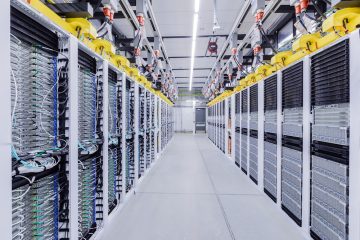
America’s cost-of-living concerns and a bond market meltdown are not indicative of a sputtering economy that is losing momentum. Quite the contrary. Prices and interest rates are increasing at an alarming pace due to three key factors: the global energy crisis stemming from conflicts in Iran and Ukraine, a worsening trade war, and an extraordinary surge in corporate investment in artificial intelligence. Policy decisions, including wars and tariffs, are attracting considerable scrutiny as petrol and diesel prices rise and a trade conflict with Canada appears to be emerging. However, there is growing concern among economists regarding the staggering sums of money that Big Tech is allocating toward the expansion of AI data centers. The substantial investment anticipated in AI infrastructure over the coming years is poised to fundamentally reshape the US economy.
All that spending poses a risk of overheating the economy at a moment when it is already operating at elevated levels: The unemployment rate remains low, and consumer spending is robust. That constitutes a formula for elevated inflation levels. Inflation levels are currently elevated. It is difficult to emphasise sufficiently the remarkable scale of the AI spending surge that has emerged following its swift ascent to prominence. AI infrastructure spending, encompassing data centers along with the associated chips and servers, is projected to reach approximately $1 trillion this year, as reported by JPMorgan. That amount exceeds the annual expenditures of the federal government on the military. However, we are merely at the initial phases of the AI development process. According to a paper published Wednesday by the Brookings Institution, Columbia University economist Stijn Van Nieuwerburgh asserts that this figure will escalate to $10.3 trillion by 2032. To provide context: Recall the $1.2 trillion bipartisan infrastructure law enacted by then-President Joe Biden in 2021, which subsequently emerged as a concern regarding inflation? Projected AI expenditures are akin to utilising the entirety of the funds designated from one of those bills annually for a decade.
That spending – just on AI infrastructure, not on the technology itself – is on pace to comprise 1.9% of all US economic activity this year, according to Goldman Sachs. However, it is anticipated that this will effectively double: On average, spending on AI infrastructure is projected to exceed 3.6% of America’s gross domestic product annually through 2032, as noted by Van Nieuwerburgh. That projection is substantial, comparable to the output from significant sectors of the American economy, including transportation, restaurants, and hotels. However, those sectors are all well-established industries. Even more shockingly, Van Nieuwerburgh projects that the AI buildout will constitute a larger share of total US economic output than any of America’s previous investment booms – surpassing the periods when the United States developed its canals, railroads, electrical grid, highways, and telecommunications networks. “All of this will result in a structural transformation of the US economy to one organized around artificial intelligence,” said Joe Brusuelas. Indeed, it is substantial. Extremely large. There is nothing fundamentally problematic about that. If tech companies are developing products that align with consumer demand, it would not inherently lead to inflationary pressures.
Supply and demand would reach equilibrium. Should AI deliver on its anticipated productivity enhancements, it is expected to mitigate the risk of inflation escalating uncontrollably. However, firms remain firmly entrenched in the “if you build it” phase of this “Field of Dreams” analogy. The anticipated transformation remains a considerable distance from realisation. The foundation must be constructed first. In the interim, the substantial surge in AI expenditures has given rise to an evolving economic challenge. “A demand shock is creating inflation,” said Daniel Yue. Data center expenditure is contributing to inflationary pressures, driven by unprecedented demand for memory and storage chips, construction materials, electricity, and skilled labour, including construction workers, plumbers, and electricians, necessary for the establishment of data centers. Prices for certain goods and services are experiencing significant increases. Supply constraints, regulations, the immigration crackdown, permitting issues, and various other practical realities have hindered the alignment of goods and labour supplies with the heightened demand. All of that is beginning to permeate the economy, particularly evident in labour shortages and increased costs for building supplies across various industries. That has raised concerns for Austan Goolsbee, president of the Federal Reserve Bank of Chicago.
In a speech in London on September 21, Goolsbee said he is closely watching whether “AI data center construction is spilling out of its own lane” and creating more economic activity than the economy can absorb. If so, it could be a sign that demand is overheating. “And if demand overheats, there is no ambiguity about how the Fed needs to respond,” Goolsbee said, predicting the central bank would have to further raise its target interest rate to help bring inflation down. The substantial increase in AI expenditure is occurring alongside an economy that has remained robust, showing no signs of cooling off since its post-pandemic surge. US manufacturing activity in August reached its highest level since July 2021, as indicated by a Purchasing Managers’ Index released by S&P Global last week. Unemployment stands at 4.1%, a threshold regarded by economists as indicative of “full employment.” US retail sales experienced a notable increase of 1.2% in August. Those do not indicate a fragile economy. In significant measure, the current robust economy has been driven by a surge in the stock market, propelled by advancements in artificial intelligence. The eight most valuable stocks in the S&P 500 are all effectively AI companies, comprising a combined 38.8% of the total value of the stock market. Portfolio gains for wealthier investors have enabled the top 40% of earners to continue their spending habits, even in the face of cost-of-living challenges that Americans in lower-income brackets are experiencing. According to the New York Fed, higher earners account for 70% of all consumer spending.
That has provided companies with the capacity to increase prices, especially as they face unprecedented diesel and shipping expenses alongside a revival in tariffs. Inflation, which has persistently exceeded the Fed’s 2% target for over five years, continues to pose a significant challenge that is unlikely to be resolved easily, regardless of the cessation of the Iran war or the removal of tariffs. “Anything that touches AI is on fire – tech investment, data center construction, even manufacturing of parts to go into these data centers,” said Heather Long. “But most of Main Street is just getting the cost increases without much of the financial gain. Rising borrowing costs only compound that feeling of someone is getting rich here, and it’s not me.” Rising bond yields and elevated target rates from the Federal Reserve are contributing to an increase in borrowing costs for businesses as well. That should, in theory, decelerate expenditure and ultimately mitigate inflation. There exists a fundamental issue with that premise: AI operates like a runaway goods train. “To be sure, rising borrowing costs may lead to some second thoughts and cancellations in planned business investment,” said Oren Klachkin. “But AI investment is rate-insensitive and unlikely to slow down soon.”