IMF’s Georgieva: AI, Oil, and Debt Create Global Risk Cocktail
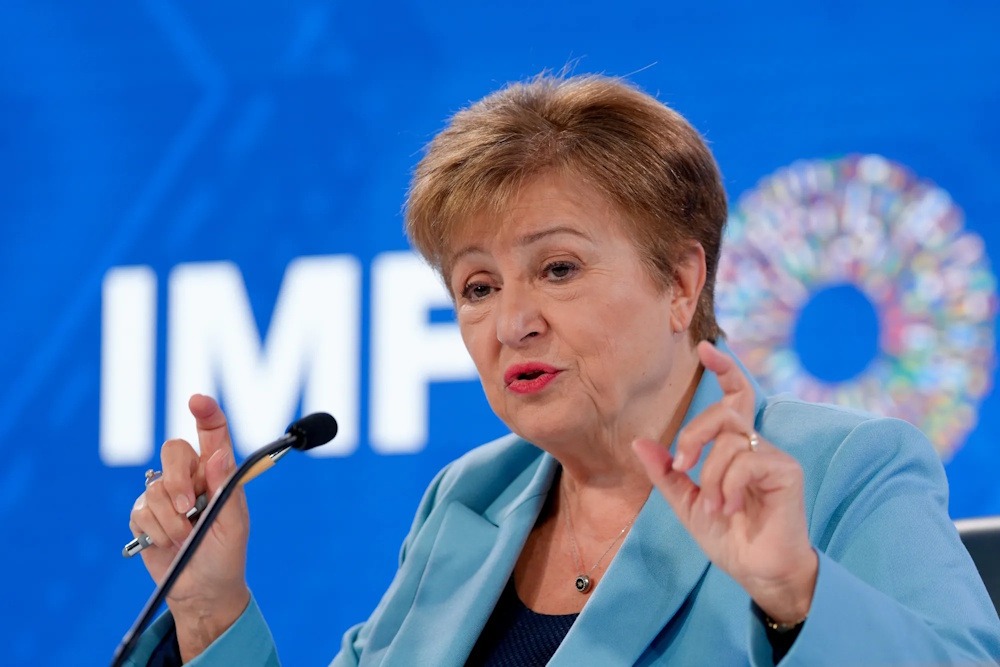
Global governments must act urgently to address challenges stemming from an unbalanced AI boom, a prolonged energy shock, and record levels of debt, according to the International Monetary Fund, which is set to host economic leaders from around the world next week. The rush to develop artificial intelligence is delivering a growth spurt that is currently limited to a select few countries, Managing Director Kristalina Georgieva stated Wednesday in prepared remarks in Singapore, in anticipation of the annual IMF-World Bank meetings in Bangkok next week. Meanwhile, the pressure on essential commodity supplies stemming from conflicts in the Middle East and Ukraine is expected to persist until 2027.
Additionally, rising bond yields have placed governments that have accumulated excessive debt under increasing budgetary strain, as noted by Georgieva, who described advanced economies as the “worst offenders” in this regard. “The AI building boom is inflationary. The energy and food shocks are inflationary. Tariffs, defense spending, and high public debt can be inflationary,” Georgieva said. She called for a “prudently hawkish bias” on the part of central banks, and said countries that have gotten used to running large budget deficits are in for “some very tough political choices.” The weeklong Bangkok gathering of top finance ministers and central bank governors occurs amid turbulence in sovereign debt markets, with yields on US, European, and Japanese bonds reaching multi-decade highs.
Total global debt has now exceeded $365 trillion, as reported by the Institute of International Finance. “Policymakers had a relatively easy ride over the last 17 years as for all that time interest rates were stuck below GDP growth rates,” Georgieva said. “Higher interest rates now put an end to that.” In contrast, the surge in AI investment – along with the anticipated economic benefits it promises – continues to drive stock prices to unprecedented levels, while also resulting in record exports for Asia’s leading manufacturers of chips and related equipment. The bond selloff commenced following the US and Israel’s assault on Iran in February, which disrupted fuel supplies and escalated costs globally.
Georgieva remarked that the energy shock has been “large but contained” thus far. However, she cautioned that “price pressures may build further as demand rises with the approach of the Northern hemisphere cold season and as countries replenish reserves.” The AI buildout is adding to energy demand, and it also risks widening economic inequalities, Georgieva said. “Growth in AI-related trade reflects the investment boom in economies embedded in its value chain,” she said, but “it largely bypasses most others.”