US-China AI Rivalry Deepens as Investors Bet on Both Sides
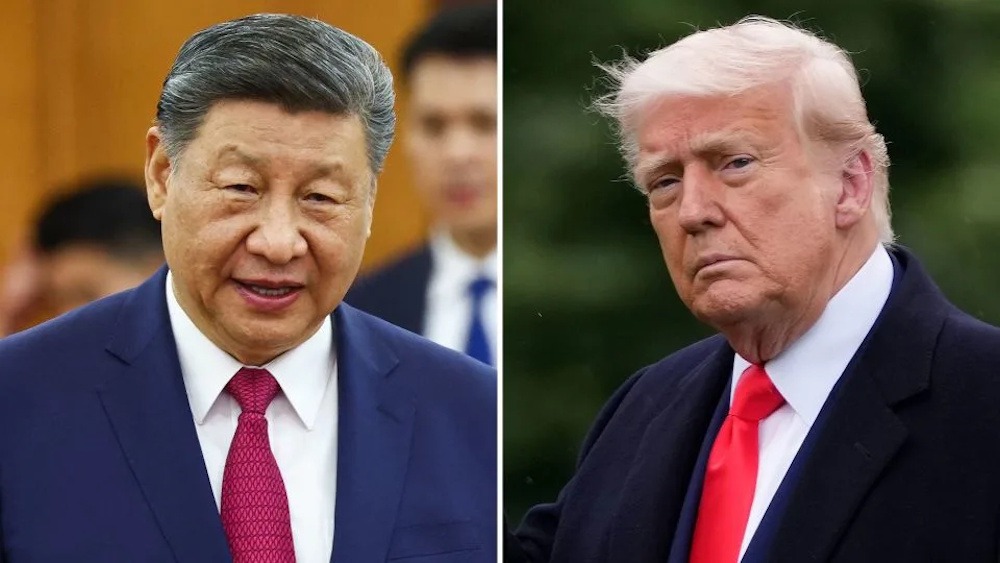
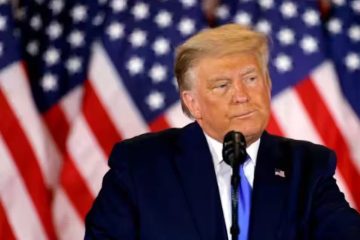
As China and the United States engage in a competitive effort to establish distinct AI supply chains, investors are strategically positioning themselves on both fronts. US banks are actively raising funds for AI startups in China, while capital from China is increasingly directed toward American technology firms. The stakes are sizable, with Wall Street banks acting as bookrunners on 19 Chinese high-tech equity capital market deals worth $17.2 billion so far this year, according to LSEG data, accounting for nearly 30% of the sector’s total issuance. US stocks, especially in the semiconductor sector, have emerged as the preferred choice for China’s outbound mutual funds. The value of US equity held by Hong Kong residents and mainland Chinese has increased by 23% over the past year, surpassing $750 billion, according to US data. The financial connections, as revealed in public disclosures, entangle the competitors in a rivalry that analysts liken to the Cold War Space race. AI is expected to be a central topic when leaders Donald Trump and Xi Jinping convene this week in Washington.
For investors, the mutual exposure serves as a safety net, fostering a shared interest in maintaining stable relations, while also tempering expectations for the Trump-Xi meeting to yield significant breakthroughs. It is also at risk of unwinding painfully if US-China relations deteriorate and further cleave AI development in two. “US and Chinese businesses and investors continue to maintain connectivity and invest in each other despite highly volatile geopolitical conditions,” said Fred Hu. “The forthcoming Trump-Xi Summit can hopefully inject more certainty and energy to the essential financial connectivity and broader economic relationship.” US Treasury Secretary Scott Bessent stated that he and Chinese Vise Premier He Lifeng engaged in discussions this week regarding the establishment of a US-China AI dialogue, which would include a notification system to address shared objectives and potential threats. The financial connectivity has remained intact and even strengthened, notwithstanding China’s efforts toward AI self-sufficiency and the US Pax Silica initiative, which seeks to secure its AI supply chains.
Washington has imposed limitations on the supply of advanced chips and chip-manufacturing technology to China, while also placing restrictions on U.S. investments in sensitive AI-related sectors within the country for several years. However, the investing regulations include an exception for publicly-traded securities and have not hindered Wall Street’s participation in China’s AI listing surge, where investor enthusiasm is partly driven by China’s pursuit of self-sufficiency. Wall Street banks this year provided counsel on over a dozen AI and chip initial public offerings and subsequent share sales, according to LSEG data. Wall Street underwriting Chinese tech IPOs represents “clipping the ticket on both sides of a cold war,” remarked James Buckley-Thorp. Optical parts manufacturer Zhongji Innolight successfully secured $6.8 billion through a significant listing in Hong Kong, with Goldman Sachs, Morgan Stanley, and Citigroup serving as its joint global coordinators. Goldman and Morgan Stanley were involved in the Hong Kong listings of AI developer MiniMax, as well as chipmakers Montage Technology and Shanghai Iluvatar CoreX Semiconductor. Meanwhile, J.P. Morgan played a key role in underwriting the approximately $2.6 billion Hong Kong share sale by Victory Giant Technology, a company specialising in printed circuit boards for AI servers.
US banks appear in the shareholder registers of chipmakers listed on Shanghai’s Nasdaq-like STAR Market, with these holdings generally indicating client activity and implying that they serve as channels for global capital into the sector. From the perspective of investors, US technology restrictions may facilitate, rather than obstruct, the development and interest in China’s domestic tech players, stated Atlian’s Buckley-Thorp. “There’ll be two internets, two chip stacks, two rulebooks, and your portfolio needs a passport for both,” he said. “The Shanghai punter buying Nvidia and the pension fund buying Zhipu in Hong Kong are making the same bet: that the politicians won’t actually pull the trigger. That’s the trade,” he said, referring to the risk of politicians taking a harder line on AI. Chinese investment flow to the US has demonstrated notable strength, as evidenced by available tracking data. U.S. stocks, including technology shares, represent almost half of the 1 trillion yuan managed by China’s outbound mutual funds, which operate under quotas set by the country’s foreign exchange regulator.
The value of Chinese holdings surged this year in US chipmakers such as Micron Technology, AMD, Sandisk Corp, Lam Research, and Applied Materials, based on data compiled by Sinolink Securities. According to S&P Global Market Intelligence, the total value of US AI funding rounds involving investors based in China or Hong Kong has increased significantly from approximately $436 million in 2023 to around $8.9 billion through mid-September. To be certain, the flows are undergoing a transformation and there are frictions evident near the surface. Thilo Hanemann, a partner at research firm Rhodium Group, noted that affluent Chinese investors persist in channelling investments into US tech companies via offshore funds, “but there is very limited visibility into these fund structures and thus the magnitude of exposure.” At least one U.S. lawmaker has expressed criticism toward JPMorgan Chase and Bank of America for their role in underwriting the Hong Kong listing of Contemporary Amperex Technology Co, a Chinese battery giant that the U.S. alleges has connections to China’s military.
JPM in an email reply said: “We recognize the challenges posed by geopolitics. As global and Chinese companies continue to engage and compete across markets, we operate within applicable legal, regulatory, and risk-management frameworks.” Washington is increasingly incorporating a rising number of Chinese tech firms into its roster of entities it suspects are supporting Beijing’s military efforts. SpaceX’s website and IPO materials were not accessible in Hong Kong and mainland China prior to its listing in June. Nonetheless, investors on both sides of the so-called ‘Silicon Curtain’ are inclined to diversify their investments, at least for the time being. “There probably won’t be a single winner in the U.S.-China AI race,” said Xile He. “From an investor perspective, I think betting entirely on one side is a big risk.”