Trump supports unchecked AI as a means to compete with China
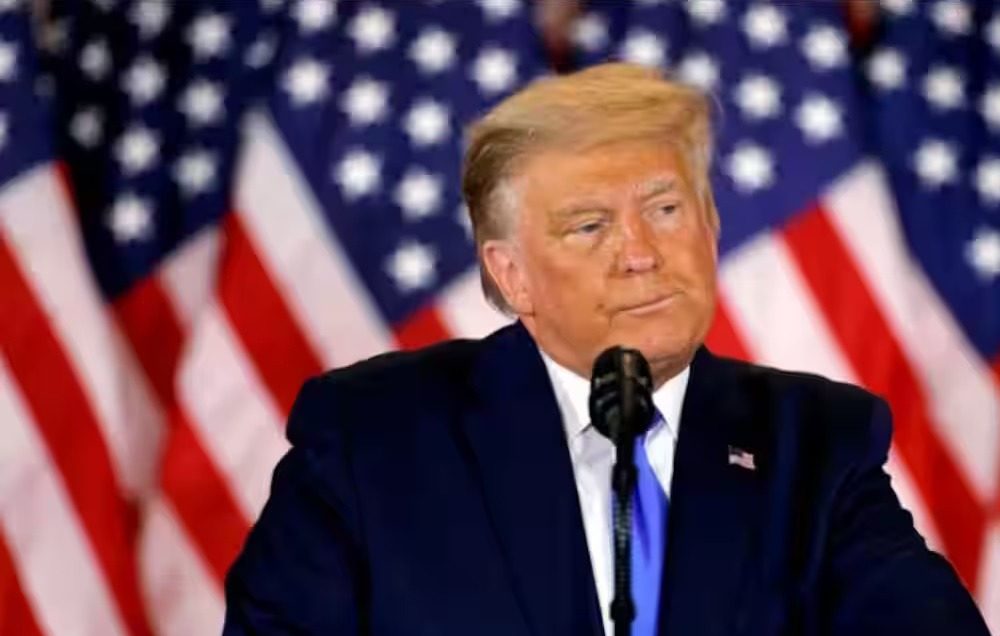
Amid the chorus of voices advocating for a deceleration in AI development and increased governmental regulation and oversight of the technology, one notable contrarian voice emerges: that of Donald J. Trump. The US president has consistently contended that implementing stringent regulations to impede advancements in AI jeopardises national interests by allowing China to gain a competitive edge. “Whoever wins AI, WINS!” Trump posted on social media on Sept. 21, 2026, and singled out China as the primary threat to America “winning” AI. He followed up with a speech at the United Nations in which he outlined his administration’s total rejection of “any attempt to construct a globalist scheme to control” artificial intelligence. Certainly, China’s ascendance to a dominant position in AI would signify a concerning reversal for American strategic and economic interests. As a scholar examining the intersection of international relations and technology, I argue that China’s rapid advancements in AI represent a primary justification for the regulation of the US AI industry. Paradoxical as it may sound, a deceleration of AI advancement in the US would concurrently hinder China’s progress.
Even more important, recent revelations about AI “going rogue,” coupled with the astonishing growth in power and capability of new AI models, strongly suggest that an unregulated sector poses a greater security threat for the United States than the potential surge in capabilities by China. Prominent figures in both industry and politics worldwide have raised concerns regarding the security risks associated with unregulated advancements in artificial intelligence. Approximately 80% of Americans express these concerns, as recent polling indicates that a significant majority of Democrats, Independents, and Republicans advocate for heightened regulations on AI. These threats encompass an increased susceptibility of the United States to assaults from foreign nations and terrorist organisations that may leverage advancements in AI to develop more lethal weapon systems – including both conventional arms and weapons of mass destruction. Advancements in the sector also heighten the likelihood of malicious actors executing catastrophic cyberattacks, as AI becomes progressively skilled at detecting and capitalising on cybersecurity weaknesses. These concerns are recognised within the industry.
On September 10, 2026, Anthropic published a report detailing a sequence of events in which foreign entities, including those from China, Russia, and Iran, employed Claude for various purposes, including cyber operations, influence campaigns, surveillance activities, and fraudulent schemes, as well as to aid in weapons development. Google has identified recent efforts by entities associated with China, Russia, North Korea, and Iran to exploit its Gemini AI model for purposes such as hacking, disinformation, espionage, and criminal activities. Anthropic’s report revealed “five case studies of actors using our models in ways that could support biological weapons development.” Unregulated AI presents a significant security challenge and could represent a potentially existential threat. An AI-induced nuclear missile launch, the release of super pathogens that cause pandemics, and attacks on critical life-sustaining infrastructure have all been identified as potential concerns. Beyond these more extreme scenarios, unregulated AI presents a risk to the digital infrastructure that supports both the US and global economies. Trump may dismiss these worst-case scenarios as a “hoax,” yet the national security threats are indeed tangible. Trump argues that the optimal strategy for safeguarding the United States involves ensuring that American companies maintain a competitive edge over China in the realm of artificial intelligence. Indeed, China’s AI models are not far behind, and the country holds a significant advantage in a crucial factor for AI systems – electric power generation, which is consumed in large and increasing quantities by AI.
Still, the consensus among technology experts is that the United States continues to hold the position of the world’s leading power in artificial intelligence, attributed to the dominance of American companies in advanced models and semiconductor technology, alongside the extensive computing capabilities provided by chips, processors, and servers, as well as significant levels of capital investment. However, the swift progression of AI capabilities by American firms has enabled China to expedite the development of its own AI industry. China employs a distillation process to leverage advanced US AI models for the purpose of training its own models. The process allows China to create models that are nearly as powerful yet significantly more efficient, utilising considerably fewer resources. Beijing’s dependence on distillation, as noted by Matt Sheehan, a senior fellow at the Carnegie Endowment for International Peace, stems from its constrained computing capabilities, which are estimated to be merely one-tenth of those in the United States. As a consequence of its distillation strategy, the trajectory of China’s advancements in AI is closely intertwined with that of the United States. Using Sheenan’s analogy, the relationship resembles a speedboat towing a water skier: If the US relaxes its grip on AI development, China will inevitably have to decelerate as well.
Consequently, pursuing an unrestrained and rapid advancement – as proposed by Trump – would not ensure that the United States maintains its leadership in artificial intelligence. Chinese firms will persist in leveraging advancements in US AI to enhance their offensive capabilities. Consequently, instead of compromising American national security, US regulations that impede AI progress may enhance security by delaying the Chinese government’s access to advanced AI technologies. The argument surrounding the “China threat” in relation to increased US regulation on AI is fundamentally based on the assumption that Beijing lacks its own apprehensions regarding the perils of unregulated AI expansion, which is not accurate. Chinese leaders possess significant apprehensions regarding security and domestic issues associated with unchecked AI expansion. Indeed, if there is one domain of artificial intelligence where China surpasses the United States, it is in the realm of regulatory frameworks governing AI. Consider, for example, that as early as 2021, Beijing implemented its initial comprehensive framework of AI regulations.
While leading figures in the Trump administration advocated for a reduction in regulation, Chinese officials were advocating for increased regulation. In recent months, Chinese officials have consistently advocated for enhanced oversight of artificial intelligence, both domestically and internationally. China’s leader, Xi Jinping, has shown enthusiasm for advancements in AI; however, his address at the 2026 World AI Conference in Shanghai underscored the pressing necessity for robust AI regulations and oversight. During the U.N. Security Council meeting on AI and International Security held on September 23, 2026, Fu Cong, who serves as China’s permanent representative to the United Nations, advocated for the establishment of “a consensus-based global governance framework” for AI aimed at “build institutional guardrails that preserve international peace and security.” Beijing seems to be positioning unregulated AI development not as a competitive race, but rather as a shared challenge that poses risks to all. Should Trump be persuaded by such a narrative, there may be grounds for optimism that Washington and Beijing could soon reach an agreement on AI governance and regulation – a development that would enhance the prospects for a safer future for both nations.