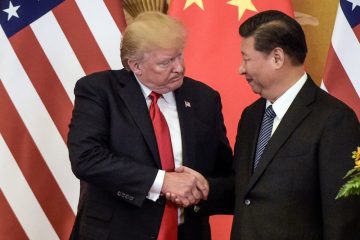
Xi promotes China as the frontrunner in a new global AI landscape
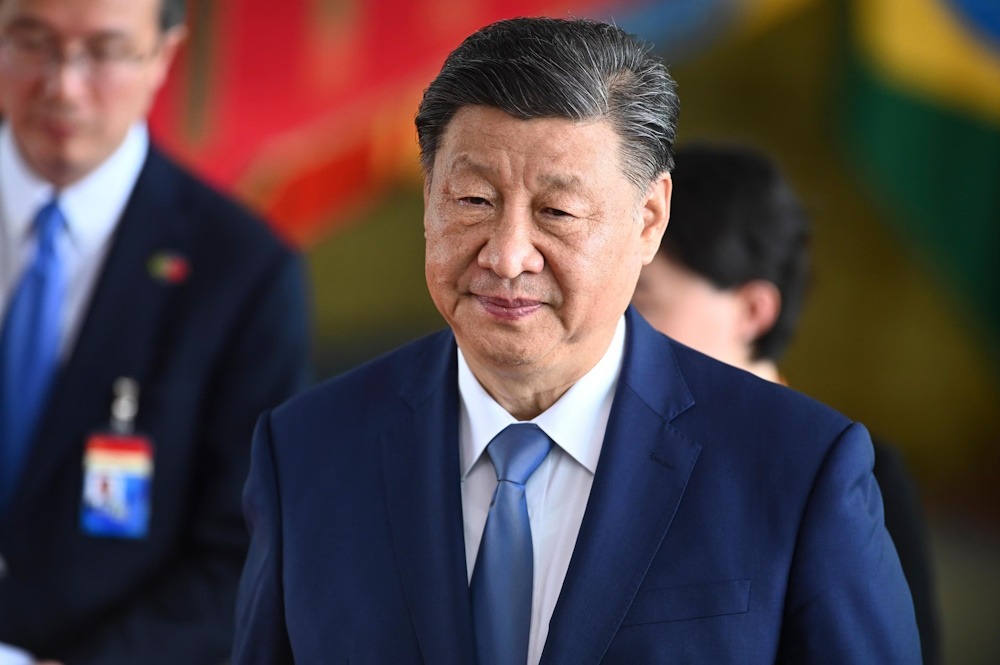
Chinese President Xi Jinping on Friday positioned Beijing as the leader of a new global artificial intelligence framework, leveraging China’s foremost technology conference to advocate for open-source technology and contest United States dominance over the regulations shaping this rapidly evolving sector. During the opening ceremony of the World Artificial Intelligence Conference in Shanghai, Xi emphasised the importance for nations to capitalise on the “historic opportunity” presented by open-source AI. He committed to assisting developing countries in enhancing their AI capabilities, while cautioning against the potential for “new historical injustices” arising from unequal access to this technology. The remarks represented Xi’s most explicit expression of China’s desire to influence global AI governance, presenting its open-source models as a global public asset and establishing Beijing as a counterpoint to Washington during a critical juncture in the competition for technological supremacy.
In drawing parallels between AI’s importance and that of the steam engine and electricity, Xi articulated a vision wherein China disseminates AI technology and knowledge to nations in the Global South, simultaneously spearheading international initiatives to establish regulatory frameworks for this nascent technology. The speech positioned China’s AI coalition as a competitor to the US-led “Pax Silica” international initiative aimed at securing global AI and critical mineral supply chains, although Xi refrained from directly naming Washington. Chinese state media have increasingly characterised Beijing’s AI strategy as a reaction to what they describe as a US-led effort to establish a “AI Iron Curtain”. In a commentary published on Thursday, Yuyuan Tantian, said China was seeking to build “another order” by “pooling the strength of all humanity and all countries to build an open-source, all-factor AI ecosystem”. The WAIC highlighted the evolving dynamics of the AI sector, as Chinese open-weight AI models swiftly advance in comparison to proprietary systems developed by US firms like OpenAI and Anthropic.
Earlier this month, source reported that Beijing is considering imposing restrictions on overseas access to certain prominent AI models from China. This development underscores the escalating tension between the country’s advocacy for open-source AI and its tightening national security framework. Xi emphasised the necessity for AI systems to remain under human oversight and advocated for nations to implement early warning and emergency response frameworks to address AI-related risks, marking his most explicit comments on AI safety to date. He further urged measures to guard against loss-of-control scenarios, warning of the dangers posed by autonomous AI systems that could evade human oversight and control. China will provide AI training and develop AI cooperation centres with BRICS, ASEAN, Latin American and African Union countries, Xi said, aligning its AI diplomacy with major Global South blocs where Beijing already carries significant influence.
The remarks followed the establishment of the China-created World AI Cooperation Organisation, which has garnered the participation of 29 member countries. Xi characterised the organization as a “milestone in the history of world AI development” and noted that it addressed the calls from Global South nations for increased involvement in AI governance. Analysts indicated that the timing transformed what could have been a standard policy address into a declaration that associates China’s technological progress with an official diplomatic framework. That institutional push reflects a broader Chinese effort to avoid being positioned as a rule-taker in a sector increasingly influenced by US companies, US export controls, and Washington-led technology partnerships, according to analysts.