US Greenlights Saudi Nuclear Agreement
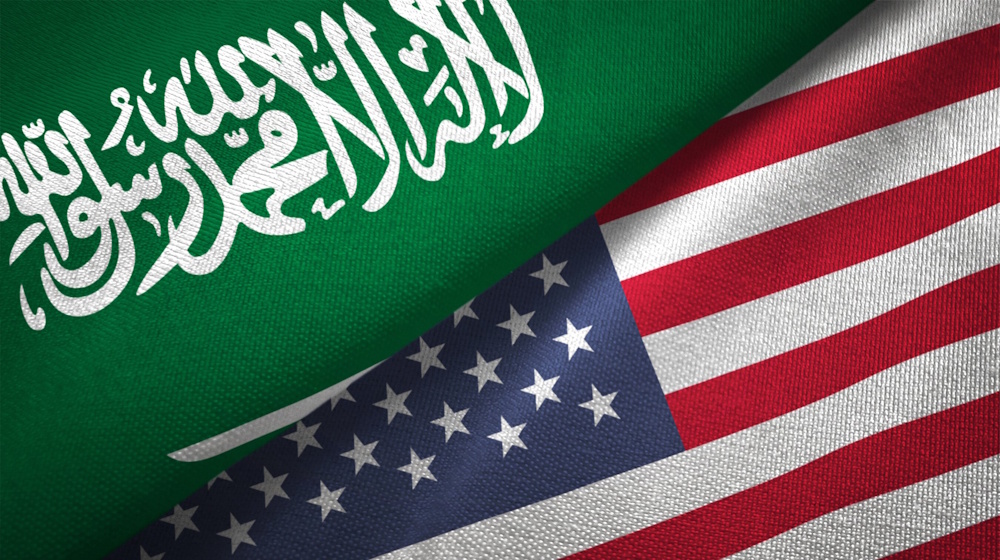
The US government on Tuesday sanctioned a civil nuclear agreement with Saudi Arabia, which may ultimately enable the kingdom to engage in domestic uranium enrichment, as reported by various sources. While an official announcement remains pending, the agreement is anticipated to be revealed in the near future prior to its submission to the US Congress for evaluation. The proposed agreement, valued at tens of billions of dollars, is anticipated to span 30 years and position American companies at the core of Saudi Arabia’s civil nuclear infrastructure initiative. What precisely does the agreement permit, and what factors have contributed to the uranium enrichment clause garnering international focus? The proposed agreement establishes the legal framework for civil nuclear cooperation under Section 123 of the US Atomic Energy Act.
Such agreements are essential for the US government and American companies to participate in substantial nuclear cooperation with another nation. If it comes into effect, it would allow US firms to engage in the development of Saudi Arabia’s civilian nuclear programme. The agreement establishes a legal framework for collaboration throughout the nuclear fuel cycle, encompassing uranium enrichment. The agreement could facilitate the establishment of a uranium enrichment facility in the kingdom, following a collaborative study conducted by the US and Saudi Arabia, as reported. While the proposed pact is expected to remain in force for 30 years, it has reportedly been designed to position US firms as the preferred partners for projects in Saudi Arabia, thereby constraining the involvement of foreign competitors. The agreement also envisions ongoing American oversight of the programme. Reports indicate that the US is set to maintain a monitoring role concerning Saudi Arabia’s civilian nuclear activities. Officials from the Trump administration contend that ongoing US involvement is essential to mitigate the risk of civilian nuclear facilities being repurposed for weapons-related objectives.
Saudi Arabia has sought nuclear power as a component of its overarching strategy to diversify an electricity system that continues to depend significantly on fossil fuels. The kingdom, however, has yet to commence operations of its inaugural nuclear power reactor. As part of the proposed agreement with the US, the uranium enrichment provision has garnered significant attention due to the dual-use nature of enrichment technology, which serves both civilian and military purposes. While low-enriched uranium serves as fuel for nuclear power reactors, the same enrichment process can yield weapons-grade material if uranium is subjected to significantly higher levels of enrichment. According to the Arms Control Centre, the majority of civilian nuclear reactors utilise uranium enriched to 3-5 percent uranium-235 (U-235). In contrast, uranium enriched beyond 20 percent is categorised as highly enriched uranium, with approximately 90 percent deemed weapons-grade.
As reported by source, the proposed agreement lacks two critical safeguards that a significant number of US lawmakers sought to include. These encompass:
- A prohibition on domestic uranium enrichment and spent-fuel reprocessing—known as the “gold standard” in US civil nuclear agreements.
- The International Atomic Energy Agency’s (IAEA) Additional Protocol grants the UN nuclear watchdog enhanced access to information and locations, including the capacity to inspect undeclared sites.
These omissions have raised concerns, as Saudi Arabia has historically articulated ambitions to develop the complete nuclear fuel cycle. In January 2025, Saudi Arabia’s Energy Minister Prince Abdulaziz bin Salman stated that the kingdom intended to produce yellowcake, enrich uranium, and ultimately market it. Crown Prince Mohammed bin Salman has previously stated that Saudi Arabia would pursue a nuclear weapon should Iran acquire one, raising concerns regarding the long-term implications of allowing domestic uranium enrichment.